
Overview & Design Features
The Haval GW4B15D is a contemporary 1.5-liter, turbocharged four-cylinder gasoline engine, engineered and manufactured by Great Wall Motors (GWM) primarily for its Haval brand vehicles. Introduced as part of GWM’s advanced ‘Lemon’ platform powertrain family, this engine represents a significant evolution in efficiency, power delivery, and emissions compliance for the Chinese automotive giant. With a displacement of 1499 cc, it forms the backbone of Haval’s compact and mid-size SUV offerings, providing a balanced blend of performance suitable for both urban commuting and highway driving, thus underpinning much of the brand’s recent market expansion.
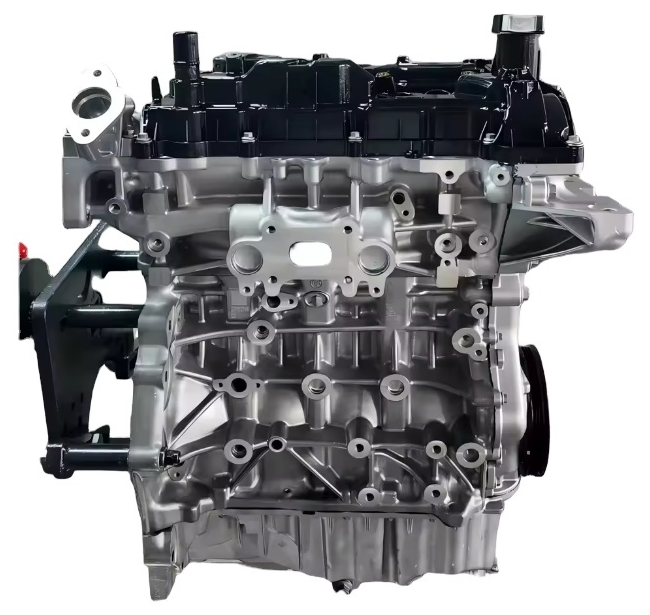
At its core, the GW4B15D engine incorporates advanced engineering to achieve its performance metrics. The cylinder block and cylinder head are constructed from lightweight aluminum alloy, contributing to overall vehicle mass reduction and improved fuel economy. Fuel delivery is managed by Gasoline Direct Injection (GDI) technology, which precisely atomizes fuel directly into the combustion chamber, enhancing combustion efficiency and power output while mitigating knock. The valvetrain features Dual Variable Valve Timing (DVVT) on both intake and exhaust camshafts, optimizing valve overlap and lift across the engine’s operating range for improved torque delivery at low RPMs and sustained power at higher RPMs. Forced induction is provided by a single-scroll turbocharger, often a BorgWarner unit, paired with an intercooler to ensure dense air charge for consistent power.
This specific iteration of the 1.5T engine has seen widespread adoption across several key Haval models. It was prominently deployed in the Haval Jolion (from approximately 2021 onwards), serving as its primary powertrain option. The GW4B15D also features in various trims of the Haval H6, particularly in its third-generation models (starting around 2020), and can be found in certain versions of the Haval F7 and other GWM-branded vehicles in various international markets. Its versatility allows it to be paired with both manual and dual-clutch automatic transmissions, depending on the specific vehicle model and market.
Technical Specifications
| Specification | Value |
|---|---|
| Displacement (cc) | 1499 |
| Max Power (hp (kW) @ RPM) | 169 (124) @ 5000-5600 |
| Max Torque (Nm (kg*m) @ RPM) | 285 (29) @ 1500-4000 |
| Fuel Type | Gasoline (Unleaded, RON 92 minimum, RON 95 recommended) |
| Fuel Consumption (l/100 km) | 6.8 – 7.5 (Combined Cycle, model dependent) |
| Engine Type | Inline-4, DOHC, Turbocharged, GDI |
| Compression Ratio | 10.5:1 |
| Cylinder Bore (mm) | 75 |
| Piston Stroke (mm) | 84.7 |
| Valvetrain | DOHC, Chain-driven |
| Valves per Cylinder | 4 (16 total) |
| Additional Info | Dual Variable Valve Timing (DVVT), Intercooled Turbocharger |
Common Problems & Reliability
The Haval GW4B15D, being a modern Gasoline Direct Injection (GDI) turbocharged engine, exhibits some common characteristics and potential issues associated with this engine type. One notable concern is the propensity for carbon buildup on the intake valves. This phenomenon occurs because GDI engines inject fuel directly into the combustion chamber, bypassing the intake valves, which prevents the natural cleaning action of fuel detergents. Over time, oil vapors and exhaust gas recirculation (EGR) deposits can accumulate on the valve stems and seats, potentially leading to reduced airflow, misfires, decreased performance, and rough idling. Regular inspection and professional cleaning (e.g., walnut blasting) may be required at higher mileages.
Another area of consideration is the longevity of the turbocharger unit. While modern turbochargers are designed for durability, they operate under extreme heat and RPMs. Insufficient oil changes, using incorrect oil viscosity, or frequent aggressive driving without proper cool-down periods can accelerate wear on turbocharger bearings and seals. Potential symptoms include excessive oil consumption, blue smoke from the exhaust, or a whining noise from the turbo. Finally, as with many complex modern engines, issues related to sensor failures or electronic control unit (ECU) glitches can occasionally arise, leading to diagnostic trouble codes and impaired engine operation.
Under a regimen of strict adherence to the manufacturer’s recommended maintenance schedule and using specified fluids, the GW4B15D engine is generally considered robust. A realistic expected service life before requiring a major overhaul, such as piston rings, bearings, or cylinder head work, typically ranges between 200,000 to 250,000 kilometers (approximately 125,000 to 155,000 miles). However, exceeding this mileage often requires proactive attention to wear components and addressing the aforementioned common issues.
Maintenance Tips & Service Schedule
Optimal performance and longevity of the Haval GW4B15D engine are highly dependent on diligent maintenance. Adhering to the following schedule and recommendations is crucial:
- Engine Oil & Filter: Perform oil and filter changes every 8,000 to 10,000 kilometers (5,000-6,000 miles) or every 6 to 12 months, whichever comes first. Synthetic engine oil conforming to API SP or SN standards, with a viscosity grade of 0W-20 or 5W-30, is typically recommended to ensure proper lubrication, especially for the turbocharger.
- Spark Plugs: Replace iridium-tipped spark plugs every 60,000 to 90,000 kilometers (37,000-56,000 miles). Using genuine Haval or OEM-equivalent spark plugs is advised to maintain optimal ignition timing and fuel efficiency.
- Timing Chain: The GW4B15D utilizes a maintenance-free timing chain. While designed for the engine’s lifetime, it is prudent to have the chain and tensioners inspected for excessive slack or noise at around 150,000 kilometers (93,000 miles).
- Coolant: Flush and replace the engine coolant every 4 to 5 years or 100,000 kilometers (60,000 miles). Use an ethylene glycol-based, long-life coolant specifically designed for aluminum engines, conforming to manufacturer specifications (e.g., HOAT or OAT type).
- Air Filter: Inspect the engine air filter at every service and replace it every 20,000 to 30,000 kilometers (12,000-18,000 miles), or more frequently in dusty environments.
- Fuel Filter: The fuel filter is often integrated within the fuel tank and is typically considered a lifetime component. However, if symptoms of fuel delivery issues arise, consult a qualified technician.
- PCV Valve: Inspect the PCV (Positive Crankcase Ventilation) valve periodically (e.g., every 30,000 km) as a clogged valve can contribute to carbon buildup and oil consumption.
Conclusion
The Haval GW4B15D engine presents itself as a modern and competitive powertrain within the compact and mid-size SUV segments. Its combination of direct injection, turbocharging, and variable valve timing delivers a commendable balance of power and fuel efficiency. For a used vehicle buyer, this engine can be a reliable choice, provided its maintenance history is clear and comprehensive. Due diligence should be exercised to ensure that regular oil changes were performed with appropriate synthetic lubricants and that attention was paid to potential GDI-related carbon buildup. With consistent preventative maintenance and prompt addressing of any emerging issues, the GW4B15D is capable of providing many years of dependable service, making vehicles equipped with it a viable option in the used car market.