
Overview & Design Features
The Haval GW4D20T is a 2.0-liter, inline four-cylinder, turbocharged diesel engine developed by Great Wall Motors (GWM) for its Haval SUV and Great Wall pickup truck brands. Introduced in the early 2010s, this engine represents a significant step for the manufacturer in offering competitive diesel powertrains, particularly in markets favoring diesel SUVs and commercial vehicles. Known for its robust construction and emphasis on torque delivery, the GW4D20T has been a cornerstone engine, providing reliable power for a range of utility-focused models across various generations.
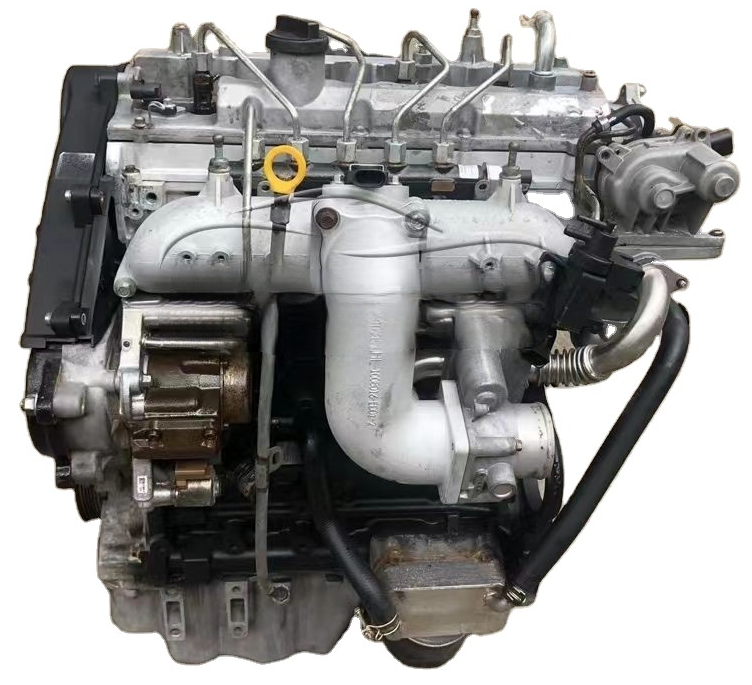
Engineered for durability and efficiency, the GW4D20T features a cast-iron cylinder block, providing excellent structural rigidity and heat dissipation, paired with an aluminum alloy cylinder head to reduce overall weight and improve thermal management. Fuel delivery is managed by a Common Rail Direct Injection (CRDI) system, which precisely controls fuel atomization and timing for improved combustion efficiency, lower emissions, and enhanced power output. The engine also incorporates a Variable Geometry Turbocharger (VGT), optimizing boost pressure across the RPM range to minimize turbo lag and deliver a broad, flat torque curve. A Double Overhead Camshaft (DOHC) valvetrain with 16 valves (four per cylinder) further ensures efficient gas exchange.
This engine has seen widespread deployment across several popular Haval and Great Wall models. Primary applications include the Haval H5 (from approximately 2010-2018), Haval H6 (first and second generations, roughly 2011-2020), Haval H9 (early models), and various Great Wall Wingle series pickup trucks (Wingle 5, Wingle 6). Its robust nature made it a suitable choice for vehicles requiring strong towing capabilities and off-road performance, cementing its presence in a diverse product lineup over many years.
Technical Specifications
| Specification | Value |
|---|---|
| Displacement | 1996 cc |
| Max Power | 110 kW (150 hp) @ 4000 RPM |
| Max Torque | 310 Nm (31.6 kg*m) @ 1800-2800 RPM |
| Fuel Type | Diesel |
| Fuel Consumption (combined) | 7.8 l/100 km (vehicle dependent) |
| Engine Type | Inline 4-cylinder, DOHC, Turbocharged Diesel |
| Compression Ratio | 16.5:1 |
| Cylinder Bore | 83.1 mm |
| Piston Stroke | 92 mm |
| Valvetrain | DOHC |
| Valves per Cylinder | 4 |
| Additional Info | Common Rail Direct Injection (CRDI), Variable Geometry Turbocharger (VGT), Intercooler, Diesel Particulate Filter (DPF) on later variants |
Common Problems & Reliability
The Haval GW4D20T engine is generally regarded as a durable unit, particularly considering its application in utility vehicles. However, specific areas warrant attention for owners and prospective buyers. One common issue relates to the Diesel Particulate Filter (DPF), especially in vehicles primarily used for short-distance driving. Insufficient regeneration cycles can lead to DPF blockage, resulting in reduced engine performance, increased fuel consumption, and costly repairs or replacement. Regular highway driving is recommended to facilitate DPF regeneration.
Another area of concern can be the EGR (Exhaust Gas Recirculation) valve. Over time, carbon buildup can impede its function, leading to erratic idling, loss of power, and illumination of the check engine light. Periodic cleaning or replacement of the EGR valve is often necessary, particularly in higher mileage examples. Furthermore, like many common rail diesel engines, injector longevity can be influenced by fuel quality. Poor quality diesel or extended service intervals can lead to premature wear or blockage of the fuel injectors, impacting combustion efficiency and potentially causing misfires or hard starting.
Under proper maintenance, the GW4D20T engine can achieve a respectable service life. With diligent servicing, including timely oil changes and attention to ancillary components, an expected service life of 250,000 to 300,000 kilometers (approximately 155,000 to 185,000 miles) before requiring a major overhaul is realistic. Instances of engines exceeding these figures are not uncommon when rigorously maintained.
Maintenance Tips & Service Schedule
Adhering to a stringent maintenance schedule is paramount for the longevity and reliable operation of the GW4D20T engine. Engine oil and filter changes are critical; it is recommended every 10,000 kilometers (6,000 miles) or 12 months, whichever comes first. Use a high-quality, fully synthetic diesel engine oil conforming to API CI-4/CJ-4 or ACEA C3 specifications, typically a 5W-30 or 5W-40 viscosity, as specified by the manufacturer.
The fuel filter should be replaced every 20,000 kilometers (12,000 miles) or annually to protect the sensitive CRDI system from contaminants. The air filter requires replacement every 30,000 kilometers (18,000 miles) or sooner if operating in dusty conditions. Given the DPF system, ensuring proper DPF regeneration is vital; periodic longer drives at highway speeds are beneficial. The cooling system requires attention, with coolant flushes recommended every 40,000-60,000 kilometers (25,000-37,000 miles) or every 2-3 years, using an appropriate long-life coolant. The GW4D20T typically utilizes a timing chain, which generally does not require routine replacement under normal conditions but should be inspected for wear and noise at major service intervals (e.g., 150,000-200,000 kilometers or 90,000-120,000 miles).
Conclusion
The Haval GW4D20T engine, despite its common issues related to DPF and EGR systems, stands as a robust and generally reliable powerplant for its intended applications. Its strong torque delivery and solid construction make it a capable choice for SUVs and pickup trucks requiring performance under load. For a used vehicle buyer, careful consideration of the vehicle’s service history, particularly concerning DPF and EGR maintenance, is essential. A well-maintained GW4D20T engine can offer many more years of dependable service, making it a safe and economical choice for those seeking a practical diesel-powered utility vehicle, provided that proactive maintenance is prioritized.