
Overview & Design Features
The Haval GW4B15E is a modern, turbocharged inline-four gasoline engine developed by Great Wall Motors (GWM) for its Haval brand vehicles. Introduced as part of GWM’s advanced engine family, this 1.5-liter unit represents a significant leap in efficiency and performance for the Chinese automotive giant. It superseded earlier 1.5T engines, offering improved power delivery, fuel economy, and emission compliance. Designed to power a range of compact and mid-size SUVs, the GW4B15E quickly became a cornerstone engine for Haval, reflecting the brand’s commitment to competitive engineering and market relevance in both domestic and international markets.
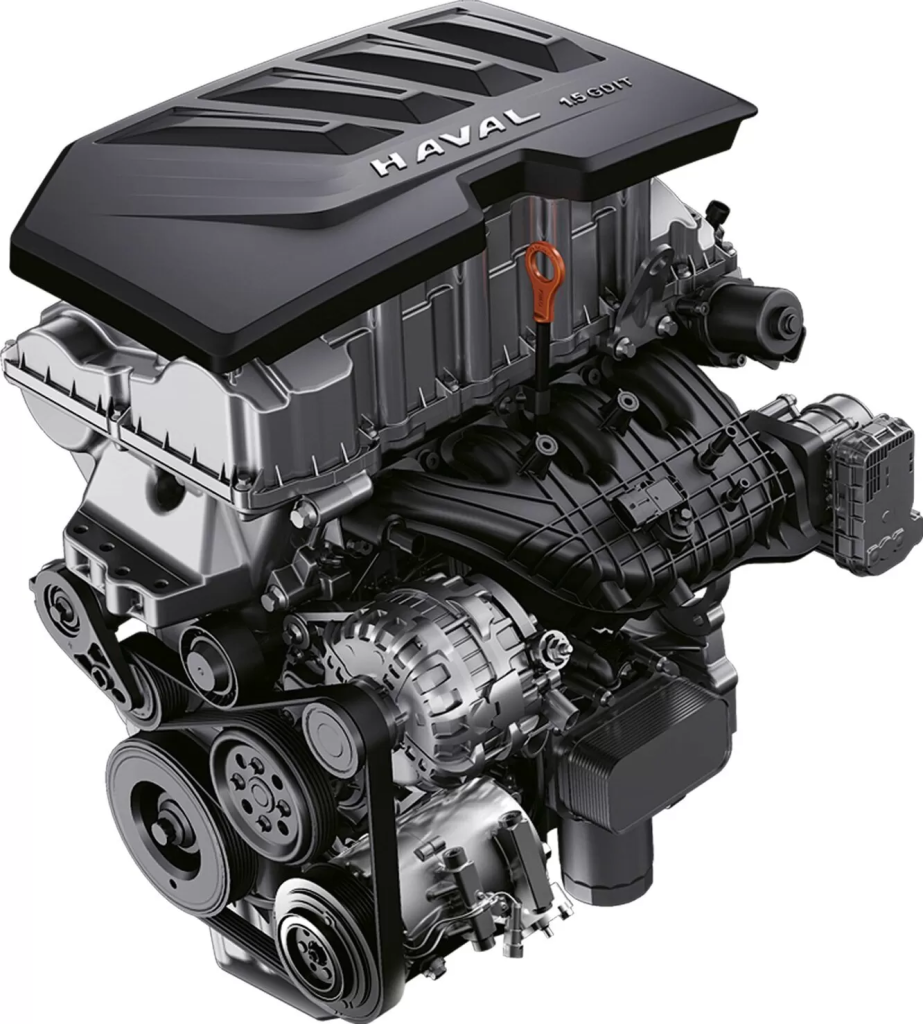
Engineered for contemporary automotive demands, the GW4B15E features an all-aluminum alloy construction for both its cylinder block and cylinder head, contributing to reduced overall vehicle weight and improved thermal management. Fuel delivery is managed by a sophisticated direct injection (GDI) system, which precisely atomizes fuel directly into the combustion chambers, optimizing combustion efficiency and reducing fuel consumption. A key performance enhancer is its twin-scroll turbocharger, designed to minimize turbo lag and deliver a broad, flat torque curve across a wide RPM range. The valvetrain incorporates Dual Variable Valve Timing (DVVT) on both intake and exhaust camshafts, allowing for dynamic adjustment of valve overlap to optimize power output, fuel efficiency, and emissions under varying driving conditions.
This specific iteration of the 1.5-liter turbocharged engine has been widely deployed across several prominent Haval models. Primary applications include, but are not limited to, the Haval H6 (second and third generation variants), the Haval Jolion (also known as Chulian), and certain configurations of the Haval F7. Production years span from its initial introduction in the late 2010s to current models, serving as a versatile powertrain for various trims and market specifications. Its prevalence underscores its importance in Haval’s product strategy, offering a balance of performance and efficiency for mass-market appeal.
Technical Specifications
| Displacement (cc) | 1499 |
| Max Power (hp (kW) @ RPM) | 169 (124) @ 5000-5600 |
| Max Torque (Nm (kg*m) @ RPM) | 285 (29.06) @ 1400-3600 |
| Fuel Type | Gasoline (RON 92/93 minimum, RON 95 recommended) |
| Fuel Consumption (l/100 km) | Approx. 6.8 – 7.5 (Combined cycle, varies by vehicle model) |
| Engine Type | Inline-four, DOHC, Turbocharged, Direct Injection (GDI) |
| Compression Ratio | 10.5:1 |
| Cylinder Bore (mm) | 75.0 |
| Piston Stroke (mm) | 84.9 |
| Valvetrain | 16-valve, Dual Variable Valve Timing (DVVT) |
| Valves per Cylinder | 4 |
| Additional Info | Aluminum alloy block and head, Twin-scroll turbocharger |
Common Problems & Reliability
While the Haval GW4B15E is generally considered a robust modern engine, like many direct-injection turbocharged units, it is susceptible to certain specific issues. A primary concern is carbon buildup on the intake valves. Due to the GDI system, fuel is injected directly into the cylinders, bypassing the intake valves, thus preventing the washing action that typically cleans the valves in port-injected engines. Over time, oil vapors from the PCV system can deposit carbon on the valve stems and seats, potentially leading to reduced airflow, misfires, and decreased performance. Regular monitoring and occasional walnut blasting or chemical cleaning are recommended.
Another area requiring attention is the turbocharger system longevity. While the twin-scroll unit is efficient, its operating conditions involve high temperatures and rotational speeds. Inadequate oil changes, using incorrect oil viscosity, or frequent aggressive driving without proper cool-down can accelerate wear on the turbo bearings and seals, potentially leading to excessive oil consumption or turbocharger failure. Furthermore, isolated reports have indicated occasional issues with ancillary components such as oxygen sensors or ignition coils, which can manifest as check engine lights or rough running, though these are typically simpler and less costly repairs than internal engine issues.
Under proper and diligent maintenance, the Haval GW4B15E engine has a realistic expected service life exceeding 200,000 to 250,000 kilometers before requiring a major overhaul. Exceeding this mileage is certainly possible with meticulous care and prompt attention to minor issues.
Maintenance Tips & Service Schedule
Maintaining the Haval GW4B15E is critical to ensuring its longevity and optimal performance. Adherence to a strict service schedule and using manufacturer-recommended fluids are paramount. Key maintenance guidelines include:
- Engine Oil & Filter Change: This is the most crucial maintenance item. Engine oil and filter should be replaced every 10,000 kilometers or every 6 months, whichever comes first. Use fully synthetic engine oil with a viscosity grade of 5W-30 or 5W-40, meeting API SN/SP or ACEA A3/B4/C3 specifications. Higher quality oil helps protect the turbocharger and minimize carbon buildup.
- Spark Plugs: Replace iridium-tipped spark plugs every 40,000 to 60,000 kilometers. Using the correct heat range and gap is essential for efficient combustion and to prevent misfires, especially in a turbocharged application.
- Air Filter: Inspect the engine air filter at every service interval and replace it every 20,000 to 30,000 kilometers, or more frequently if driving in dusty conditions. A clean air filter is vital for engine breathing and turbocharger health.
- Coolant Flush: The cooling system should be flushed and refilled with long-life OAT (Organic Acid Technology) coolant every 5 years or 100,000 kilometers. Proper cooling system maintenance prevents overheating and protects engine components.
- Timing Chain: The GW4B15E utilizes a timing chain, which is generally designed to last the life of the engine under normal conditions. Inspection for excessive slack or noise is recommended at high mileage intervals (e.g., 150,000 km). Replacement is typically only necessary if symptoms of wear are present.
- Fuel Filter: Replace the in-tank fuel filter every 60,000 kilometers to ensure clean fuel delivery and protect the direct injection system.
- PCV System: Periodically inspect and clean the Positive Crankcase Ventilation (PCV) valve and associated hoses to mitigate carbon buildup on intake valves.
Conclusion
The Haval GW4B15E engine is a modern, capable powertrain that delivers a strong balance of performance and fuel efficiency for its class. For a used vehicle buyer, it represents a generally safe and reliable choice, provided the vehicle has a documented history of consistent and proper maintenance. Its aluminum construction, direct injection, and dual VVT technology are indicative of contemporary engine design, offering a responsive driving experience. Awareness of potential carbon buildup and diligent adherence to strict oil change intervals with high-quality synthetic oil are key to maximizing its service life. With proactive care and attention to the recommended service schedule, a Haval vehicle equipped with the GW4B15E engine can provide many years and kilometers of dependable operation.