
Overview & Design Features
The IVECO F5HFL414A engine is a robust, high-performance diesel powertrain engineered by IVECO, a global leader in commercial and industrial vehicles. Part of the F5 engine family, this specific variant is widely recognized for its strong torque delivery and durability, primarily deployed in light commercial vehicles and demanding industrial applications. With a displacement of 2998 cc (3.0 liters) and an inline four-cylinder configuration, it embodies IVECO’s commitment to producing efficient and resilient power units capable of prolonged heavy-duty operation. Its introduction marked a significant step in enhancing fuel economy and emissions compliance within its class, serving as a cornerstone for several generations of IVECO’s flagship commercial offerings.
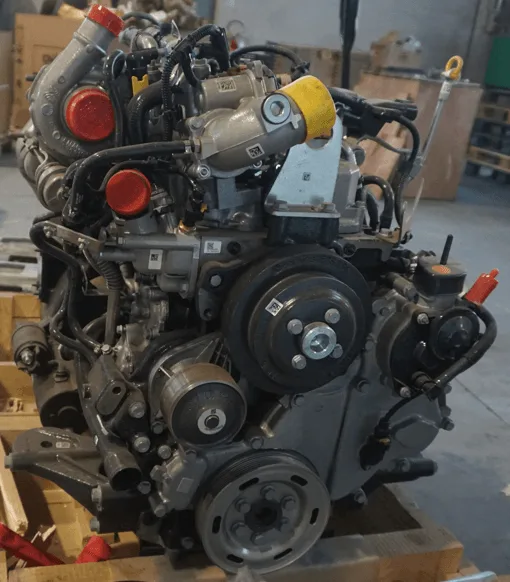
At its core, the F5HFL414A features a high-strength cast iron cylinder block, providing a stable foundation for demanding operational conditions, complemented by an aluminum alloy cylinder head for optimized heat dissipation and weight reduction. Fuel delivery is managed by a sophisticated common rail direct injection (CRDI) system, which precisely controls fuel atomization and combustion for improved efficiency and reduced emissions. This engine typically incorporates a variable geometry turbocharger (VGT), allowing for optimal boost pressure across a wide RPM range, enhancing responsiveness and power output. The valvetrain features a double overhead camshaft (DOHC) design, actuating four valves per cylinder, which contributes to superior breathing and combustion efficiency, further supported by advanced engine management systems for peak performance and compliance with stringent emission standards.
The IVECO F5HFL414A engine has been extensively utilized across various models, primarily in the IVECO Daily light commercial vehicle range. It powered numerous configurations of the Daily van and chassis cab, known for their versatility in transport and utility roles. Specific deployments include different iterations of the Daily 35S, 50C, and 70C series, typically found in higher power output trims. Production years for models featuring this engine variant generally span from the mid-2010s onwards, reflecting its role as a contemporary and compliant power solution for modern commercial fleets and individual operators seeking reliable performance.
Technical Specifications
| Specification | Value |
|---|---|
| Displacement (cc) | 2998 |
| Max Power (hp (kW) @ RPM) | 180 (132) @ 3500 |
| Max Torque (Nm (kg*m) @ RPM) | 430 (43.8) @ 1500-2600 |
| Fuel Type | Diesel |
| Fuel Consumption (l/100 km) | Refer to manufacturer’s technical documentation (highly application-dependent) |
| Engine Type | Inline 4-cylinder, DOHC, Turbocharged, Common Rail Diesel |
| Compression Ratio | 16.5:1 – 17.5:1 (typical) |
| Cylinder Bore (mm) | 95.8 |
| Piston Stroke (mm) | 104 |
| Valvetrain | DOHC (Double Overhead Camshaft) |
| Valves per Cylinder | 4 |
| Additional Info | Variable Geometry Turbocharger (VGT), Common Rail Direct Injection, Diesel Particulate Filter (DPF), Exhaust Gas Recirculation (EGR) |
Common Problems & Reliability
- One of the most frequently reported issues for engines in this family, particularly when operated in stop-and-go urban environments, involves the exhaust gas recirculation (EGR) system and diesel particulate filter (DPF). Carbon buildup within the EGR valve and cooler can restrict flow, leading to error codes, reduced performance, and increased emissions. DPF clogging can occur if regeneration cycles are not completed regularly, often requiring forced regeneration or costly replacement.
- Injector problems are another area of concern. While the common rail system is precise, high-pressure injectors can eventually wear, especially when exposed to contaminated or poor-quality diesel fuel. Symptoms include rough idling, misfires, black smoke, and reduced fuel economy. Regular fuel filter replacement and using quality fuel additives are crucial preventative measures.
- Although generally robust, the variable geometry turbocharger (VGT) actuator can sometimes experience issues, leading to incorrect boost pressure. This can manifest as sluggish acceleration or a “limp mode” activation. Failure is often due to carbon buildup or electronic component degradation, though the turbocharger unit itself is typically durable.
- Under proper maintenance and typical commercial operation, the IVECO F5HFL414A engine is engineered for a substantial service life, often exceeding 300,000 to 500,000 kilometers (approximately 186,000 to 310,000 miles) before requiring a major overhaul. Longevity is highly dependent on adherence to service schedules and driving conditions.
Maintenance Tips & Service Schedule
- Engine Oil & Filter: Regular oil changes are paramount. Use a full synthetic, low-ash diesel-specific engine oil meeting IVECO’s recommended specifications (e.g., ACEA C3 or E9) with an appropriate viscosity (e.g., 5W-30 or 5W-40). Intervals typically range from 20,000 to 40,000 kilometers (12,500 to 25,000 miles) or annually, whichever comes first, depending on vehicle use and oil quality. Always replace the oil filter simultaneously.
- Fuel Filter: The high-pressure common rail system necessitates clean fuel. Replace the fuel filter every 40,000 to 80,000 kilometers (25,000 to 50,000 miles) to prevent injector wear and maintain system integrity. Shorter intervals may be prudent in regions with lower fuel quality.
- Air Filter: A clean air filter is vital for combustion efficiency and turbocharger longevity. Inspect and replace the air filter every 40,000 to 60,000 kilometers (25,000 to 37,500 miles) or more frequently if operating in dusty environments.
- Coolant System: Flush and replace the engine coolant every 4 to 5 years or 100,000 to 150,000 kilometers (60,000 to 90,000 miles) using an approved long-life ethylene glycol-based coolant. Ensure the system is properly bled to prevent air pockets.
- Timing Chain: This engine utilizes a timing chain system, generally designed for the engine’s lifespan. However, it is advisable to inspect the chain, guides, and tensioners for wear or excessive slack around 250,000 to 300,000 kilometers (155,000 to 186,000 miles) as a preventative measure.
- EGR/DPF Maintenance: For vehicles frequently used for short trips, regular highway driving or periodic forced DPF regenerations (if available) are recommended to prevent premature clogging of the DPF and EGR system.
Conclusion
The IVECO F5HFL414A engine stands out as a highly capable and generally reliable diesel powerhouse, especially suited for the rigorous demands of commercial applications. Its robust design, combined with modern fuel injection and turbocharging technologies, delivers excellent performance and efficiency for its class. For a used vehicle buyer, an IVECO vehicle equipped with the F5HFL414A can be a safe and economical choice, provided a comprehensive service history is available and proper maintenance has been consistently performed. While susceptibility to common modern diesel issues like DPF and EGR challenges exists, these are largely manageable with diligent preventative maintenance and appropriate driving habits. Overall, the F5HFL414A represents a dependable investment, capable of many more years of service when properly cared for.