
Overview & Design Features
The GMC L48 is a legendary variant of the General Motors small-block V8 engine family. Displacing 5.7 liters (350 cubic inches), this naturally aspirated 90-degree V8 was a crucial utility engine for GMC’s light-duty, medium-duty, and heavy-duty trucks during the late 1960s and the entire 1970s. Its balanced displacement, reliable iron construction, and versatile architecture made it one of the most widely manufactured and celebrated powerplants of its era, serving as a classic benchmark for American utility performance.
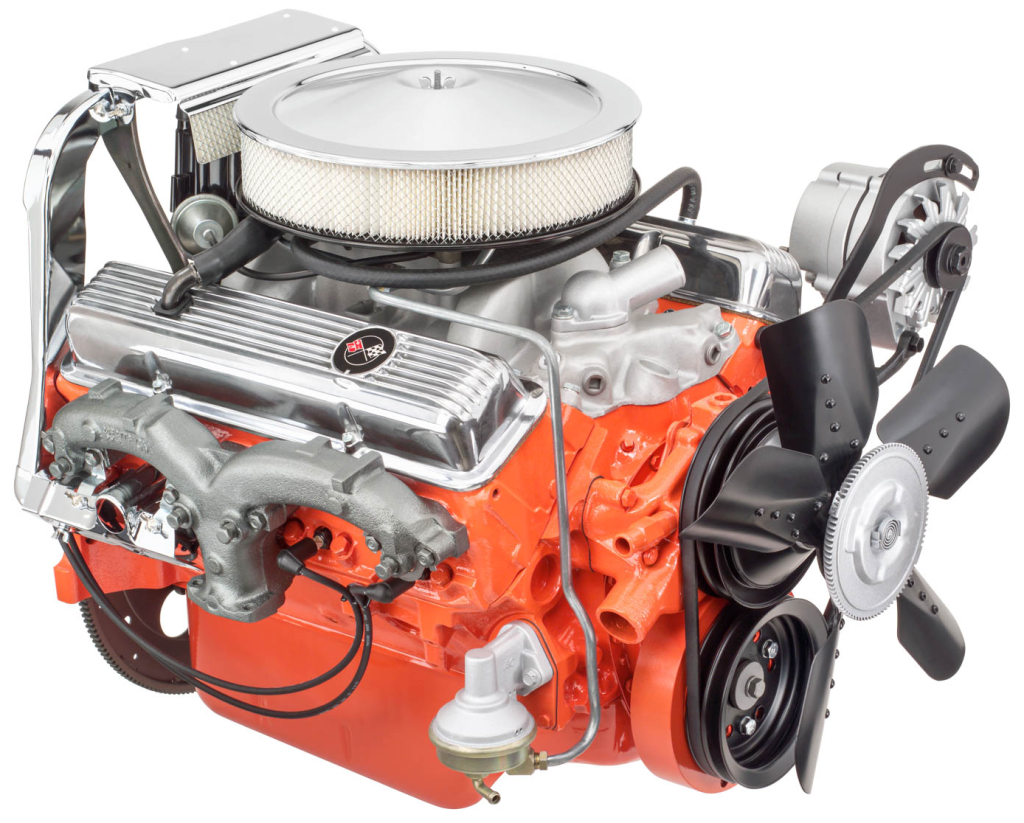
The engine utilizes a highly durable cast iron cylinder block and matching cast iron cylinder heads. It features a traditional overhead valve (OHV) pushrod configuration with two valves per cylinder operated by a single, block-mounted hydraulic flat-tappet camshaft. Fuel delivery was primarily handled by a mechanical Rochester Quadrajet four-barrel carburetor, which optimized fuel distribution under heavy load conditions. The L48 lacks modern electronic aids like variable valve timing or electronic fuel injection, relying instead on mechanical simplicity to produce steady, low-end torque.
This powerplant was deployed extensively across GMC’s vehicle lineup from 1969 to 1980. It served as the primary V8 choice for the GMC C/K pickup series (including the C1500, C2500, and C3500), the GMC Suburban, the GMC Jimmy SUV, and the GMC Vandura commercial van series. It was especially popular in utility trims designed specifically for heavy towing, municipal transport, and agricultural hauling duties.
Technical Specifications
| Specification Field | Factory Data Value |
|---|---|
| Displacement (cc) | 5,733 cc (350 cubic inches) |
| Max Power (hp (kW) @ RPM) | 165 hp (123 kW) @ 3,800 RPM |
| Max Torque (Nm (kg*m) @ RPM) | 353 Nm (36 kg*m) @ 2,400 RPM |
| Fuel Type | Gasoline |
| Fuel Consumption (l/100 km) | Approx. 18.0 to 22.0 l/100 km |
| Engine Type | 90-degree V8, Naturally Aspirated, Carbureted |
| Compression Ratio | 8.5:1 |
| Cylinder Bore (mm) | 101.6 mm |
| Piston Stroke (mm) | 88.4 mm |
| Valvetrain | OHV (Overhead Valve, pushrod-driven) |
| Valves per Cylinder | 2 |
| Additional Info | Equipped with two-bolt or four-bolt main bearing caps depending on truck GVWR |
Common Problems & Reliability
Despite a robust reputation, the L48 has clear mechanical vulnerabilities that owners should monitor. The flat-tappet camshaft configuration is highly sensitive to modern engine oils. Because modern lubricants lack the high concentrations of zinc and phosphorus (ZDDP) additives of earlier eras, standard modern oils cause accelerated camshaft lobe wear, potentially leading to a dead cylinder. Overheating is another critical risk; if the engine runs dry or experiences cooling failure, the cast iron cylinder heads are prone to developing hairline cracks between the valve seats.
Additionally, vacuum leaks frequently develop around the intake manifold gaskets and the throttle shaft of the aging Rochester Quadrajet carburetor. These leaks introduce unmetered air into the combustion chambers, causing rough idling, poor acceleration, and hard cold starts. Despite these age-related issues, a well-maintained L48 easily reaches a realistic service life of 200,000 to 250,000 miles (320,000 to 400,000 km) before requiring a major internal overhaul.
Maintenance Tips & Service Schedule
Proper preservation of this vintage engine requires strict maintenance protocols to guarantee longevity:
- Engine Oil: Use a high-quality 10W-30 or 15W-40 mineral oil formulated with a high-zinc (ZDDP) additive to prevent flat-tappet camshaft wear. Change the oil and filter every 3,000 miles (5,000 km) or every six months.
- Ignition System: Inspect and replace spark plugs and check or adjust distributor points (on pre-1975 engines) every 12,000 miles (20,000 km). HEI electronic ignition models should receive new spark plug wires every 50,000 miles.
- Cooling System: Flush the cooling system and replace the traditional green ethylene glycol coolant every 24 months to prevent internal rust, scale buildup, and corrosion in the radiator.
- Timing Chain: Inspect the mechanical timing chain for excessive slack and wear at 100,000 miles (160,000 km) to prevent timing drift and potential valve synchronization issues.
Conclusion
The GMC L48 engine is a highly reliable and satisfying choice for vintage truck buyers and classic car enthusiasts alike. Its simple mechanical layout, combined with an enormous global aftermarket support network and very low parts costs, makes it one of the easiest and most cost-effective engines to maintain, restore, and upgrade in the modern era.