
Overview & Design Features
The GMC L9H and L94 are distinct yet closely related 6.2-liter (6162 cc) V8 gasoline engines, part of General Motors’ renowned Gen IV small-block engine family. Manufactured by General Motors, these engines represent a high-output evolution of the Vortec line, primarily developed for full-size SUVs and pickup trucks. Introduced in the late 2000s, they provided a significant power and torque upgrade over smaller displacement options, establishing a benchmark for performance and refinement in their segment. Their historical significance lies in continuing the legacy of the pushrod V8 while integrating modern technologies to meet contemporary demands for efficiency and emissions.
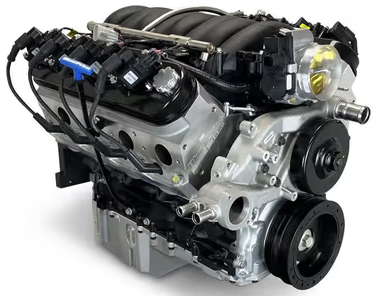
Engineered for durability and robust performance, both the L9H and L94 feature a lightweight aluminum cylinder block with cast-in iron cylinder liners, paired with aluminum cylinder heads. This construction optimizes weight distribution and heat dissipation. Fuel delivery is managed by a sophisticated port fuel injection (PFI) system, ensuring precise fuel metering. A key technological advancement in these engines is Variable Valve Timing (VVT), which electronically adjusts camshaft phasing to optimize valve overlap for improved performance and fuel economy across the RPM range. The L94 variant further incorporates Active Fuel Management (AFM), allowing for seamless deactivation of four cylinders under light load conditions to enhance fuel efficiency.
The GMC L9H engine was predominantly deployed in models offering E85 FlexFuel capability. Key applications included the 2009-2013 Cadillac Escalade, 2009-2013 GMC Yukon Denali, and certain trims of the Chevrolet Silverado and GMC Sierra pickups. The L94 variant, distinguished by its inclusion of Active Fuel Management, was primarily found in premium SUVs and trucks from 2007 through 2014. Notable vehicles utilizing the L94 include the 2007-2014 Cadillac Escalade, 2007-2014 GMC Yukon Denali, and the 2008-2009 Hummer H2.
Technical Specifications
| Specification | Value |
|---|---|
| Displacement (cc) | 6162 |
| Max Power (hp (kW) @ RPM) | 403-420 hp (300-313 kW) @ 5700-5900 RPM |
| Max Torque (Nm (kg*m) @ RPM) | 565 Nm (57.6 kg*m) @ 4400 RPM |
| Fuel Type | Gasoline (L9H also E85 FlexFuel capable) |
| Fuel Consumption (l/100 km) | 13.0-16.5 (Combined, highly vehicle-dependent) |
| Engine Type | V8, OHV (Pushrod) |
| Compression Ratio | 10.4:1 |
| Cylinder Bore (mm) | 103.25 |
| Piston Stroke (mm) | 92 |
| Valvetrain | Overhead Valve (OHV) with Variable Valve Timing (VVT) |
| Valves per Cylinder | 2 |
| Additional Info | Aluminum Block & Heads, Port Fuel Injection (PFI), L94 includes Active Fuel Management (AFM) |
Common Problems & Reliability
The L9H and L94 engines, while generally robust, exhibit a few known issues. The most prominent concerns for the L94 variant stem from its Active Fuel Management (AFM) system. Failures can manifest as lifter collapse, excessive oil consumption, and fouled spark plugs, particularly on cylinders associated with AFM deactivation. These issues are often due to inadequate oil flow to AFM lifters or oil control ring problems. Another common problem for both variants can be oil pressure sensor failures, leading to incorrect oil pressure readings or “check engine” lights. Furthermore, at higher mileages, valve cover gaskets and rear main seals can develop leaks, necessitating replacement. Proper maintenance is critical for mitigating these issues. With diligent care, including prompt oil changes and addressing any AFM-related symptoms early, these engines typically offer a service life exceeding 320,000 kilometers (200,000 miles) before requiring significant internal overhaul.
Maintenance Tips & Service Schedule
Optimal longevity and performance from the L9H/L94 engines hinge on adherence to a strict maintenance regimen. Engine oil changes are paramount; full synthetic 5W-30 motor oil is recommended every 8,000-12,000 kilometers (5,000-7,500 miles) or as indicated by the vehicle’s Oil Life Monitor, whichever comes first. For vehicles with AFM, more frequent oil changes within this range can help prolong lifter life. Spark plugs should be inspected and replaced every 160,000 kilometers (100,000 miles) using iridium-tipped plugs. The engine coolant requires flushing and replacement every 5 years or 160,000 kilometers (100,000 miles) with approved DEX-COOL coolant. While the L9H/L94 utilizes a timing chain designed for the engine’s lifespan, its condition should be inspected during high-mileage services. Regular inspection of the serpentine belt and tensioner, along with checking for any fluid leaks, is also advisable during routine service intervals.
Conclusion
The GMC L9H and L94 engines represent a powerful and generally reliable choice for a used vehicle buyer seeking a robust V8. Their high output, combined with features like VVT, delivers strong performance in heavy-duty applications. While the L94’s Active Fuel Management system can be a source of potential issues, awareness and proactive maintenance, particularly frequent oil changes with quality synthetic oil, can significantly mitigate these risks. Vehicles equipped with the L9H, lacking AFM, tend to offer marginally higher reliability in this specific regard. Overall, with a comprehensive pre-purchase inspection and a commitment to proper, timely maintenance, these engines provide a durable foundation for many more years of service.