
Overview & Design Features
The GMC LR4 and LY2 are robust 4.8-liter naturally aspirated V8 engines belonging to General Motors’ highly acclaimed Small-Block engine family. Introduced as the entry-level V8 options for light-duty trucks, vans, and sport utility vehicles, these powerplants bridge the gap between daily fuel economy and V8 capability. The LR4 represents the Generation III architecture, serving from 1999 to 2007, while the LY2 represents the refined Generation IV architecture, produced from 2007 to 2009.
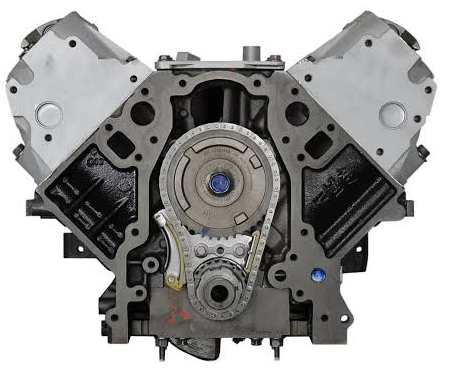
Engineered for durability, both powerplants utilize a heavy-duty cast-iron cylinder block paired with lightweight, high-flowing aluminum cylinder heads. Fuel delivery is managed via a reliable sequential multi-port fuel injection system rather than modern direct injection, which keeps intake valves free from carbon buildup. Utilizing a traditional overhead valve (OHV) pushrod design, these engines lack complex variable valve timing (VVT) in most applications and completely omit active fuel management (AFM) cylinder deactivation, a critical omission that greatly enhances their long-term mechanical simplicity and overall reliability.
These engines were widely deployed across several prominent General Motors vehicles. Primary applications include the GMC Sierra 1500 light-duty pickup truck, the GMC Yukon full-size SUV, and the GMC Savana passenger and cargo transport vans. The corresponding Chevrolet sister models, including the Silverado 1500, Tahoe, and Express vans, also heavily featured these 4.8-liter powerplants during their respective production periods.
Technical Specifications
| Specification | Value |
|---|---|
| Displacement (cc) | 4,807 cc (293 cu in) |
| Max Power (hp (kW) @ RPM) | 255 – 295 hp (190 – 220 kW) @ 5,200 – 5,600 RPM |
| Max Torque (Nm (kg*m) @ RPM) | 386 – 414 Nm (39.4 – 42.2 kg*m) @ 4,000 RPM |
| Fuel Type | Gasoline (Regular unleaded) |
| Fuel Consumption (l/100 km) | 14.0 – 16.8 l/100 km (combined average) |
| Engine Type | V8, 90-degree, naturally aspirated |
| Compression Ratio | 9.1:1 to 9.5:1 |
| Cylinder Bore (mm) | 96.01 mm |
| Piston Stroke (mm) | 83.0 mm |
| Valvetrain | OHV, pushrod, 16-valve |
| Valves per Cylinder | 2 |
| Additional Info | Cast-iron block, aluminum heads, Gen III (LR4) and Gen IV (LY2) architectures |
Common Problems & Reliability
- Intake Manifold Gasket Leaks: Particularly on the Gen III LR4, the factory intake manifold gaskets degrade over time, leading to vacuum leaks, lean running conditions, and rough idling.
- Exhaust Manifold Bolt Failure: Thermal expansion cycles often cause the rear-most steel exhaust manifold bolts to shear off inside the aluminum cylinder head, resulting in a distinct ticking sound upon cold starts.
- Knock Sensor Corrosion: On the LR4, the valley-mounted knock sensors are highly susceptible to moisture intrusion. Water can pool in the sensor wells, corroding the harness and triggering diagnostic trouble codes.
Because these engines completely lack the failure-prone active fuel management (AFM) lifters found in larger displacement Vortec engines of the same era, they are exceptionally reliable. Under proper care and routine servicing, the realistic expected service life of both the LR4 and LY2 routinely exceeds 300,000 miles (480,000 km) before requiring a major overhaul.
Maintenance Tips & Service Schedule
To ensure maximum longevity of these 4.8-liter V8 engines, a structured preventative maintenance schedule must be maintained:
- Engine Oil: Change the engine oil every 5,000 to 7,500 miles (8,000 to 12,000 km) using high-quality 5W-30 viscosity motor oil. Regular oil changes prevent sludge formation and protect the pushrods and lifters.
- Cooling System: Flush the Dex-Cool coolant every 5 years or 150,000 miles (240,000 km). Keeping the coolant clean prevents corrosion at the mating surfaces of the iron block and aluminum heads.
- Ignition Components: Replace spark plugs and high-voltage ignition wires every 100,000 miles (160,000 km) to prevent misfires, which can degrade fuel economy and damage the catalytic converters.
- Exhaust Hardware: Address broken exhaust manifold bolts promptly using upgraded aftermarket clamp kits or high-grade replacement bolts to prevent damaging the aluminum cylinder head threads.
Conclusion
The GMC LR4 and LY2 4.8-liter V8 engines are outstanding, highly durable examples of traditional American pushrod design. By avoiding the modern, complex mechanical systems that plague newer powertrains, these engines deliver exceptional service life and straightforward maintenance. For used vehicle buyers seeking a reliable, heavy-duty truck, van, or SUV, a vehicle equipped with a well-maintained LR4 or LY2 engine is a remarkably safe and sensible purchase.