
Overview & Design Features
The GMC LU3 engine is a prominent member of General Motors’ Vortec 4300 series, a naturally aspirated V6 gasoline engine renowned for its durability and ubiquitous application in light-duty trucks, vans, and SUVs. Manufactured by General Motors, this 4.3-liter (4300 cc) powerplant served as a reliable workhorse across various GMC and Chevrolet models primarily from the late 1990s through the mid-2000s. Its historical significance lies in its direct lineage to GM’s long-standing V6 engine family, offering a balance of power, torque, and fuel efficiency suitable for consumer and commercial hauling needs without the higher costs associated with V8 alternatives.
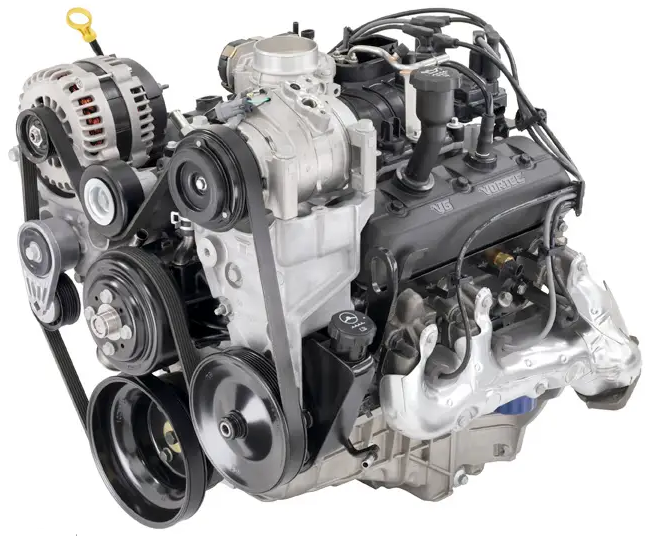
Engineered for robustness, the LU3 features a cast iron cylinder block, providing excellent structural integrity and heat dissipation, paired with lightweight aluminum cylinder heads to optimize weight and enhance thermal efficiency. The valvetrain utilizes an overhead valve (OHV) pushrod design, activating two valves per cylinder. This straightforward architecture contributes to the engine’s compact size and ease of maintenance. Early versions of the LU3 utilized a Sequential Central Port Injection (SCPI) system, characterized by a “spider” assembly with fuel lines running to individual poppet nozzles. Later iterations transitioned to a more conventional Multiport Fuel Injection (MPFI) system for improved fuel delivery and atomization, contributing to better emissions and performance.
The GMC LU3 engine found widespread deployment across a range of popular vehicles, underscoring its versatility and market acceptance. Key models include the Chevrolet S-10 pickup (1999-2004), Chevrolet Blazer (1999-2005), GMC Sonoma (1999-2004), GMC Jimmy (1999-2005), Chevrolet Silverado 1500 (1999-2007), GMC Sierra 1500 (1999-2007), Chevrolet Express (1999-2008), and GMC Savana (1999-2008). It was typically offered as a base or mid-range engine option, often paired with automatic transmissions in both rear-wheel drive and four-wheel drive configurations.
Technical Specifications
| Specification | Value |
|---|---|
| Displacement (cc) | 4300 |
| Max Power (hp (kW) @ RPM) | 190-200 hp (142-149 kW) @ 4400-4800 RPM |
| Max Torque (Nm (kg*m) @ RPM) | 320-339 Nm (33-34.5 kg*m) @ 2800 RPM |
| Fuel Type | Unleaded Gasoline (87 Octane Recommended) |
| Fuel Consumption (l/100 km) | 13-16 (Combined, Varies by Vehicle Application) |
| Engine Type | 90-degree V6 |
| Compression Ratio | 9.2:1 – 9.4:1 |
| Cylinder Bore (mm) | 101.6 |
| Piston Stroke (mm) | 88.4 |
| Valvetrain | OHV (Overhead Valve), Pushrod |
| Valves per Cylinder | 2 |
| Additional Info | Cast Iron Block, Aluminum Cylinder Heads, Hydraulic Roller Lifters, Sequential Central Port Injection (SCPI) or Multiport Fuel Injection (MPFI) |
Common Problems & Reliability
The GMC LU3 engine, while generally robust, is known for a few specific mechanical weak points that can manifest over time. One prevalent issue, particularly in earlier SCPI-equipped versions, is the failure of the “spider” fuel injector assembly. This can lead to misfires, rough idling, poor fuel economy, and difficulty starting. The internal poppet valves can stick or leak, necessitating replacement of the entire assembly. Many owners opt to upgrade to a revised Multiport Fuel Injection (MPFI) style spider assembly for improved reliability and performance.
Another common concern involves the intake manifold gaskets. The original plastic gaskets are prone to degradation and cracking, leading to external coolant leaks, internal coolant consumption, or vacuum leaks. Coolant leaks can cause overheating, while vacuum leaks can result in lean conditions, rough idle, and various drivability issues. Replacement with updated, more durable gasket designs is a common preventative or corrective measure.
Additionally, distributor gear wear can occur in high-mileage examples, leading to erratic ignition timing, misfires, and reduced engine performance. This wear is typically due to inadequate lubrication or material fatigue over extended periods of operation. Careful inspection of the distributor shaft and gear during tune-ups is advisable. With proper and diligent maintenance, including addressing these known issues, the GMC LU3 engine can reliably achieve a service life of 200,000 to 300,000 miles (320,000 to 480,000 km) before requiring a major overhaul.
Maintenance Tips & Service Schedule
- Engine Oil and Filter: Perform oil and filter changes every 3,000 to 5,000 miles (5,000 to 8,000 km) or every six months, whichever comes first. The recommended viscosity is SAE 5W-30. Consistent, high-quality oil changes are critical for the longevity of the OHV valvetrain components.
- Spark Plugs and Wires: Replace spark plugs every 60,000 to 100,000 miles (100,000 to 160,000 km), depending on the specific plug type. Inspect spark plug wires for cracks, corrosion, or degradation and replace as necessary, typically with the plugs.
- Coolant Flush: The cooling system should be flushed and refilled with an appropriate long-life coolant every 5 years or 100,000 miles (160,000 km). Monitor coolant levels regularly and address any unexplained loss promptly.
- Fuel Filter: Replace the fuel filter every 30,000 miles (50,000 km) to ensure clean fuel delivery and protect the fuel injectors from contaminants.
- Air Filter: Inspect the engine air filter every 15,000 miles (24,000 km) and replace as needed, especially when operating in dusty conditions.
- PCV Valve: Inspect and replace the Positive Crankcase Ventilation (PCV) valve every 30,000 miles (50,000 km) to prevent oil sludge buildup and maintain proper crankcase ventilation.
- Timing Chain: The LU3 utilizes a timing chain, designed for the life of the engine. Routine replacement is not typically required, but it should be inspected for excessive slack or noise at high mileage (e.g., over 150,000 miles) if symptoms arise.
Conclusion
The GMC LU3 engine stands as a testament to practical, reliable engineering within the light truck and SUV segment. Its robust cast iron block, proven OHV design, and adequate power output for its displacement make it a capable workhorse. For a used vehicle buyer, the LU3 can represent a safe and reliable choice, particularly if its maintenance history is well-documented. While susceptible to certain known issues such as SCPI injector failures and intake manifold gasket leaks, these problems are well-understood and typically have established, cost-effective repair solutions. A pre-purchase inspection that specifically checks for these common faults is highly recommended. With attentive maintenance and proactive addressing of its few weak points, the LU3 offers substantial longevity and a continued low cost of ownership, making vehicles equipped with this engine a sound investment for utility-focused applications.