
Overview & Design Features
The MG 20L4E is a 2.0-liter turbocharged four-cylinder gasoline engine designed and manufactured by SAIC Motor for its MG and Roewe brand vehicles. Introduced in the mid-2010s as a key member of the NetBlue high-efficiency engine family, this powerplant represents SAIC’s modern push into downsized, high-output turbocharged propulsion. The engine combines competitive power delivery with modern emissions compliance, serving as a flagship powertrain option for mid-size SUVs and sedans across global automotive markets.
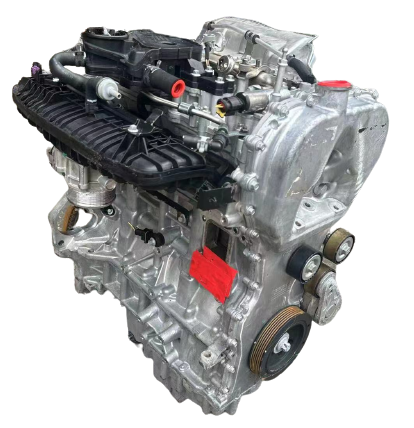
From an engineering standpoint, the 20L4E features an all-aluminum alloy cylinder block and cylinder head, which minimizes weight and enhances thermal conductivity. The engine operates on a dual overhead camshaft (DOHC) configuration with 16 valves. It utilizes gasoline direct injection (GDI) technology, which sprays fuel at high pressure directly into the combustion chambers for optimized fuel atomization and flame propagation. To maximize efficiency across the rev range, the unit is equipped with a dual variable valve timing (DVVT) system on both intake and exhaust sides, alongside a twin-scroll turbocharger designed to reduce lag and provide rapid throttle response.
This engine has been primarily deployed in premium and performance-oriented trims of SAIC-MG vehicles. Notable applications include the MG GS (2015–2019) and the first-generation MG HS (2018–present). It has also found widespread application in other SAIC portfolio products, such as the Roewe RX5 and Roewe 950, where it is typically mated to either a six-speed wet dual-clutch transmission (DCT) or a six-speed torque-converter automatic transmission.
Technical Specifications
| Displacement (cc) | 1995 cc |
| Max Power (hp (kW) @ RPM) | 220 hp (162 kW) @ 5000–5300 RPM |
| Max Torque (Nm (kg*m) @ RPM) | 350 Nm (35.7 kg*m) @ 2500–4000 RPM |
| Fuel Type | Petrol (Gasoline, minimum 95 RON recommended) |
| Fuel Consumption (l/100 km) | Approximately 8.2 to 8.6 l/100 km (combined cycle, vehicle-dependent) |
| Engine Type | Turbocharged Inline-4, Direct Injection (TGI) |
| Compression Ratio | 10.0:1 |
| Cylinder Bore (mm) | 83.0 mm |
| Piston Stroke (mm) | 92.2 mm |
| Valvetrain | DOHC with Dual VVT |
| Valves per Cylinder | 4 |
| Additional Info | Twin-scroll turbocharger, Euro 5 / Euro 6 emissions standards compliant |
Common Problems & Reliability
The MG 20L4E engine has shown decent overall durability, but like many modern direct-injection turbocharged engines, it exhibits specific mechanical vulnerabilities. The most prevalent issue is carbon buildup on the intake valves. Because fuel is injected directly into the combustion chamber rather than upstream of the valves, the detergent additives in fuel do not wash over the intake valves. Over time, this leads to carbon accumulation, which causes rough idling, reduced fuel economy, and eventual power loss.
Additionally, the electronic turbocharger wastegate actuator has been a known failure point on higher-mileage units. Wear in the actuator linkage can cause boost fluctuation, triggering a safe-mode engine map and a check engine light. Oil consumption can also increase if low-quality lubricants are used or if oil changes are neglected, which accelerates wear on the piston rings and the timing chain tensioner. Under a strict maintenance regime, the realistic expected service life of the MG 20L4E is approximately 220,000 to 250,000 kilometers before requiring a major overhaul.
Maintenance Tips & Service Schedule
To preserve the operational integrity of the 20L4E engine and prevent premature failure of its high-tolerance components, strict adherence to a professional service schedule is required:
- Engine Oil: Use only high-quality full synthetic oil meeting ACEA C3 or GM dexos2 specifications. The recommended viscosity is 5W-30. Replace the oil and the oil filter every 8,000 to 10,000 kilometers, or every 12 months, whichever comes first.
- Spark Plugs: Replace the high-performance iridium spark plugs every 40,000 kilometers to prevent ignition misfires and protect the ignition coils.
- Intake Valve Cleaning: Perform a physical or chemical intake valve decarbonization service (such as walnut blasting) every 60,000 to 80,000 kilometers to maintain optimal airflow.
- Coolant: Flush and replace the cooling system fluid every 5 years or 100,000 kilometers using an ethylene-glycol-based OAT (Organic Acid Technology) coolant.
- Timing Chain: Inspect the timing chain tensioner and guide wear during routine servicing past 120,000 kilometers.
Conclusion
The MG 20L4E engine is a modern, punchy, and technologically competitive powerplant that offers strong performance for mid-size vehicles. For a used car buyer, this engine represents a safe and reliable purchase, provided there is verifiable documentation of consistent oil changes and high-quality fuel usage. Prospective buyers should prioritize vehicles with comprehensive service histories to avoid the costs associated with carbon buildup and turbocharger wear.