
Overview & Design Features
The GM High Feature LF1 engine is a 3.0-liter, naturally aspirated V6 engine developed by General Motors. Introduced for the 2010 model year, this power plant is part of the modular GM High Feature (HFV6) engine family. Operating as a downsized sibling to the larger 3.6-liter LLT engine, the LF1 was engineered to balance performance with improved fuel efficiency and reduced emissions during a period of shifting global automotive standards. It served as a premium entry-level engine for several upscale platforms.
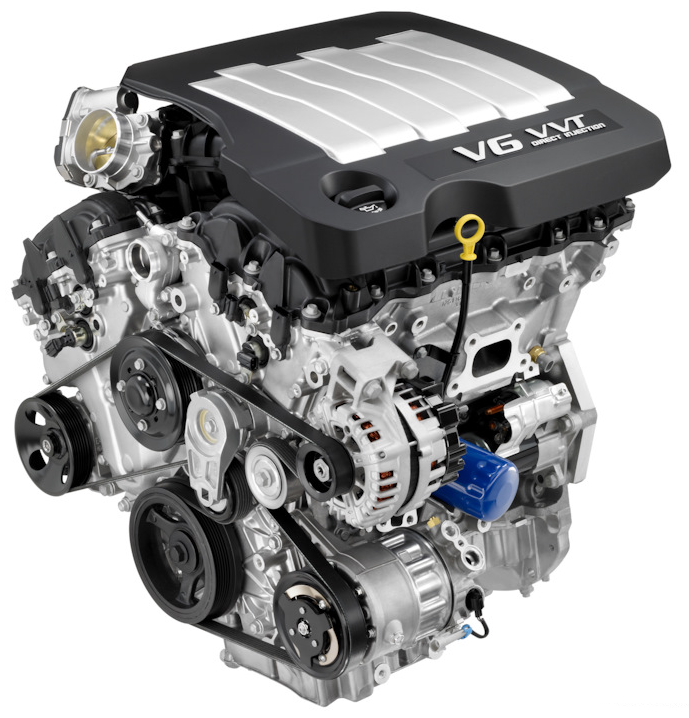
Built with a lightweight aluminum alloy cylinder block and cylinder heads, the LF1 features a 60-degree V configuration that minimizes secondary engine vibrations. The core of its technical design is Spark Ignition Direct Injection (SIDI), which delivers fuel directly into the combustion chambers under high pressure. This is paired with Dual Overhead Camshafts (DOHC) and four valves per cylinder controlled by a continuously variable valve timing (VVT) system on both intake and exhaust sides to optimize combustion efficiency.
The LF1 engine was primarily deployed in premium and mid-size vehicles across General Motors’ portfolio between 2010 and 2014. Key applications include the second-generation Cadillac CTS (2010–2014) in both rear-wheel and all-wheel-drive configurations, and the second-generation Cadillac SRX crossover (2010–2011). It was also utilized in other GM vehicles, including the Buick LaCrosse (2010), Chevrolet Equinox LTZ (2010–2012), GMC Terrain (2010–2012), and the Saab 9-4X (2011).
Technical Specifications
| Displacement (cc) | 2,997 cc |
| Max Power (hp (kW) @ RPM) | 270 hp (201 kW) @ 7,000 RPM |
| Max Torque (Nm (kg*m) @ RPM) | 302 Nm (30.8 kg*m) @ 5,700 RPM |
| Fuel Type | Gasoline (Premium Unleaded) |
| Fuel Consumption (l/100 km) | Approximately 10.7 l/100 km (combined depending on vehicle model) |
| Engine Type | 60-degree V6, Direct Injection |
| Compression Ratio | 11.7:1 |
| Cylinder Bore (mm) | 89.0 mm |
| Piston Stroke (mm) | 80.3 mm |
| Valvetrain | DOHC with dual continuous variable valve timing (VVT) |
| Valves per Cylinder | 4 |
| Additional Info | Features electronic throttle control and polymer-coated piston skirts |
Common Problems & Reliability
Despite its advanced design, the LF1 has documented issues typical of the GM High Feature V6 family. First, timing chain stretch remains a notable point of failure. The complex three-chain timing system relies heavily on consistent oil pressure; oil starvation or delayed oil changes cause premature wear on the chains and guides, triggering timing correlation codes (such as P0008). Second, because the LF1 utilizes direct fuel injection, it lacks the fuel wash over the intake valves that port-injected engines benefit from, leading to gradual carbon buildup on the intake valves over time. This restriction reduces airflow, causing rough idling and misfires. Lastly, some owners report high oil consumption, often exacerbated by a clogged Positive Crankcase Ventilation (PCV) system. Under optimal operating conditions and strict maintenance, the LF1 engine can achieve a service life of 150,000 to 200,000 miles (240,000 to 320,000 km) before requiring a major overhaul.
Maintenance Tips & Service Schedule
To maximize the lifespan of the LF1, owners must adhere to a rigorous preventative maintenance schedule:
- Engine Oil: Change the engine oil every 5,000 miles (8,000 km) using Dexos1 certified fully synthetic 5W-30 oil. Do not rely on the vehicle’s Oil Life Monitor to stretch intervals, as clean oil is critical for timing chain longevity.
- Spark Plugs: Replace the spark plugs every 80,000 to 100,000 miles to ensure optimal ignition.
- Intake Valve Cleaning: Perform an intake tract carbon cleaning service every 40,000 to 50,000 miles to mitigate the carbon buildup.
- Cooling System: Flush the Dex-Cool coolant every 5 years or 100,000 miles to protect the aluminum components.
Conclusion
The GM High Feature LF1 is a sophisticated V6 that delivers smooth power and respectable performance. However, due to its susceptibility to timing chain wear and carbon buildup, it is not a neglect-friendly engine. For a used car buyer, the LF1 is a safe choice only if there is comprehensive proof of frequent oil changes and proactive maintenance from the previous owner. Without a documented service history, buyers should exercise caution.