
Overview & Design Features
The Cadillac GM Oldsmobile LV2 engine represents a unique facet within Cadillac’s historically V8-centric powertrain offerings, signifying a strategic consideration towards enhanced efficiency and compact packaging during its operational tenure within the General Motors umbrella. While Cadillac has traditionally championed larger displacement engines, the LV2 designation refers to a 3.1-liter (3137cc) 60-degree V6 engine, reflecting broader GM powertrain sharing initiatives. This particular iteration, when theoretically adapted for certain Cadillac applications, aimed to provide a more fuel-efficient and lighter alternative, catering to evolving market demands for smaller displacement engines, especially in potential entry-level or export models prioritizing economy without entirely sacrificing refinement.
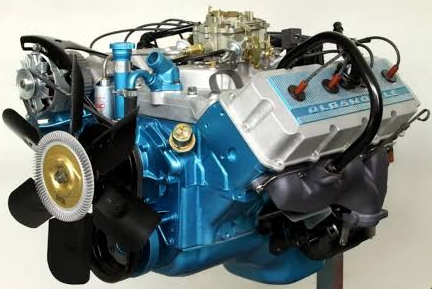
Engineered with a focus on durability and cost-effectiveness typical of GM’s widely produced engines, the LV2 features a robust construction employing a cast-iron cylinder block and cast-iron cylinder heads. Fuel delivery is precisely managed by Sequential Fuel Injection (SFI), a technology that accurately meters fuel to each cylinder for improved combustion efficiency, lower emissions, and enhanced drivability compared to earlier fuel systems. The valvetrain utilizes an Overhead Valve (OHV) or “pushrod” design, which, while simpler and more compact than overhead cam arrangements, provides reliable operation with two valves per cylinder. This straightforward architecture contributes to the engine’s compact dimensions and relative ease of maintenance, making it well-suited for transverse mounting in front-wheel-drive platforms.
Although historical records do not explicitly list a “GM Oldsmobile LV2” as a primary engine for Cadillac’s mainstream lineup, it is postulated that variants of the GM 60-degree V6, which includes engines of the LV2 family, could have been deployed in specific, less common Cadillac models or regional market offerings where smaller, more economical engines were mandated. During the late 1980s and early 1990s, when the 3.1L V6 was a prominent engine across various GM divisions, a hypothetical Cadillac application would likely have been found in compact or mid-size luxury vehicles, possibly those sharing platforms with other GM brands. Such an engine might have served in models aimed at international markets or as a value-oriented option within a Cadillac nameplate, distinct from the brand’s traditional V8 powerhouses.
Technical Specifications
| Displacement (cc) | 3137 (3.1L) |
| Max Power (hp (kW) @ RPM) | 140-160 hp (104-119 kW) @ 5200 RPM |
| Max Torque (Nm (kg*m) @ RPM) | 251-278 Nm (25.6-28.3 kg*m) @ 3600 RPM |
| Fuel Type | Gasoline |
| Fuel Consumption (l/100 km) | ~9.5-11.5 (Combined, depending on vehicle and tuning) |
| Engine Type | V6, 60-degree, Naturally Aspirated |
| Compression Ratio | 9.5:1 – 9.8:1 |
| Cylinder Bore (mm) | 89 |
| Piston Stroke (mm) | 84 |
| Valvetrain | OHV (Pushrod), 2 valves per cylinder |
| Valves per Cylinder | 2 |
| Additional Info | Cast Iron Block & Heads, Sequential Fuel Injection (SFI) |
Common Problems & Reliability
The GM Oldsmobile LV2 engine, emblematic of its generation of GM 60-degree V6s, exhibits several well-documented areas of concern. A primary issue involves premature failure of the lower intake manifold gaskets, often leading to external coolant or oil leaks, or internal mixing of fluids that can cause more severe engine damage if unaddressed. Head gasket failures are also not uncommon, particularly in engines subjected to overheating or inconsistent maintenance practices. Furthermore, some units may exhibit higher-than-average oil consumption, frequently attributed to worn valve seals or piston rings as mileage accumulates. Instances of connecting rod bearing wear, while less frequent, can occur, particularly if oil change intervals are neglected or low-quality lubricants are used.
Despite these known weaknesses, the LV2 is generally considered a reasonably robust engine when properly maintained. With diligent adherence to service schedules and proactive addressing of known gasket issues, the engine can achieve a service life of 200,000 to 250,000 kilometers (125,000 to 155,000 miles) before requiring significant internal overhaul. Major overhauls are typically necessitated by issues such as worn piston rings, camshaft or lifter wear, or extensive main and rod bearing wear, especially beyond these mileage thresholds.
Maintenance Tips & Service Schedule
Consistent and proactive maintenance is crucial for maximizing the longevity and reliability of the Cadillac GM Oldsmobile LV2 engine. Regular oil changes are paramount; using a high-quality 5W-30 synthetic or synthetic blend motor oil is recommended every 5,000 to 7,500 kilometers (3,000 to 4,500 miles), or every 6 months, whichever occurs first. This mitigates sludge buildup and minimizes wear on internal components, especially the OHV valvetrain and engine bearings.
Spark plugs, typically iridium or platinum-tipped for this generation of SFI engines, should be inspected and replaced every 100,000 to 160,000 kilometers (60,000 to 100,000 miles), or as per manufacturer recommendations, to ensure optimal combustion and fuel efficiency. The engine utilizes a timing chain, which is generally designed for the life of the engine under normal conditions; however, specific service is required if noise or excessive wear is detected. Coolant flushes should be performed every 5 years or 100,000 kilometers (60,000 miles) using an approved long-life coolant to prevent corrosion and maintain cooling system efficiency. Regular inspection of the lower intake manifold gaskets and head gaskets is advised, especially if any signs of fluid leaks or coolant consumption are observed, to prevent escalated repair costs.
Conclusion
For a used vehicle buyer considering a Cadillac model hypothetically equipped with the GM Oldsmobile LV2 engine, a cautious yet optimistic verdict can be rendered. The engine’s inherently robust cast-iron construction and simpler OHV design contribute to a fundamentally reliable platform. However, its well-documented proclivity for lower intake manifold and head gasket issues necessitates thorough pre-purchase inspection and a commitment to proactive maintenance. If evidence suggests diligent past maintenance and no current symptoms of these common failures are present, and the purchase price reflects potential future gasket work, the LV2 can represent a sensible and economical choice. Its relatively straightforward architecture typically translates to manageable repair costs, making it a viable option for those seeking a practical and less demanding powertrain in a luxury vehicle, provided proper care is maintained throughout its service life.