
Overview & Design Features
The Cadillac LW2, widely recognized by its “Blackwing” moniker, represents a pinnacle of modern American performance engineering. Developed exclusively by Cadillac, this 4.2-liter (4199 cc) twin-turbocharged V8 engine was designed as a bespoke, hand-built powerplant for the brand’s luxury performance vehicles. Its introduction marked a significant moment for Cadillac, showcasing a commitment to unique, high-output engines distinct from General Motors’ broader corporate offerings.
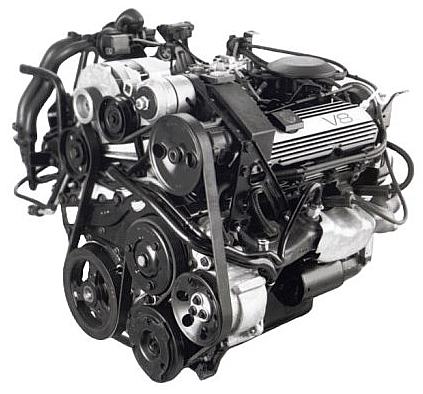
Engineered for exhilarating performance, the LW2 features an all-aluminum construction for both its cylinder block and cylinder heads, optimizing weight distribution and heat dissipation. It utilizes a sophisticated dual overhead camshaft (DOHC) design with four valves per cylinder and continuously variable valve timing (VVT) on both intake and exhaust. Fuel delivery is managed by a high-pressure direct injection (DI) system, ensuring precise fuel atomization and efficiency. A key design characteristic is its “hot V” configuration, where the twin turbochargers are mounted within the valley of the V8, minimizing turbo lag and contributing to a compact engine package. This setup is complemented by a water-to-air intercooling system, effectively managing intake air temperatures for sustained performance.
The Cadillac LW2 engine was exclusively deployed in the range-topping variants of the Cadillac CT6 luxury sedan. Its primary application was in the high-performance CT6-V, produced from 2019 to 2020. A slightly detuned version was also available in the late-model 2019-2020 CT6 Platinum trim, offering robust performance in a less overtly aggressive package.
Technical Specifications
| Displacement (cc) | 4199 |
| Max Power (hp (kW) @ RPM) | 550 (410) @ 5700 (CT6-V) |
| Max Torque (Nm (kg*m) @ RPM) | 640 (65.3) @ 2400-5200 (CT6-V) |
| Fuel Type | Premium Unleaded (91+ RON) |
| Fuel Consumption (l/100 km) | 12.4 (Combined EPA estimate) |
| Engine Type | Twin-Turbocharged DOHC V8 |
| Compression Ratio | 9.8:1 |
| Cylinder Bore (mm) | 86 |
| Piston Stroke (mm) | 90.5 |
| Valvetrain | DOHC, Continuously Variable Valve Timing (VVT) |
| Valves per Cylinder | 4 |
| Additional Info | “Hot V” turbocharger configuration, Water-to-Air Intercooling, Aluminum Block & Heads. A 500 hp (373 kW) version was also offered in the CT6 Platinum. |
Common Problems & Reliability
As a relatively new and low-production, bespoke performance engine, widespread common issues for the LW2 “Blackwing” are not extensively documented in the same manner as high-volume engines. However, like many modern direct-injection, twin-turbocharged V8s, certain characteristics and potential long-term concerns can be anticipated.
- Carbon Buildup: Direct injection engines, without port injection to wash intake valves, are susceptible to carbon deposits on intake valves over time. This can lead to reduced airflow, decreased performance, and potential misfires, typically requiring periodic walnut blasting or chemical cleaning.
- Turbocharger Longevity: The twin-turbochargers, especially given their “hot V” placement, operate under significant thermal stress. While designed for durability, aggressive driving and inadequate cool-down procedures could potentially shorten their lifespan or lead to wastegate issues over very high mileage.
- Bespoke Part Availability and Cost: Due to the LW2’s exclusive and hand-built nature, replacement parts for specific engine components are likely to be specialized, expensive, and potentially have longer lead times compared to parts for more common GM engines. This affects repair costs and service convenience.
Under proper maintenance and responsible driving, a service life exceeding 150,000 to 200,000 miles (approximately 240,000 to 320,000 km) before requiring a major overhaul is a realistic expectation for this robustly engineered V8.
Maintenance Tips & Service Schedule
- Oil Changes: Utilize a high-quality, fully synthetic engine oil with the manufacturer-recommended viscosity (e.g., 0W-40 or 5W-40). Due to its high-performance nature, more frequent oil changes are advisable, typically every 5,000-7,500 miles (8,000-12,000 km) or annually, whichever comes first, even if the vehicle’s oil life monitoring system suggests longer intervals.
- Spark Plugs: Replace iridium-tipped spark plugs at approximately 60,000-75,000 miles (96,000-120,000 km) to maintain optimal combustion efficiency.
- Air Filters: Inspect engine air filters regularly and replace them every 15,000-30,000 miles (24,000-48,000 km), or more frequently in dusty conditions, to ensure proper airflow to the turbochargers.
- Coolant System: Perform a coolant flush and refill with the specified long-life coolant (e.g., Dex-Cool compatible) every 5 years or 100,000 miles (160,000 km). Pay attention to the intercooler’s separate cooling circuit.
- Timing System: The LW2 employs a robust timing chain system, which is generally designed for the life of the engine. Routine replacement is typically not required unless specific issues arise.
- Fuel System Cleaning: Consider periodic fuel system cleaning additives or professional intake valve cleaning to mitigate potential carbon buildup associated with direct injection.
Conclusion
The Cadillac LW2 “Blackwing” engine stands as a testament to Cadillac’s engineering prowess, offering exceptional performance and a unique driving experience. For a used vehicle buyer, it represents a strong choice for those prioritizing exclusivity, power, and sophisticated engineering. Its relatively low production volume and bespoke nature mean that while it is a robust and well-engineered unit, potential ownership considerations include higher maintenance costs due to specialized parts and labor, as well as the necessity for premium fuel. With diligent adherence to manufacturer-recommended maintenance schedules and an understanding of its high-performance characteristics, the LW2 can provide many years of reliable, exhilarating motoring for the discerning enthusiast.