
Overview & Design Features
The Cadillac LZ1 is an RPO (Regular Production Option) code designation for a specific application of the General Motors Gen IV small block 6.2-liter (376 cu in) V8 engine, primarily deployed in the Cadillac Escalade and Escalade ESV. Part of GM’s highly successful small block engine family, the LZ1 represents a potent, naturally aspirated overhead valve (OHV) gasoline engine engineered to provide robust power and torque for premium full-size luxury SUVs. Its significance lies in its combination of performance, relative simplicity, and reliability within a demanding vehicle segment, marking it as a workhorse V8 for Cadillac’s flagship SUV during its production run.
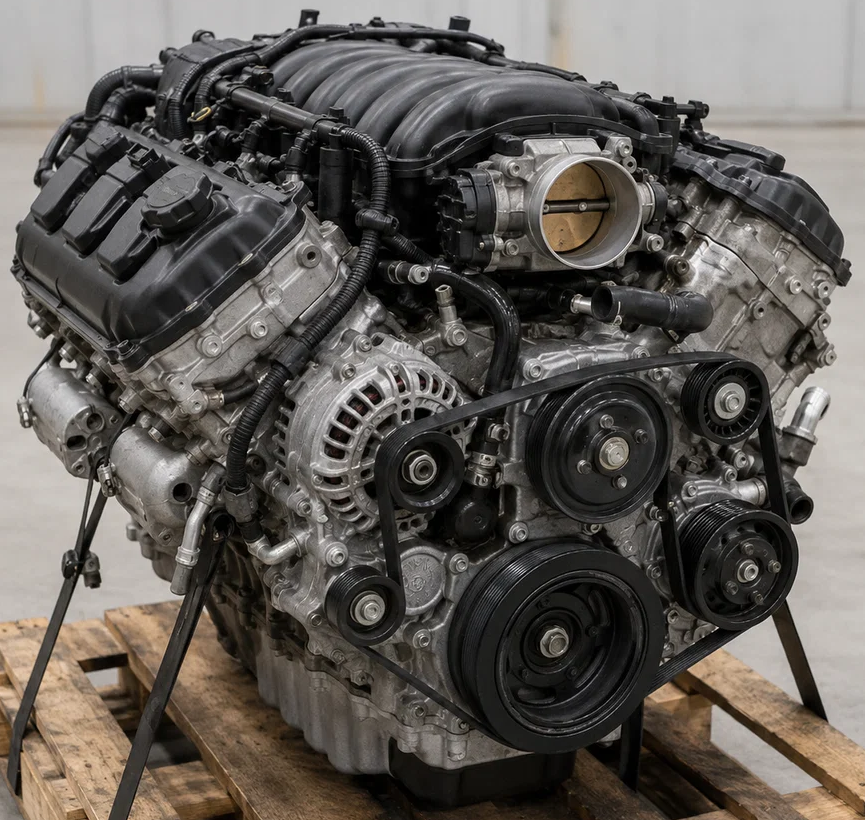
At its core, the LZ1 engine features an all-aluminum construction, utilizing a cast aluminum cylinder block with pressed-in cast iron liners and matching aluminum cylinder heads. This lightweight design contributes to overall vehicle efficiency and improved weight distribution. Fuel delivery is managed by sequential port fuel injection (SFI), ensuring precise fuel atomization and mixture control. A key technological inclusion is Variable Valve Timing (VVT), which continuously adjusts camshaft phasing to optimize valve overlap for improved low-end torque, high-end power, and fuel economy across the RPM range. Unlike many other Gen IV V8s, the LZ1 application in the Escalade typically did not incorporate Active Fuel Management (AFM) or Displacement on Demand (DOD), a feature often associated with potential reliability concerns in other engines.
The Cadillac LZ1 engine was exclusively utilized in the 2007 to 2014 model year Cadillac Escalade and Escalade ESV. This deployment coincided with the GMT900 platform, a significant update for GM’s full-size truck and SUV architecture. The LZ1 was typically paired with a robust 6L80E six-speed automatic transmission, forming a drivetrain designed for substantial towing capacity, strong acceleration, and refined cruising performance suitable for the luxury SUV market.
Technical Specifications
| Specification | Value |
|---|---|
| Displacement (cc) | 6162 (6.2L / 376 cu in) |
| Max Power (hp (kW) @ RPM) | 403 (301) @ 5700 |
| Max Torque (Nm (kg*m) @ RPM) | 565 (57.6) @ 4300 |
| Fuel Type | Premium Unleaded (91+ RON recommended) |
| Fuel Consumption (l/100 km) | Approximately 14-18 (combined, highly dependent on driving conditions and vehicle load) |
| Engine Type | V8, 90-degree, OHV, Pushrod |
| Compression Ratio | 10.4:1 |
| Cylinder Bore (mm) | 103.25 |
| Piston Stroke (mm) | 92.0 |
| Valvetrain | OHV, 2 valves per cylinder, Variable Valve Timing (VVT) |
| Valves per Cylinder | 2 |
| Additional Info | All-aluminum block and heads; Sequential Port Fuel Injection (SFI); typically no Active Fuel Management (AFM) |
Common Problems & Reliability
The LZ1 engine is generally considered a highly reliable powerplant, benefiting from the robust design principles of the GM Gen IV small block family and the absence of the often problematic Active Fuel Management (AFM) system. However, specific issues can arise with mileage and age. Common concerns include harmonic balancer failures, which can manifest as vibration or serpentine belt issues. The rubber isolator within the balancer can degrade, necessitating replacement. Oil pressure sensor failures are also relatively common, leading to erroneous oil pressure readings on the dashboard but not necessarily indicating an actual oil pressure problem. Additionally, valve cover gaskets and PCV (Positive Crankcase Ventilation) systems can develop leaks over time, typically presenting as minor oil seepage. With diligent maintenance, the LZ1 engine is capable of exceeding 250,000 miles (400,000 km) before requiring any major internal overhaul.
Maintenance Tips & Service Schedule
Proper maintenance is paramount to ensuring the longevity and performance of the LZ1 engine. Regular oil changes using a high-quality full synthetic 5W-30 engine oil are recommended every 7,500 miles (12,000 km) or according to the vehicle’s Oil Life Monitor (OLM) system. Spark plugs should be replaced every 100,000 miles (160,000 km). The engine utilizes a timing chain, which is designed to last the life of the engine and typically does not require replacement under normal circumstances. The cooling system, filled with long-life Dex-Cool coolant, should be serviced with a flush and refill every 5 years or 100,000 miles (160,000 km). Air filters and cabin filters require inspection at every service and replacement as needed, typically every 15,000-30,000 miles (24,000-48,000 km) depending on driving conditions. The accessory drive belt should be inspected for cracks or wear at each oil change and replaced around 50,000-70,000 miles (80,000-110,000 km).
Conclusion
The Cadillac LZ1 engine stands as a testament to the enduring appeal and reliability of the GM small block V8 architecture. Its strong power output, robust construction, and the absence of complex cylinder deactivation systems contribute to its reputation for durability and consistent performance. For a used vehicle buyer, an Escalade equipped with the LZ1 engine represents a generally safe and reliable choice, provided the vehicle has a documented history of consistent and proper maintenance. The engine delivers a compelling blend of luxury, capability, and long-term serviceability, making it a desirable powerplant within its segment.