
Produced between 2008 and 2013, the 1.8-liter turbocharged Audi CDHB 1.8 TFSI engine was fitted to the A4, A5 in the B8 body, and the A4 clone in the B7 body known as the Seat Exeo. The Audi A4 B8 was equipped with the first generation EA888 unit with the CABB index from 2007 to 2008.
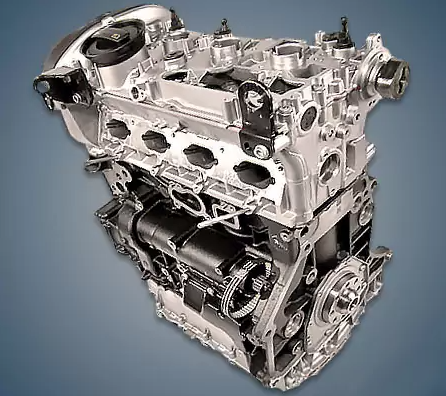
The EA888 gen2 series includes: CDAA, CDAB, CDHA, CDHB, CCZA, CCZB, CCZC, CCZD, CDNB, CDNC, CAEA, CAEB.
Specifications
| Production years | 2008-2013 |
| Displacement, cc | 1798 |
| Fuel system | direct injection |
| Power output, hp | 160 |
| Torque output, Nm | 250 |
| Cylinder block | cast iron R4 |
| Block head | aluminum 16v |
| Cylinder bore, mm | 82.5 |
| Piston stroke, mm | 84.2 |
| Compression ratio | 9.6 |
| Features | DOHC, AVS |
| Hydraulic lifters | yes |
| Timing drive | chain |
| Phase regulator | on the intake shaft |
| Turbocharging | KKK K03 |
| Recommended engine oil | 5W-30 |
| Engine oil capacity, liter | 4.6 |
| Fuel type | petrol |
| Euro standards | EURO 5 |
| Fuel consumption, L/100 km (for Audi A4 2009) — city — highway — combined |
9.9 5.5 7.1 |
| Engine lifespan, km | ~250 000 |
| Weight, kg | 144 |
The engine was installed on:
- Audi A4 B8 (8K) in 2008 – 2011;
- Audi A5 1 (8T) in 2009 – 2011;
- Seat Exeo 1 (3R) in 2010 – 2013.
Disadvantages of the Audi CDHB engine
The owner of a car with such an engine spends their entire life battling oil consumption.
The manufacturer has made a number of piston options available, and changing them frequently is beneficial.
The motor’s interior is rapidly covered in soot as a result of the continuous oil fumes.
Purchasing forged pistons is one way to solve the oil burner issue.
Additionally, there is a very short-lived timing chain that occasionally spans 100,000 kilometers.
Injection pumps, water pumps, and ignition coils are not the best resources.