
Since 2015, several models with longitudinal engines, including the A4, A5, and Q7, have been equipped with the 2.0-liter turbocharged Audi CYRB or A5 2.0 TFSI engine. This power unit is a member of the second power class, or EA888 gen3b series.
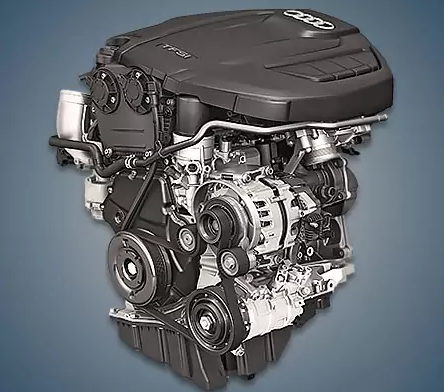
The EA888 gen3b series includes: CZPA, CZPB, DKZA, CVKB, CYRB, CYRC.
Specifications
| Production years | since 2015 |
| Displacement, cc | 1984 |
| Fuel system | FSI + MPI |
| Power output, hp | 250 |
| Torque output, Nm | 370 |
| Cylinder block | cast iron R4 |
| Block head | aluminum 16v |
| Cylinder bore, mm | 82.5 |
| Piston stroke, mm | 92.8 |
| Compression ratio | 9.6 |
| Features | AVS on the exhaust |
| Hydraulic lifters | yes |
| Timing drive | chain |
| Phase regulator | on both shafts |
| Turbocharging | IHI IS20 |
| Recommended engine oil | 0W-20 |
| Engine oil capacity, liter | 5.7 |
| Fuel type | petrol |
| Euro standards | EURO 6 |
| Fuel consumption, L/100 km (for Audi A5 2017) — city — highway — combined |
7.5 5.0 6.2 |
| Engine lifespan, km | ~240 000 |
| Weight, kg | 132 |
The engine was installed on:
- Audi A4 B9 (8W) since 2015;
- Audi A4 B9 Allroad (8W) since 2016;
- Audi A5 2 (F5) since 2016;
- Audi Q7 2 (4M) since 2015.
Disadvantages of the Audi CYRB engine
As of right now, the motor has shown itself to be reliable and has had very few failures;
You can find complaints regarding oil consumption if you delve into the specialized forums;
The timing chain can stretch and start to rattle after about 120 thousand kilometers;
The engine’s adjustable oil pump and plastic pump are also weak points.