
Since 2016, the company has assembled the 2.0-liter Volkswagen DBGC 2.0 TDI diesel engine, which is found in the company’s most well-known crossovers, the Skoda Kodiaq and the second generation Tiguan. This motor is basically a diesel engine with the DFGA index that has been simplified for the environment.
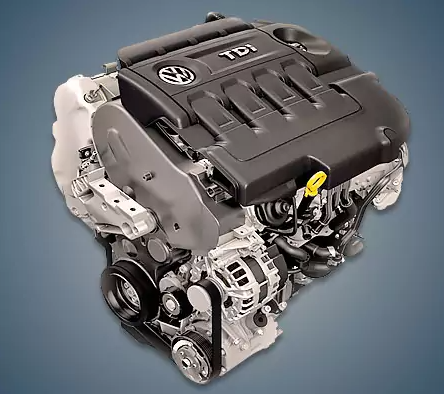
DCXA, CRLB, CRMB, DETA, DBGC, DFGA, DFBA, and DAUA are additional models in the EA288 series.
Specifications
| Production years | since 2016 |
| Displacement, cc | 1968 |
| Fuel system | Common Rail |
| Power output, hp | 150 |
| Torque output, Nm | 340 |
| Cylinder block | cast iron R4 |
| Block head | aluminum 16v |
| Cylinder bore, mm | 81 |
| Piston stroke, mm | 95.5 |
| Compression ratio | 16.2 |
| Features | DOHC, intercooler |
| Hydraulic lifters | yes |
| Timing drive | belt |
| Phase regulator | no |
| Turbocharging | Mahle BM70B |
| Recommended engine oil | 5W-30 |
| Engine oil capacity, liter | 5.7 |
| Fuel type | diesel |
| Euro standards | EURO 5 |
| Fuel consumption, L/100 km (for Volkswagen Tiguan 2018) — city — highway — combined |
7.6 5.1 6.1 |
| Engine lifespan, km | ~330 000 |
The engine was installed on:
- Skoda Kodiaq 1 (NS) since 2017;
- Volkswagen Tiguan 2 (AD) since 2016.
Disadvantages of the VW DBGC engine
Extraneous sounds and workplace vibrations are most frequently discussed on specialized forums;
More owners complain about coolant or lubricant leaks; the timing drive is belt-driven and needs maintenance because when it breaks, the valves always bend; the diesel particulate filter or the EGR valve may already be clogged closer to 100,000 kilometers.