
The pre-styling version of the renowned first-generation Crafter minibus was equipped with a 2.5-liter Volkswagen BJM or Crafter 2.5 diesel engine, which was assembled between 2006 and 2010. This unit changed the index to CECB after adopting stricter EURO 5 environmental standards.
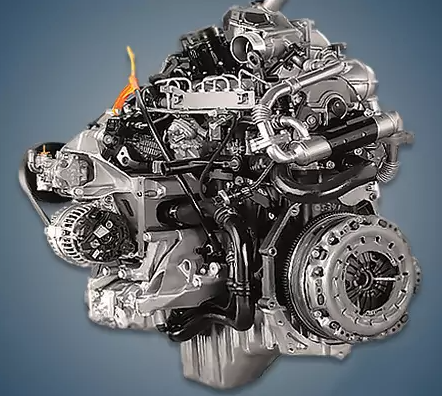
CN, AAS, AAT, 1T, AEL, AHD, BJK, and BJM are all part of the EA381 series.
Specifications
| Production years | 2006-2010 |
| Displacement, cc | 2461 |
| Fuel system | Common Rail |
| Power output, hp | 163 |
| Torque output, Nm | 350 |
| Cylinder block | cast iron R5 |
| Block head | aluminum 10v |
| Cylinder bore, mm | 81 |
| Piston stroke, mm | 95.5 |
| Compression ratio | 16.8 |
| Features | SOHC |
| Hydraulic lifters | yes |
| Timing drive | belt |
| Phase regulator | no |
| Turbocharging | MHI TD04L |
| Recommended engine oil | 5W-30 |
| Engine oil capacity, liter | 9.0 |
| Fuel type | diesel |
| Euro standards | EURO 3/4 |
| Fuel consumption, L/100 km (for VW Crafter 2008) — city — highway — combined |
11.5 7.6 8.9 |
| Engine lifespan, km | ~280 000 |
| Weight, kg | 220 |
The engine was installed on:
- Volkswagen Crafter 1 (2E) in 2006 – 2010.
Disadvantages of the VW BJM engine
Although piezo injectors have high fuel quality requirements, this diesel engine is incredibly dependable.
The system for altering the turbine’s geometry is one of the unit’s well-known weak points.
Because the valves bend when the timing belt breaks, it is crucial to keep an eye on its condition.
Grease leaks through the seals and antifreeze leaks through the flanges occur frequently.
Condensate in the engine breather frequently freezes during the winter.