
From 1994 to 2000, the company produced the 2.0-liter Saab B204i engine, which was used in nearly all of the company’s models at the time, including the 900, 9000, and 9-3. This is a basic atmospheric engine that can be used to modify the cars that are already on the list.
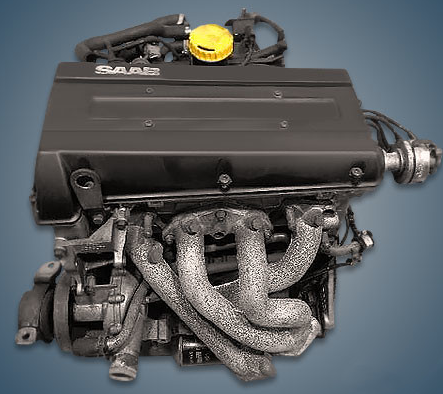
B204E, B204i, B204L, and B205E are 2.0-liter H-series engines.
Specifications
| Production years | 1994-2000 |
| Displacement, cc | 1985 |
| Fuel system | distributed injection |
| Power output, hp | 130 |
| Torque output, Nm | 177 |
| Cylinder block | cast iron R4 |
| Block head | aluminum 16v |
| Cylinder bore, mm | 90 |
| Piston stroke, mm | 78 |
| Compression ratio | 10.0 |
| Features | Bosch Motronic |
| Hydraulic lifters | yes |
| Timing drive | chain |
| Phase regulator | no |
| Turbocharging | no |
| Recommended engine oil | 5W-40 |
| Engine oil capacity, liter | 4.0 |
| Fuel type | petrol |
| Euro standards | EURO 2/3 |
| Fuel consumption, L/100 km (for Saab 900 1996) — city — highway — combined |
10.0 6.3 8.3 |
| Engine lifespan, km | ~350 000 |
The engine was installed on:
- Saab 900 II (NG) in 1994 – 1998;
- Saab 9000 I in 1994 – 1996;
- Saab 9-3 I (YS3D) in 1998 – 2000.
Disadvantages of the Saab B204i engine
Although this naturally aspirated engine is dependable, breakdowns occur at high mileage;
Balance shafts are the primary source of issues; they are frequently removed;
The timing chain rattles but does not jump after 200,000 kilometers;
pipes and hoses that are difficult to deliver and eventually break;
The oil pump, the mass air flow sensor, and the short-lived wiring are additional engine weak points.