
Only the first generation Megane coupe and the Laguna 2 prior to restyling were equipped with the 2.0-liter Renault F5R or 2.0 idE engine, which was assembled at the company’s factory between 1999 and 2003. The Siemens direct fuel injection system sets this unit apart.
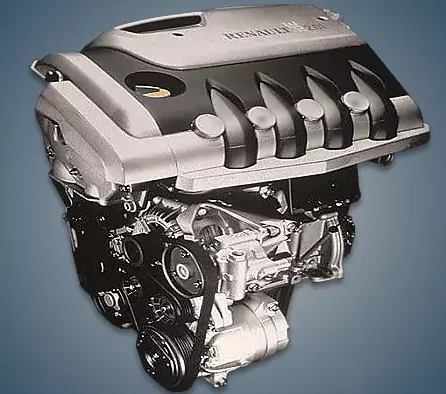
F3P, F4P, F7P, F2R, F3R, F4R, F4Rt, F5R, and F7R are all part of the F-series.
A 2.0-liter engine with direct fuel injection made its debut in the Megane Coupe in 1999. This engine, which had a cast-iron cylinder block, an aluminum 16-valve head with hydraulic compensators, a timing belt drive, an ignition system with two dual coils from Sagem, and an EGR valve, was designed to replicate the engine that was already well-liked at the time under the F4R index. The engine’s unique Siemens direct fuel injection system was one of its features.
This engine proved to be so unpredictable that production was soon discontinued, and it wasn’t until nearly a decade later that Renault dared to revisit the concept of such engines.
The engine was mounted on:
- Renault Megane 1 (X64) in 1999 – 2001;
- Renault Laguna 2 (X74) in 2001 – 2003.
Specifications
| Production years | 1999-2003 |
| Displacement, cc | 1998 |
| Fuel system | direct injection |
| Power output, hp | 140 |
| Torque output, Nm | 200 |
| Cylinder block | cast iron R4 |
| Block head | aluminum 16v |
| Cylinder bore, mm | 82.7 |
| Piston stroke, mm | 93 |
| Compression ratio | 10.0 |
| Hydraulic lifters | yes |
| Timing drive | belt |
| Turbocharging | no |
| Recommended engine oil | 5W-30, 5W-40 |
| Engine oil capacity, liter | 6.0 |
| Fuel type | petrol |
| Euro standards | EURO 3 |
| Fuel consumption, L/100 km (for Renault Laguna 2002) — city — highway — combined |
10.7 6.2 7.8 |
| Engine lifespan, km | ~300 000 |
| Weight, kg | 145 |
Disadvantages of the Renault F5R engine
The vagaries of the fuel system are somehow linked to all of the engine’s major issues: the injection pump wears out, the pressure regulator malfunctions, and the line filter becomes clogged. Additionally, a decline in the booster pump’s performance can occasionally be the reason.
This motor’s unreliable ignition system is another flaw. The manufacturer suggests pricey iridium candles, and Sagem twin coils and their high-voltage wires stand out for having a low resource.
Car owners with such a unit frequently experience an oil burner after 150,000 kilometers, and worn caps or stuck oil scraper rings are typically the culprits. On the other hand, consumption happens much later if you use high-quality oil.
The constantly sticking EGR valve with an electric drive causes a lot of problems for the owners. Here, lubrication leaks are also frequent, and when the timing belt breaks, the valves are also bent.