
From 1997 to 2003, the company manufactured the 1.9-liter diesel engine F9Qt or F9Q 1.9 dTi and fitted it to its most well-known models, including the Volvo S40, Megane, and Scenic. A Common Rail variant of this engine, identified by the dCi suffix, has been manufactured since 1998.
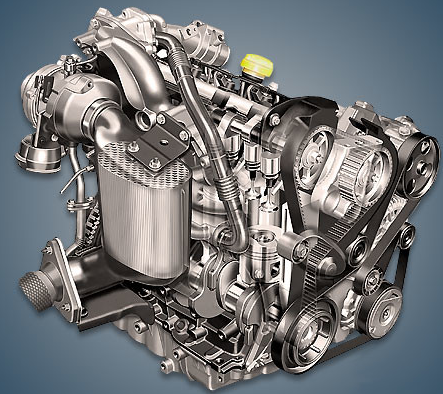
F8M, F8Q, and F9Q dCi are additional F-series diesels.
The Megan and Scenic models introduced a new 1.9-liter diesel engine in 1997. This unit’s direct fuel injection system with the Bosch VP37 electronic injection pump set it apart from the F8Q pre-chamber diesel engine, which had a similar working volume. The same cast-iron block, an aluminum 8-valve cylinder head without hydraulic lifters, a timing belt drive, and a Garrett or BorgWarner/KKK turbocharger are the other components.
The index did not change when a Common Rail version of this diesel was introduced in 1998; instead, the suffix dTi was used for direct injection engines and dCi for the more recent model.
The engine was mounted on:
- Renault Clio 2 (X65) in 1999 – 2001;
- Renault Espace 3 (J66) in 1999 – 2002;
- Renault Kangoo 1 (KC) in 1999 – 2003;
- Renault Laguna 1 (X56) in 1998 – 2001;
- Renault Megane 1 (X64) in 1997 – 2003;
- Renault Scenic 1 (J64) in 1997 – 2003;
- Volvo S40 I (644) in 1999 – 2000 (as D4192T2);
- Volvo V40 I (645) in 1999 – 2000 (as D4192T2).
Specifications
| Production years | 1997-2003 |
| Displacement, cc | 1870 |
| Fuel system | direct injection |
| Power output, hp | 80 – 98 |
| Torque output, Nm | 160 – 200 |
| Cylinder block | cast iron R4 |
| Block head | aluminum 8v |
| Cylinder bore, mm | 80 |
| Piston stroke, mm | 93 |
| Compression ratio | 18.3 |
| Hydraulic lifters | no |
| Timing drive | belt |
| Turbocharging | yes |
| Recommended engine oil | 5W-30, 5W-40 |
| Engine oil capacity, liter | 5.9 |
| Fuel type | diesel |
| Euro standards | EURO 2/3 |
| Fuel consumption, L/100 km (for Renault Megane 2000) — city — highway — combined |
6.8 4.4 5.2 |
| Engine lifespan, km | ~400 000 |
| Weight, kg | 172 |
Disadvantages of the F9Qt (dTi) engine
Although the Bosch fuel pump is incredibly dependable, it is prone to leaks and air leaks at high mileage because of a loss of tightness. Its seals deteriorate and fall apart. Electronic control unit malfunctions and plunger pair wear are frequent occurrences.
Wear on the turbine from oil savings or infrequent air filter replacements can cause oil to be driven up to 150,000 kilometers. This is a prevalent issue in this area.
This family of diesel engines is terrified of overheating, and gasket failures occur frequently. The primary risk is that high temperatures will eventually cause the cylinder head to crack.
Additionally, these motors are vulnerable to lubricant and antifreeze leaks, particularly from the oil separator, EGR valve contamination, and frequent electrical failures brought on by subpar wiring.