
From 1993 to 2002, the company’s plant assembled the 2.2-liter Renault G8T diesel engine, which was fitted to the biggest concern models at the time, including the Laguna, Safrane, and Espace. This diesel engine had an atmospheric modification that produced 83 horsepower and a turbocharged 113 horsepower.
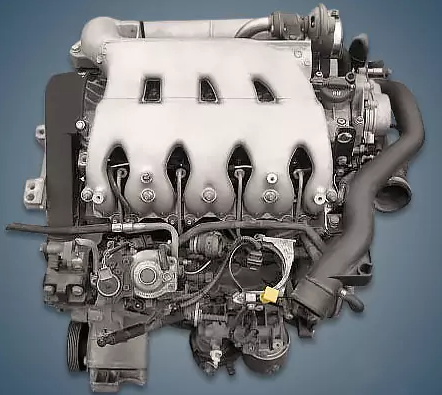
Additionally, G9T and G9U are part of the G-series diesel line.
The first generation Renault Laguna made its debut with an atmospheric 2.2-liter diesel engine in 1993. Its unique cylinder head with a single camshaft for twelve valves and hydraulic lifters made it stand out. Other than that, this is a standard pre-chamber diesel engine with a timing belt drive and a cast-iron block.
The power was increased from 83 to 113 horsepower when a turbocharged version debuted in 1996. The Safrane liftback and the Espace minivan were equipped with the supercharged version of the diesel engine in addition to the Laguna.
The engine was mounted on:
- Renault Avantime 1 (D66) in 2001 – 2002;
- Renault Espace 3 (J66) in 1996 – 2000;
- Renault Laguna 1 (X56) in 1993 – 2000;
- Renault Safrane 1 (B54) in 1996 – 2000.
Specifications
| Production years | 1993-2002 |
| Displacement, cc | 2188 |
| Fuel system | prechambers |
| Power output, hp | 83 (atmospheric) 113 (turbocharged) |
| Torque output, Nm | 142 (atmospheric) 234 – 250 (turbocharged) |
| Cylinder block | cast iron R4 |
| Block head | aluminum 12v |
| Cylinder bore, mm | 87 |
| Piston stroke, mm | 92 |
| Compression ratio | 23.0 (atmospheric) 22.0 (turbocharged) |
| Hydraulic lifters | yes |
| Timing drive | belt |
| Recommended engine oil | 5W-40, 10W-40 |
| Engine oil capacity, liter | 7.5 |
| Fuel type | diesel |
| Euro standards | EURO 1/2 |
| Fuel consumption, L/100 km (for Renault Laguna 1999) — city — highway — combined |
9.8 5.6 7.1 |
| Engine lifespan, km | ~500 000 |
| Weight, kg | 218 |
Disadvantages of the Renault G8T engine
The appearance of air bubbles in the expansion tank is typically a sign that this diesel engine is afraid of overheating because its head is frequently distorted and even cracked. Thus, keep an eye on your cooling system.
In this engine, reducing lubrication frequently results in camshaft cam wear. In the most common scenario, this results in a belt jump and rocker breakage. Additionally, hydraulic lifters here begin to knock rather quickly due to cheap oil.
Even in this diesel engine, there are frequent lubricant leaks from beneath the oil cooler rings, numerous air pipes that crack all the time, and occasionally the fuel line.