
From 2008 to 2013, the company manufactured the 2.0-liter Opel A20NHT or LDK engine, which was limited to the more expensive Insignia models. The A20NFT motor quickly replaced this power unit, which was thought to be extremely unreliable.
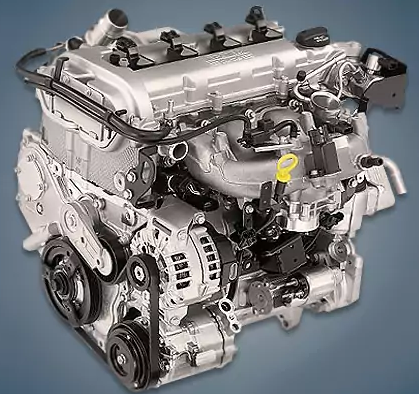
The engines A20NFT, A24XE, A28NET, and A30XH are also part of the A-series.
The engine was mounted on:
- Opel Insignia A (G09) in 2008 – 2013.
Specifications
| Production years | 2008-2013 |
| Displacement, cc | 1998 |
| Fuel system | direct injection |
| Power output, hp | 220 |
| Torque output, Nm | 350 |
| Cylinder block | aluminum R4 |
| Block head | aluminum 16v |
| Cylinder bore, mm | 86 |
| Piston stroke, mm | 86 |
| Compression ratio | 9.2 |
| Features | no |
| Hydraulic lifters | no |
| Timing drive | chain |
| Phase regulator | DCVCP |
| Turbocharging | twin-scroll |
| Recommended engine oil | 5W-30 |
| Engine oil capacity, liter | 6.0 |
| Fuel type | petrol |
| Euro standards | EURO 5 |
| Fuel consumption, L/100 km (for Opel Insignia 2010) — city — highway — combined |
12.8 7.1 9.0 |
| Engine lifespan, km | ~220 000 |
| Weight, kg | 130 |
Disadvantages of the A20NHT engine
Owners frequently experienced unexpected traction failures in the early years of production;
The engine has a huge number of weak points and is continuously leaking oil;
Even at low mileage, many had to replace the timing chain because it operates so differently;
This little resource has a high-pressure fuel pump and an electronic throttle;
It is possible to replace the piston up to 50,000 kilometers when using subpar fuel.