
From 1987 to 1993, the Bochum plant produced the 1.6-liter Opel C16NZ engine, which was fitted to several of the company’s well-known models, including the Astra, Corsa, Vectra, and Kadett. A more contemporary X16SZ engine soon replaced this power unit.
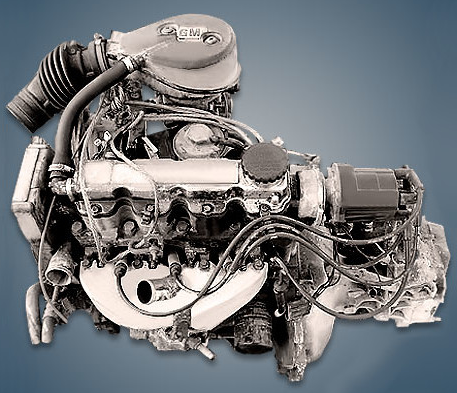
The C14NZ and C18NZ engines are also part of the C10 line.
The engine was mounted on:
- Opel Astra F (T92) in 1991 – 1994;
- Opel Ascona C (J82) in 1987 – 1988;
- Opel Corsa A (S83) in 1989 – 1991;
- Opel Kadett E (T85) in 1987 – 1993;
- Opel Vectra A (J89) in 1988 – 1993.
Specifications
| Production years | 1987-1993 |
| Displacement, cc | 1598 |
| Fuel system | single injection |
| Power output, hp | 75 |
| Torque output, Nm | 125 |
| Cylinder block | cast iron R4 |
| Block head | aluminum 8v |
| Cylinder bore, mm | 79 |
| Piston stroke, mm | 81.5 |
| Compression ratio | 9.2 |
| Features | no |
| Hydraulic lifters | yes |
| Timing drive | belt |
| Phase regulator | no |
| Turbocharging | no |
| Recommended engine oil | 5W-30 |
| Engine oil capacity, liter | 3.5 |
| Fuel type | petrol |
| Euro standards | EURO 1 |
| Fuel consumption, L/100 km (for Opel Vectra 1990) — city — highway — combined |
9.6 5.5 7.0 |
| Engine lifespan, km | ~320 000 |
| Weight, kg | 120 |
Disadvantages of the C16NZ engine
Owners typically complain about ignition system malfunctions, such as a spark going out.
The distributor cover, high-voltage wires, or candles are typically the cause.
The timing belt resource is roughly 60,000 km, and it’s good that the valves don’t bend when it breaks.
Failure of sensors, like a lambda probe, is a common cause of issues.
The fuel pump, thermostat, and idle speed controller all have finite resources.