
From 1992 to 1997, a German plant assembled the 2.0-liter turbo Opel C20LET engine, which was installed on sports versions of several well-known models, including the Vectra and Calibra. Fans of low-cost garage tuning were big fans of this power unit.
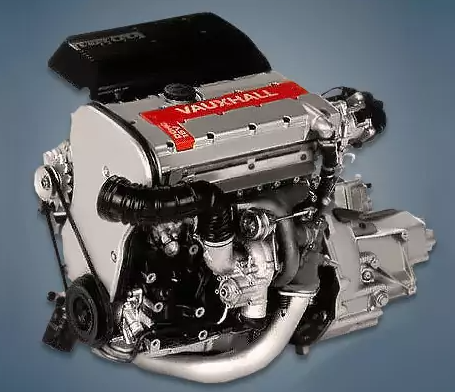
The engines C20NE, C20XE, C24NE, and C30SE are also part of the C20/30 line.
The engine was mounted on:
- Opel Calibra A (C89) in 1992 – 1997;
- Opel Vectra A (J89) in 1992 – 1994.
Specifications
| Production years | 1992-1997 |
| Displacement, cc | 1998 |
| Fuel system | distributed injection |
| Power output, hp | 204 |
| Torque output, Nm | 280 |
| Cylinder block | cast iron R4 |
| Block head | aluminum 16v |
| Cylinder bore, mm | 86 |
| Piston stroke, mm | 86 |
| Compression ratio | 9.0 |
| Features | no |
| Hydraulic lifters | yes |
| Timing drive | belt |
| Phase regulator | no |
| Turbocharging | yes |
| Recommended engine oil | 5W-30 |
| Engine oil capacity, liter | 4.5 |
| Fuel type | petrol |
| Euro standards | EURO 1 |
| Fuel consumption, L/100 km (for Opel Calibra 1995) — city — highway — combined |
12.3 6.8 8.5 |
| Engine lifespan, km | ~250 000 |
| Weight, kg | 145 |
Disadvantages of the C20LET engine
Nearly all of these motors are subject to revision, which is linked to numerous issues.
The cylinder head is the engine’s weak point; it just cracks;
The valves bend when the timing belt resource, which is roughly 50,000–60,000 km long, breaks;
Here, the pump, thermostat, and several electronic sensors are unreliable, and many owners lament how hard it is to set the proper mixture formation.