
Only the company’s two most well-known vehicles, the Vectra and Omega models, were equipped with the 2.0-liter Opel X20DTH or LD1 diesel engine, which was manufactured between 1997 and 2000. The unit’s Y20DTH index changed after it was upgraded to Euro 3 environmental standards.
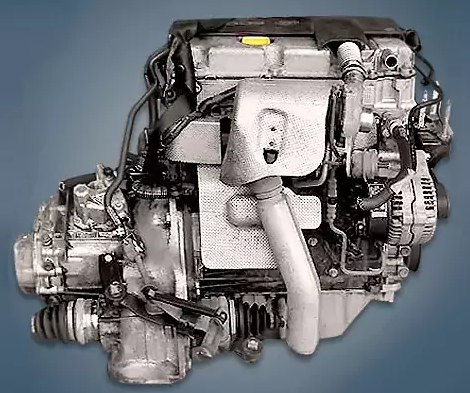
The X17DTL, X20DTL, and X22DTH engines are also part of the X family.
The engine was mounted on:
- Opel Omega B (V94) in 1997 – 2000;
- Opel Vectra B (J96) in 1997 – 2000.
Specifications
| Production years | 1997-2000 |
| Displacement, cc | 1995 |
| Fuel system | direct injection |
| Power output, hp | 100 |
| Torque output, Nm | 205 |
| Cylinder block | cast iron R4 |
| Block head | aluminum 16v |
| Cylinder bore, mm | 84 |
| Piston stroke, mm | 90 |
| Compression ratio | 18.5 |
| Features | intercooler |
| Hydraulic lifters | yes |
| Timing drive | two chains |
| Phase regulator | no |
| Turbocharging | yes |
| Recommended engine oil | 5W-40 |
| Engine oil capacity, liter | 5.5 |
| Fuel type | diesel |
| Euro standards | EURO 2 |
| Fuel consumption, L/100 km (for Opel Vectra 1998) — city — highway — combined |
8.0 4.7 5.9 |
| Engine lifespan, km | ~330 000 |
| Weight, kg | 190 |
Disadvantages of the X20DTH engine
The Bosch VP44 high-pressure fuel pump’s malfunctions are the main cause of the car owner’s issues;
Fuel pump control transistor burnout is the most frequent cause of failure;
This is where the system will simply air out if the fuel filter is replaced incorrectly;
Because the gaskets beneath the nozzles are drying out, oil and diesel fuel can be combined;
Additionally, the particulate filter is clogged or soot frequently wedges the EGR valve.