
From 1991 until 2007, Toyota’s 3.0-liter 2JZ-GE engine was assembled at the Tahara Plant in Japan and installed in the company’s well-known rear-wheel drive models, including the Aristo, Crown, and Mark II. A 1991 stock model and a 1997 model with VVT-i are the two variations of this motor.
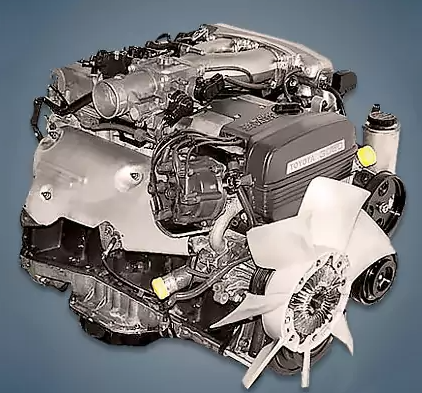
A year after the 2.5-liter, the 3.0-liter version of the JZ engine debuted in 1991. It was characterized by a large piston stroke and a cylinder block that was 14 millimeters higher. This is a similar in-line six in every other way, with a cast-iron block, a 24-valve cylinder head without hydraulic lifters, and a toothed belt driving the camshafts. The ACIS variable geometry system is installed in the intake manifold, just like in the younger unit.
The 3.0-liter engine was upgraded in 1997, a year later than its predecessor, but it remained essentially the same: the antiquated ignition system with a distributor was replaced with a more contemporary type DIS-3, and a VVT-i variable valve timing system was added at the intake.
The engines 1JZ-GE, 1JZ-GTE, 1JZ-FSE, 2JZ-GE, 2JZ-GTE, and 2JZ-FSE are also part of the JZ family.
The engine was mounted on:
- Toyota Altezza 1 (XE10) in 1998 – 2005;
- Toyota Aristo 1 (S140) in 1991 – 1997; Aristo 2 (S160) in 1997 – 2005;
- Toyota Chaser 5 (X90) in 1992 – 1996; Chaser 6 (X100) in 1996 – 2001;
- Toyota Cresta 4 (X90) in 1992 – 1996; Cresta 5 (X100) in 1996 – 2001;
- Toyota Crown 8 (S130) in 1991 – 1999; Crown 9 (S140) in 1991 – 1995; Crown 10 (S150) in 1995 – 2001; Crown 11 (S170) in 1999 – 2007;
- Toyota Crown Majesta 1 (S140) in 1991 – 1995; Crown Majesta 2 (S150) in 1995 – 1999; Crown Majesta 3 (S170) in 1999 – 2004;
- Toyota Mark II 7 (X90) in 1992 – 1996; Mark II 8 (X100) in 1996 – 2000;
- Toyota Origin 1 (G17) in 2000 – 2001;
- Toyota Progres 1 (G10) in 1998 – 2007;
- Toyota Soarer 3 (Z30) in 1991 – 2000;
- Toyota Supra 4 (A80) in 1993 – 2002;
- Lexus GS S140 in 1991 – 1997; GS S160 in 1997 – 2005;
- Lexus IS XE10 in 1998 – 2005;
- Lexus SC Z30 in 1991 – 2000.
Specifications
| Production years | 1991-2007 |
| Displacement, cc | 2997 |
| Fuel system | injector |
| Power output, hp | 215 – 230 |
| Torque output, Nm | 280 – 305 |
| Cylinder block | cast iron R6 |
| Block head | aluminum 24v |
| Cylinder bore, mm | 86 |
| Piston stroke, mm | 86 |
| Compression ratio | 10.5 |
| Hydraulic lifters | no |
| Timing drive | belt |
| Phase regulator | no VVT-i intake |
| Turbocharging | no |
| Recommended engine oil | 5W-30, 5W-40 |
| Engine oil capacity, liter | 4.0-5.0 |
| Fuel type | petrol |
| Euro standards | EURO 2/3 |
| Fuel consumption, L/100 km (for Toyota Mark II 1995) — city — highway — combined |
14.5 8.6 10.8 |
| Engine lifespan, km | ~500 000 |
| Weight, kg | 230 |
Disadvantages of the 2JZ-GE engine
The motor’s design is flawless, but it uses a lot of oil at high mileage. As usual, the cause of this is the presence of rings or the deterioration of valve stem seals.
In addition to a more dependable ignition system, the engine’s 1997 update included an erratic VVT-i phase regulator that typically only lasts 100–150 thousand kilometers.
The JZ line’s power units have an astounding number of electronic sensors that occasionally malfunction.
With the exception of the pump’s limited resources, the unreliable belt tensioner, and the ignition system’s severe water phobia, there aren’t many minor issues. Additionally, this motor enjoys filling candles, and the valves need to be adjusted on a regular basis.