
From 1983 until 1996, the company produced the 2.0-liter Toyota 3Y-EU gasoline engine, which was fitted to well-known minibuses like the LiteAce, Master Ace, and Town Ace. The Asian version of the Hilux 4Runner 61G SUV also has this unit under the hood.
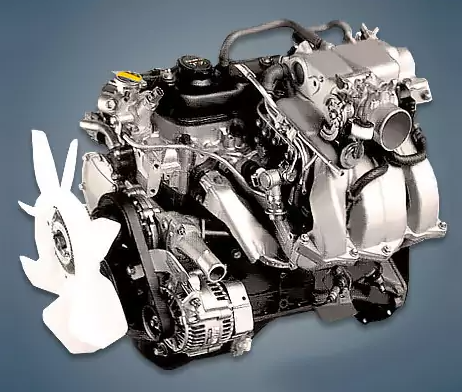
The engines in the Y family are 1Y, 2Y, 3Y, 3Y-E, 3Y-EU, 4Y, and 4Y-E.
The engine was mounted on:
- Toyota 4Runner 1 (N60) in 1984 – 1989;
- Toyota LiteAce 4 (R20) in 1992 – 1996;
- Toyota Master Ace R20 in 1983 – 1991;
- Toyota Town Ace 2 (R20) in 1983 – 1996.
Specifications
| Production years | 1983-1996 |
| Displacement, cc | 1998 |
| Fuel system | injector |
| Power output, hp | 95 – 115 |
| Torque output, Nm | 160 – 180 |
| Cylinder block | cast iron R4 |
| Block head | aluminum 8v |
| Cylinder bore, mm | 86 |
| Piston stroke, mm | 86 |
| Compression ratio | 9.0 |
| Features | OHV |
| Hydraulic lifters | yes |
| Timing drive | chain |
| Phase regulator | no |
| Turbocharging | no |
| Recommended engine oil | 5W-30 |
| Engine oil capacity, liter | 3.5 |
| Fuel type | petrol |
| Euro standards | EURO 2 |
| Fuel consumption, L/100 km (for Toyota Lite Ace 1993) — city — highway — combined |
9.9 7.5 8.3 |
| Engine lifespan, km | ~330 000 |
| Weight, kg | 150 |
Disadvantages of the Toyota 3Y-EU engine
This power unit’s overheating is somehow related to its primary issues.
Here, cylinder head warping and gasket failure are frequent occurrences.
This can occasionally result in the fourth cylinder’s jumper with the antifreeze channel being destroyed.
Overheating and lubricant consumption cause oil seals to quickly turn tan.
Additionally, problems with the fuel pump, ignition system, and oil leaks can be unsettling.