
From 2005 to 2018, the 2.2-liter Toyota 2AD-FTV or 2.2 D4D diesel engine was manufactured and fitted to popular European models like the Avensis, Verso, and RAV4. During the switch to Euro 5, the unit was upgraded with piezo nozzles rather than electromagnetic ones.
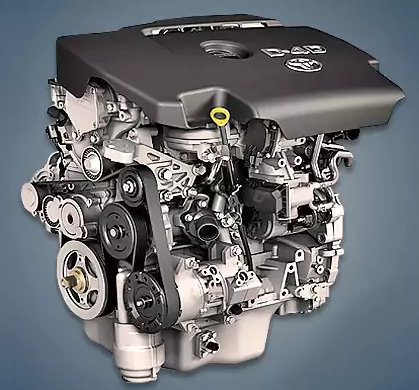
The Avensis model made its debut with a new 2.2-liter diesel engine in 2005. This motor features a timing chain, an IHI variable geometry turbocharger with a vacuum drive, an aluminum block with cast iron sleeves and an open cooling jacket, and an aluminum 16-valve block head with two camshafts and hydraulic lifters. Here, Denso’s state-of-the-art Common Rail system with an HP3 injection pump handles the injection. This unit has a block of balancer shafts, just like many others with a volume greater than 2.0 liters.
The motor was updated several times during the release, but the most significant change was the addition of piezo injectors in place of electromagnetic ones when the engine was modified for Euro 5 in 2009.
Diesel engines in the AD family are 1AD-FTV, 2AD-FTV, and 2AD-FHV.
The engine was mounted on:
- Toyota Avensis 2 (T250) in 2005 – 2009; Avensis 3 (T270) in 2009 – 2015;
- Toyota RAV4 3 (XA30) in 2006 – 2012; RAV4 4 (XA40) in 2012 – 2018;
- Toyota Verso AR10 in 2006 – 2009; Verso 1 (AR20) in 2009 – 2018;
- Lexus IS XE20 in 2010 – 2013.
Specifications
| Production years | 2005-2018 |
| Displacement, cc | 2231 |
| Fuel system | Common Rail |
| Power output, hp | 136 – 150 |
| Torque output, Nm | 310 – 360 |
| Cylinder block | aluminum R4 |
| Block head | aluminum 16v |
| Cylinder bore, mm | 86 |
| Piston stroke, mm | 96 |
| Compression ratio | 15.7 – 16.8 |
| Hydraulic lifters | yes |
| Timing drive | chain |
| Turbocharging | yes |
| Recommended engine oil | 0W-30, 5W-30 |
| Engine oil capacity, liter | 6.5 |
| Fuel type | diesel |
| Euro standards | EURO 4/5 |
| Fuel consumption, L/100 km (for Toyota RAV4 2014) — city — highway — combined |
8.3 5.6 6.5 |
| Engine lifespan, km | ~250 000 |
| Weight, kg | 190 |
Disadvantages of the 2AD-FTV engine
The erosion of the block’s mating surfaces with the cylinder head and the gasket’s frequent failure due to gas or oil leaking into the cooling system are two well-known issues with the motor.
These diesel engines are also notorious for using a lot of lubricant, usually during the first few kilometers of operation. Oil consumption did not decline despite promotions to replace pistons under warranty.
Although it is recommended to replace the washers beneath the nozzles every 60,000 kilometers, this is rarely done, and the washers eventually burn out. As a result, when disassembling, the nozzles become sour and break.
Regeneration failures, particulate filter failure, frequent EGR valve contamination, low piezo injector resource, and soot-induced turbocharger geometry jamming are all common issues with modern diesel engines.