
From 2005 to 2018, the 2.0-liter Toyota 1AD-FTV or 2.0 D4D diesel engine was assembled and fitted to the company’s European market models, including the Auris, Avensis, Corolla, and Verso. This power unit now has piezo nozzles rather than electromagnetic ones due to the switch to Euro 5.
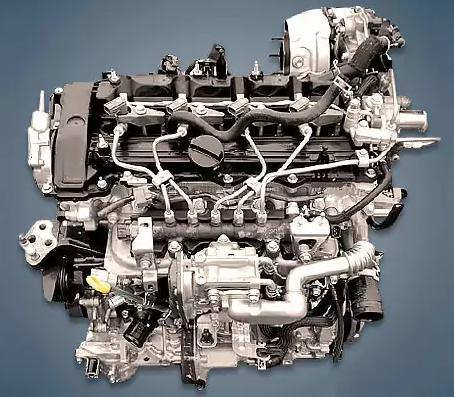
In 2005, Toyota introduced its new diesel family with Denso’s Common Rail system. These engines had an open cooling jacket, a 16-valve head with two camshafts, hydraulic lifters, a timing chain drive, and cast-iron sleeves. A variable geometry turbine made by the Japanese company IHI was used for supercharging.
This power unit underwent a significant upgrade in 2009 as part of the switch to Euro 5. The engine was fitted with a different exhaust system and piezo nozzles rather than electromagnetic ones.
Diesel engines from the AD family include the 1AD FTV, 2AD FTV, and 2AD FHV.
The engine was mounted on:
- Toyota Auris 1 (E150) in 2006 – 2012; Auris 2 (E180) in 2012 – 2015;
- Toyota Avensis 2 (T250) in 2005 – 2009; Avensis 3 (T270) in 2009 – 2015;
- Toyota Corolla 10 (E150) in 2006 – 2013;
- Toyota RAV4 4 (XA40) in 2012 – 2015;
- Toyota Verso AR10 in 2006 – 2009; Verso 1 (AR20) in 2009 – 2018.
Specifications
| Production years | 2005-2018 |
| Displacement, cc | 1998 |
| Fuel system | Common Rail |
| Power output, hp | 122 – 127 |
| Torque output, Nm | 300 – 310 |
| Cylinder block | aluminum R4 |
| Block head | aluminum 16v |
| Cylinder bore, mm | 86 |
| Piston stroke, mm | 86 |
| Compression ratio | 15.8 – 16.8 |
| Hydraulic lifters | yes |
| Timing drive | chain |
| Turbocharging | yes |
| Recommended engine oil | 0W-30, 5W-30 |
| Engine oil capacity, liter | 6.7 |
| Fuel type | diesel |
| Euro standards | EURO 4/5 |
| Fuel consumption, L/100 km (for Toyota Avensis 2006) — city — highway — combined |
6.7 4.6 5.4 |
| Engine lifespan, km | ~250 000 |
| Weight, kg | 180 |
Disadvantages of the 1AD-FTV engine
The most well-known issue with these diesel engines is the cylinder head gasket’s frequent failure. The problem is made worse for these motors by mating surface erosion.
The increasing lubricant consumption ranks second in terms of complaints. Even several campaigns to replace pistons were reversible, but oil consumption persisted.
The washers beneath the nozzles should be changed once every 60,000 kilometers to prevent them from burning out. Only a cool specialist can disassemble the soured nozzles without shattering them.
The following issues—rapid EGR valve contamination, particulate filter failure and regeneration failures, turbine geometry jamming, and low piezo injector resources—apply to nearly all contemporary diesel engines.