
Since 2015, the Hyundai-Kia G6DP 3.3-liter turbo engine, also known as the 3.3 T-GDi, has been manufactured and fitted to the company’s rear-wheel drive models, including the Stinger and Genesis sedans. The Smartstream 3.5 T-GDi motor has recently been actively replacing such a power unit.
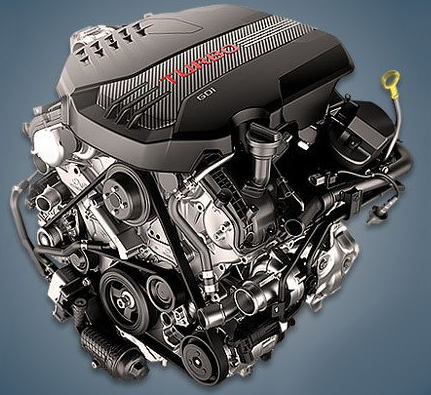
G6DB, G6DF, G6DH, G6DM, and G6DP make up the Lambda 3.3L family.
The engine was mounted on:
- Genesis G70 1 (IK) since 2017;
- Genesis G80 1 (DH) in 2016 – 2020;
- Genesis G90 1 (HI) since 2015;
- Kia K900 2 (RJ) since 2018;
- Kia Stinger 1 (CK) since 2017.
Specifications
| Production years | since 2015 |
| Displacement, cc | 3342 |
| Fuel system | direct injection |
| Power output, hp | 365 – 375 |
| Torque output, Nm | 510 – 515 |
| Cylinder block | aluminum V6 |
| Block head | aluminum 24v |
| Cylinder bore, mm | 92 |
| Piston stroke, mm | 83.8 |
| Compression ratio | 10.0 |
| Features | DOHC |
| Hydraulic lifters | no |
| Timing drive | chain |
| Phase regulator | Dual CVVT |
| Turbocharging | two Garrett GT14s |
| Recommended engine oil | 5W-30 |
| Engine oil capacity, liter | 7.7 |
| Fuel type | petrol |
| Euro standards | EURO 5/6 |
| Fuel consumption, L/100 km (for Kia Stinger 2018) — city — highway — combined |
15.4 7.9 10.6 |
| Engine lifespan, km | ~280 000 |
| Weight, kg | 232 (with attachments) |
Disadvantages of the Hyundai G6DP engine
This turbo engine has proven to be very dependable and trouble-free;
The unit is extremely concerned about overheating, so it is crucial to keep an eye on the cooling system’s condition;
Turbines and stretched timing chains frequently need maintenance after 200,000 kilometers;
This engine, like all direct injection engines, has carbon deposits on the intake valves. Since there are no hydraulic lifters in this engine, remember to adjust the valve clearances.