
From 2005 to 2013, the Hyundai G6EA 2.7-liter V6 gasoline engine was manufactured in Korea and fitted to several well-known models, including the Magentis, Opirus, Grandeur, and Santa Fe. This power unit underwent a gas modification under its own index, L6EA.
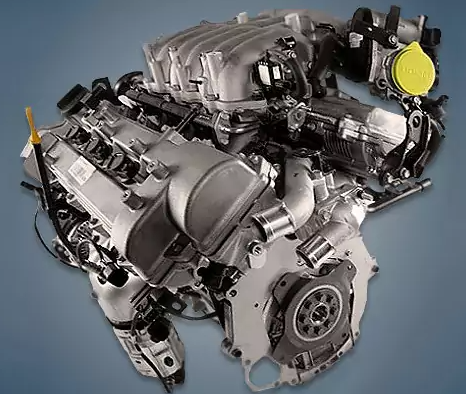
The company debuted an upgraded version of the Delta 2.7-liter V6 engine in 2005. The engine of the new Mu family gained 10 horsepower thanks to inlet dephasers and a higher compression ratio. Hydraulic lifters were abandoned even with the new engine. This V-shaped, six-cylinder engine is identical in every other way. It has a 60° camber angle, multiport fuel injection, a cast-iron block, aluminum DOHC block heads, and a combined timing drive from a belt and two chains between the camshafts. A contemporary three-stage VIS geometry change system was installed in the intake manifold.
In order to boost the engine’s power to 200 horsepower and 255 Nm of torque, phase shifters were added to the exhaust camshafts in 2009.
The engine was mounted on:
- Hyundai Grandeur 4 (TG) in 2005 – 2011;
- Hyundai Santa Fe 2 (CM) in 2005 – 2010;
- Kia Cadenza 1 (VG) in 2009 – 2011;
- Kia Carens 3 (UN) in 2006 – 2013;
- Kia Carnival 2 (VQ) in 2005 – 2010;
- Kia Magentis 2 (MG) in 2005 – 2010;
- Kia Opirus 1 (GH) in 2006 – 2011.
Specifications
| Production years | 2005-2013 |
| Displacement, cc | 2656 |
| Fuel system | distributed injection |
| Power output, hp | 185 – 200 |
| Torque output, Nm | 245 – 255 |
| Cylinder block | cast iron V6 |
| Block head | aluminum 24v |
| Cylinder bore, mm | 86.7 |
| Piston stroke, mm | 75 |
| Compression ratio | 10.4 |
| Features | DOHC, VIS |
| Hydraulic lifters | no |
| Timing drive | belt and chains |
| Phase regulator | yes |
| Turbocharging | no |
| Recommended engine oil | 5W-30, 5W-40 |
| Engine oil capacity, liter | 5.5 |
| Fuel type | petrol |
| Euro standards | EURO 4 |
| Fuel consumption, L/100 km (for Hyundai Santa Fe 2007) — city — highway — combined |
14.4 8.4 10.6 |
| Engine lifespan, km | ~350 000 |
| Weight, kg | 154 (185 with attachments) |
Disadvantages of the Hyundai G6EA engine
Phase regulators, which are a feature of Mu line units, frequently need maintenance. The motor’s loud operation or the ECU’s errors are typically the symptoms of a malfunction. Cleaning or replacing solenoid valves can sometimes be sufficient, but not always.
The swirl flap intake manifolds of the Mu motors, like those of their predecessors, have bolts that can come loose and fall directly into the power unit’s combustion chamber. This typically results in a significant overhaul or the hunt for a new engine.
Oil consumption, which rises with mileage, is a major source of complaints on specialized forums. Initially, it is roughly 0.5 liters per 1000 kilometers and appears to be 150,000 kilometers. Stuck rings and hardened valve stem seals are the primary offenders.
The motor’s sensors, ignition coils, and attachments are its weak points. Remember to update the chains between the camshafts every two timing belt replacements and to periodically adjust the thermal clearances of the valves.