
Compact models like the Matrix, Getz, and Second Generation Accent were equipped with the 1.5-liter diesel Hyundai D3EA or 1.5 CRDI engine, which was manufactured between 2001 and 2005. In essence, this power unit is a three-cylinder D4EA engine modification.
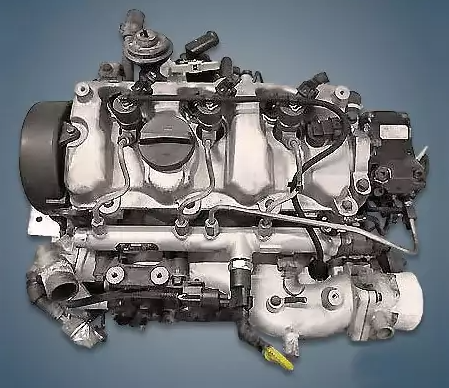
Diesels D4EA and D4EB were also part of the D family.
The engine was mounted on:
- Hyundai Accent 2 (LC) in 2003 – 2005;
- Hyundai Getz 1 (TB) in 2003 – 2005;
- Hyundai Matrix 1 (FC) in 2001 – 2005.
Specifications
| Production years | 2001-2005 |
| Displacement, cc | 1493 |
| Fuel system | Common Rail |
| Power output, hp | 82 |
| Torque output, Nm | 187 – 191 |
| Cylinder block | cast iron R3 |
| Block head | aluminum 12v |
| Cylinder bore, mm | 83 |
| Piston stroke, mm | 92 |
| Compression ratio | 17.7 |
| Features | intercooler |
| Hydraulic lifters | yes |
| Timing drive | belt |
| Phase regulator | no |
| Turbocharging | Garrett GT1544V |
| Recommended engine oil | 5W-40 |
| Engine oil capacity, liter | 4.5 |
| Fuel type | diesel |
| Euro standards | EURO 3 |
| Fuel consumption, L/100 km (for Hyundai Matrix 2003) — city — highway — combined |
6.5 4.6 5.3 |
| Engine lifespan, km | ~200 000 |
| Weight, kg | 176.1 |
Disadvantages of the Hyundai D3EA engine
First of all, this engine is prone to excessive vibrations and is rather noisy;
Owners are typically worried about the fuel system, specifically the injectors or injection pumps;
Keep an eye on the timing belt’s condition because the valves always bend here when it breaks;
The unit rapidly becomes overgrown with soot from the inside due to the burnout of the washers beneath the nozzles;
ECU malfunctions frequently cause the power unit to freeze at specific speeds;
The cylinder head of this diesel engine frequently cracks on runs longer than 200,000 kilometers; a clogged receiver causes oil starvation of the liners and their cranking.