
The 1.1-liter diesel Hyundai D3FA, also known as the 1.1 CRDi, was manufactured between 2005 and 2019 and was fitted to a number of the Korean company’s compact models, including the i10, i20, Rio, and Picanto. This three-cylinder diesel engine was available in two generations for Euro 4 and Euro 5.
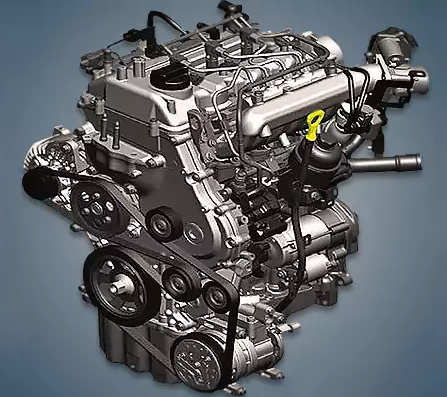
The U family’s 1.1-liter diesel engine, a 3-cylinder variant of a 1.5-liter diesel engine under the D4FA index, made its debut on the Kia Picanto model in 2005. It features a Garrett GT1544V variable geometry turbine, an aluminum 12-valve head with hydraulic lifters, a timing chain, a block of balancers in the sump, and a cast-iron cylinder block. Additionally, there is an intake manifold with swirl flaps and a Bosch CRS2 common rail fuel system with a maximum pressure of up to 1600 bar. You can comply with the Euro 4 environmental standards thanks to all of this.
The first generation, or U1, power units were eventually discontinued in 2010, and the second generation, or U2, engines debuted in 2011 under stricter Euro 5 environmental regulations. A fuel system with a pressure of 1800 bar, a different turbocharger MHI TD025S2 with a bypass valve and no variable geometry, and a compression ratio lowered from 17.8 to 16.0 were what set them apart. A proprietary ISG start-stop system was also an option for these power units.
The engines D4FA, D4FB, D4FC, D4FD, and D4FE are also part of the Hyundai U family.
The engine was mounted on:
- Hyundai i10 1 (PA) in 2008 – 2014; i10 2 (IA) in 2013 – 2019;
- Hyundai i20 1 (PB) in 2012 – 2014; i20 2 (GB) in 2014 – 2018;
- Kia Picanto 1 (SA) in 2005 – 2008;
- Kia Rio 3 (UB) in 2011 – 2017.
Specifications
| Production years | 2005-2019 |
| Displacement, cc | 1120 |
| Fuel system | Common Rail |
| Power output, hp | 75 |
| Torque output, Nm | 153 (1 Gen U1) 180 (2 Gen U2) |
| Cylinder block | cast iron R3 |
| Block head | aluminum 12v |
| Cylinder bore, mm | 75 |
| Piston stroke, mm | 84.5 |
| Compression ratio | 17.8 (1 Gen U1) 16.0 (2 Gen U2) |
| Hydraulic lifters | yes |
| Timing drive | chain |
| Turbocharging | yes |
| Recommended engine oil | 0W-30, 5W-30 |
| Engine oil capacity, liter | 5.7 |
| Fuel type | diesel |
| Euro standards | EURO 4 (1 Gen U1) EURO 5 (2 Gen U2) |
| Fuel consumption, L/100 km (for Hyundai i10 2009) — city — highway — combined |
5.3 3.8 4.3 |
| Engine lifespan, km | ~300 000 |
| Weight, kg | 140.4 |
Disadvantages of the Hyundai D3FA engine
The EGR valve and the intake manifold with dampers like the Swirl Control Valve, which rapidly accumulates soot and needs to be cleaned every 50,000 kilometers, are the primary sources of the problem.
There are no significant issues with the Bosch Common Rail fuel system, which is highly dependable. Because of banal wear, only the fuel pressure regulator frequently provides.
The timing drive for this power unit is made up of two roller chains with tensioners that have a resource of no more than 100,000 kilometers. The valves typically bend when they jump.
Due to a burst crankcase ventilation membrane, the first generation engines had an oil burner. When in operation, it keeps the lubricant out of the intake by separating it from crankcase gases.
Additionally, regular leaks from beneath the valve cover and crankshaft position sensor failure are complained about on specialized forums; however, these issues are typically resolved by cleaning.