
Popular models like the Ceed, Soul, Elantra, Venga, and i30 were equipped with the 1.6-liter diesel Hyundai D4FB or 1.6 CRDi, which was manufactured at a Slovakian plant between 2005 and 2020. The first and second generations of this motor were modified in a number of ways.
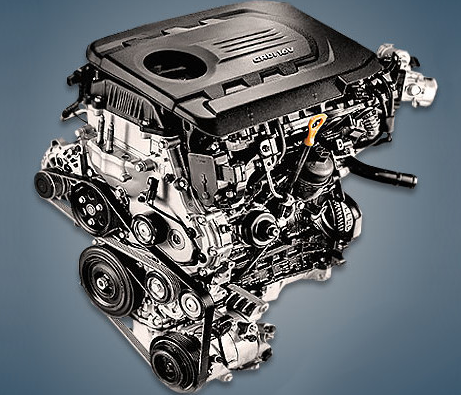
The Kia Cerato debuted a 1.6-liter U-line diesel engine with 116 horsepower in June 2005. With a cast-iron block, an aluminum 16-valve cylinder head with hydraulic compensators, a timing chain, a variable geometry turbine Garrett GT1544V, an intake with swirl flaps, and a Bosch CRS2 Common Rail fuel system with injection pressure up to 1600 bar, it was a typical Euro 4 diesel engine for its time. Some models also had a 90 horsepower version of the engine installed in addition to the 116 horsepower version.
The second generation of 1.6 CRDi diesel engines debuted in 2008 under stricter EURO 5 environmental regulations. These engines differed in a number of ways, not just in terms of emission control. For example, the compression ratio was reduced from 17.3 to 17.0, a fuel system with a Garrett GTB1444VZ turbine and injection pressure up to 1800 bar was introduced, some versions of this unit started to have a proprietary ISG start-stop system, and the engine power range was significantly increased from 90 horsepower and 235 Nm to 136 horsepower and 400 Nm.
The engines D3FA, D4FA, D4FC, D4FD, and D4FE are also part of the Hyundai U family.
The engine was mounted on:
- Hyundai i20 1 (PB) in 2008 – 2010;
- Hyundai ix20 1 (JC) in 2010 – 2018;
- Hyundai i30 1 (FD) in 2008 – 2012; i30 2 (GD) in 2011 – 2017; i30 3 (PD) in 2016 – 2018;
- Hyundai Accent 4 (RB) in 2010 – 2017;
- Hyundai Elantra 4 (HD) in 2006 – 2011; Elantra 6 (AD) in 2015 – 2020;
- Kia Ceed 1 (ED) in 2006 – 2013; Ceed 2 (JD) in 2012 – 2018;
- Kia Cerato 1 (LD) in 2005 – 2008; Cerato 2 (TD) in 2008 – 2013; Cerato 3 (YD) in 2013 – 2018;
- Kia Carens 3 (UN) in 2010 – 2013;
- Kia Soul 1 (AM) in 2008 – 2014; Soul 2 (PS) in 2014 – 2019;
- Kia Stonic 1 (YB) in 2017 – 2018;
- Kia Venga 1 (YN) in 2010 – 2019.
Specifications
| Production years | 2005-2020 |
| Displacement, cc | 1582 |
| Fuel system | Common Rail |
| Power output, hp | 90 – 116 (1 Gen U1) 90 – 136 (2 Gen U2) |
| Torque output, Nm | 235 – 255 (1 Gen U1) 235 – 300 (2 Gen U2) |
| Cylinder block | cast iron R4 |
| Block head | aluminum 16v |
| Cylinder bore, mm | 77.2 |
| Piston stroke, mm | 84.5 |
| Compression ratio | 17.3 (1 Gen U1) 17.0 (2 Gen U2) |
| Hydraulic lifters | yes |
| Timing drive | chain |
| Turbocharging | yes |
| Recommended engine oil | 0W-30, 5W-30 |
| Engine oil capacity, liter | 5.7 |
| Fuel type | diesel |
| Euro standards | EURO 4 (1 Gen U1) EURO 5/6 (2 Gen U2) |
| Fuel consumption, L/100 km (for Hyundai i30 2014) — city — highway — combined |
7.9 4.6 5.8 |
| Engine lifespan, km | ~350 000 |
| Weight, kg | 155.8 |
Disadvantages of the Hyundai D4FB engine
The first generation diesel engines’ turbines occasionally needed to be replaced after 30,000 kilometers, and the second generation units had faulty glow plugs installed during the first year.
Only the fuel pressure regulator frequently malfunctions in the dependable Bosch fuel system. Additionally, occasionally the booster pump fails or the return pipes on the injectors burst.
A collector with swirl flaps rapidly becomes overgrown with soot, even in this motor. It must be cleaned at least once every 50,000 kilometers, ideally in tandem with the EGR valve.
The timing drive, which consists of two roller chains that can stretch and start to rattle violently at a run of 120–150 thousand kilometers, also lacks high resources.
Additionally, the crankshaft position sensor frequently fails after routine cleaning, and the boost sensor frequently fails here, simply breaking the wiring.