
The popular Colt model’s sixth generation was equipped with Mitsubishi’s 1.3-liter 16-valve 4G19 engine, which was manufactured in Japan between 2002 and 2012 and only available in a few markets. This engine should not be confused with the 1.3-liter 4A90 that was installed concurrently on the Colt.
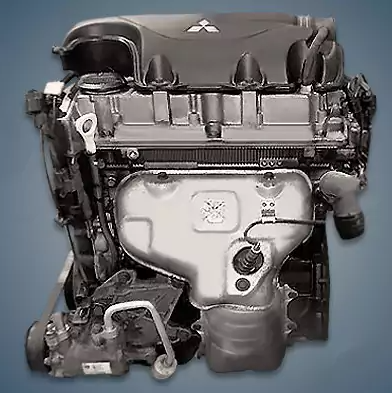
A MIVEC-type phase regulator on the intake shaft set the new 1.3-liter Orion family engine apart from its predecessor on the sixth generation of Colt. Apart from that, this engine is typical for this series and has a cast-iron block, an aluminum SOHC head with a single 16-valve camshaft and hydraulic lifters, a timing belt drive, an EGR valve, an ignition system with individual coils, and multiport fuel injection.
The engines 4G13, 4G15, 4G15T, and 4G18 are also part of the 4G1 family.
The engine was mounted on:
- Mitsubishi Colt 6 (Z30) in 2002 – 2012.
Specifications
| Production years | 2002-2012 |
| Displacement, cc | 1343 |
| Fuel system | distributed injection |
| Power output, hp | 90 |
| Torque output, Nm | 121 |
| Cylinder block | cast iron R4 |
| Block head | aluminum 16v |
| Cylinder bore, mm | 75.5 |
| Piston stroke, mm | 75 |
| Compression ratio | 10.0 |
| Hydraulic lifters | yes |
| Timing drive | belt |
| Phase regulator | MIVEC |
| Turbocharging | no |
| Recommended engine oil | 5W-30, 5W-40 |
| Engine oil capacity, liter | 3.6 |
| Fuel type | petrol |
| Euro standards | EURO 4/5 |
| Fuel consumption, L/100 km (for Mitsubishi Colt 2005) — city — highway — combined |
7.4 4.8 5.8 |
| Engine lifespan, km | ~300 000 |
| Weight, kg | 130 |
Disadvantages of the Mitsubishi 4G19 engine
Compared to its predecessors in the series, this unit’s oil burn starts much later, but by 150,000 km, thin oil scraper rings have fallen and consumption is still visible. Sometimes a straightforward decarbonization will suffice, but most of the time it just involves changing the rings.
Additionally, compared to earlier models in this family, the issue with floating revolutions—which is exclusive to the Orion series—caused by throttle wear is not as severe. However, since restored dampers for this kind of motor are sold, someone must be in need of them.
A damaged timing belt is a frequent reason for this engine’s failure. It can burst earlier and with a bend in the valves, but the regulations state that it serves 90,000 kilometers.
Additionally, the owners bemoan the fact that the rear engine mount, ignition coils, cooling system fan, and flood candles frequently fail to run for extended periods of time when they start in heavy frost. The catalyst’s short lifespan and the EGR valve’s rapid dirt buildup are also frequently criticized.