
The Japanese company has only been producing the 2.0-liter gasoline Mitsubishi 4J11 since 2012, and it is only found in two of its models: the Delica minibus and the Outlander crossover. This motor is different from the 4B11 in that it has a single 16-valve camshaft and a new head with VVL.
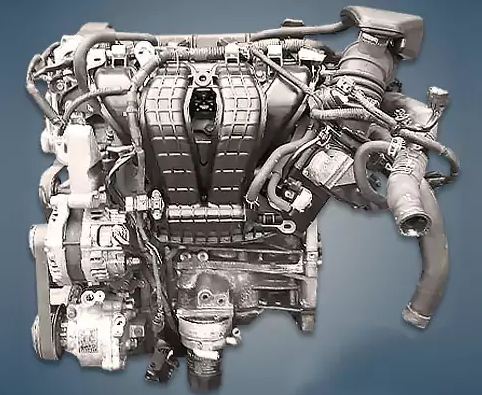
The 4J10 and 4J12 engines are also part of the 4J1 family.
The engine was mounted on:
- Mitsubishi Outlander GF since 2012;
- Mitsubishi Delica D:5 since 2012.
Specifications
| Production years | since 2012 |
| Displacement, cc | 1998 |
| Fuel system | injector |
| Power output, hp | 150 – 166 |
| Torque output, Nm | 195 – 201 |
| Cylinder block | aluminum R4 |
| Block head | aluminum 16v |
| Cylinder bore, mm | 86 |
| Piston stroke, mm | 86 |
| Compression ratio | 10.5 |
| Features | VVL |
| Hydraulic lifters | no |
| Timing drive | chain |
| Phase regulator | MIVEC 2 |
| Turbocharging | no |
| Recommended engine oil | 5W-20 |
| Engine oil capacity, liter | 4.4 |
| Fuel type | petrol |
| Euro standards | EURO 5/6 |
| Fuel consumption, L/100 km (for Mitsubishi Delica 2014) — city — highway — combined |
9.9 6.4 7.7 |
| Engine lifespan, km | ~250 000 |
| Weight, kg | 120 |
Disadvantages of the Mitsubishi 4J11 engine
This power unit has a very positive response on specialized forums;
The majority of owners are only concerned about unnecessary vibration or noise during operation;
The advanced MIVEC phase control system with VVL has strict requirements for oil quality; you must choose cups to modify the valve clearances once every 50,000 kilometers.