
From 1970 until 1998, the company’s factories assembled the 1.4-liter Mitsubishi 4G33 engine, which was fitted to numerous well-known models like the Lancer, Galant, and Delica. Both passenger cars and commercial vehicles made extensive use of this motor.
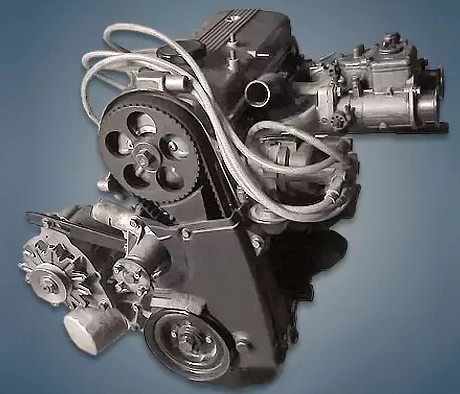
The 4G32 and 4G37 engines are also part of the 4G3 family.
The engine was mounted on:
- Mitsubishi Celeste in 1975 – 1982;
- Mitsubishi Delica in 1979 – 1994;
- Mitsubishi Galant A50 in 1970 – 1973;
- Mitsubishi Lancer A70 in 1973 – 1976; Lancer A140 in 1976 – 1979;
- Hyundai Pony in 1975 – 1990;
- Hyundai Stellar in 1983 – 1987.
Specifications
| Production years | 1970-1998 |
| Displacement, cc | 1439 |
| Fuel system | carburetor (4G33 carburetor) injector (4G33B ECI-multi) |
| Power output, hp | 68 – 75 (4G33 carburetor) 70 – 75 (4G33B ECI-multi) |
| Torque output, Nm | 104 – 117 (4G33 carburetor) 108 – 121 (4G33B ECI-multi) |
| Cylinder block | cast iron R4 |
| Block head | aluminum 8v |
| Cylinder bore, mm | 73 |
| Piston stroke, mm | 86 |
| Compression ratio | 8.5 – 9.0 (4G33 carburetor) 9.0 (4G33B ECI-multi) |
| Features | no |
| Hydraulic lifters | no |
| Timing drive | belt |
| Phase regulator | no |
| Turbocharging | no |
| Recommended engine oil | 5W-40 |
| Engine oil capacity, liter | 4.0 |
| Fuel type | petrol |
| Euro standards | EURO 0 (4G33 carburetor) EURO 1/2 (4G33B ECI-multi) |
| Fuel consumption, L/100 km (for Mitsubishi Celeste 1976) — city — highway — combined |
9.7 5.8 7.4 |
| Engine lifespan, km | ~275 000 |
| Weight, kg | 125 |
Disadvantages of the Mitsubishi 4G33 engine
The owners’ primary issues are related to the capricious carburetor’s malfunctions.
Additionally, the balance shaft belt and timing belt do not have the best resources.
Oil frequently seeps onto belts from gaskets and seals, corroding them over time.
The fuel pump is short-lived, and the motor mounts are damaged rather quickly.
The valves must be adjusted because hydraulic lifters are not available here.