
The Infiniti QX50, QX55, and QX60 crossovers are the most well-known vehicles to use the 2.0-liter Nissan KR20DDET (or simply KR20) or 2.0 VC-Turbo engine, which has been manufactured in Japan since 2017 and is utilized in Altima sedans. A proprietary compression ratio adjustment system is what sets this type of power unit apart.
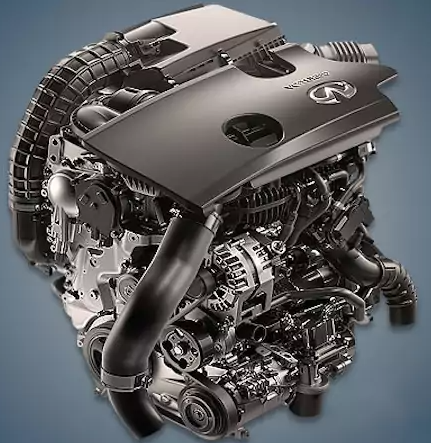
The KR15DDT, an internal combustion engine, is another member of the KR family.
The engine was mounted on:
- Infiniti QX50 2 (P71) in 2017 – …;
- Infiniti QX55 1 (J55) in 2021 – …;
- Infiniti QX60 2 (L51) in 2021 – …;
- Nissan Altima 6 (L34) in 2018 – …
Specifications
| Production years | 2017-… |
| Displacement, cc | 1970 – 1997 |
| Fuel system | combined injection |
| Power output, hp | 250 – 272 |
| Torque output, Nm | 380 |
| Cylinder block | aluminum R4 |
| Block head | aluminum 16v |
| Cylinder bore, mm | 84 |
| Piston stroke, mm | 88.9 – 90.1 |
| Compression ratio | 8.0 – 14.0 |
| Features | ATR |
| Hydraulic lifters | no |
| Timing drive | chain |
| Phase regulator | on both shafts |
| Turbocharging | Garrett MGT2056Z |
| Recommended engine oil | 5W-30 |
| Engine oil capacity, liter | 4.7 |
| Fuel type | petrol |
| Euro standards | EURO 6 |
| Fuel consumption, L/100 km (for Infiniti QX50 2020) — city — highway — combined |
10.5 7.6 8.6 |
| Engine lifespan, km | ~220 000 |
| Weight, kg | 137 |
Disadvantages of the KR20DDET engine
This turbo engine was manufactured not too long ago, and data on its malfunctions was gathered;
They frequently complain only about Start-Stop system bugs on specialized forums;
Deposits on the intake valves of the engine are removed by the combined injection system;
There are no hydraulic lifters, and the engine’s primary issue is where to fix the compression ratio system. The valve clearances must be adjusted every 100,000 kilometers.