
D6DA engines are four-stroke diesel engines with direct fuel injection, water cooling, and a one-million-kilometer service life.
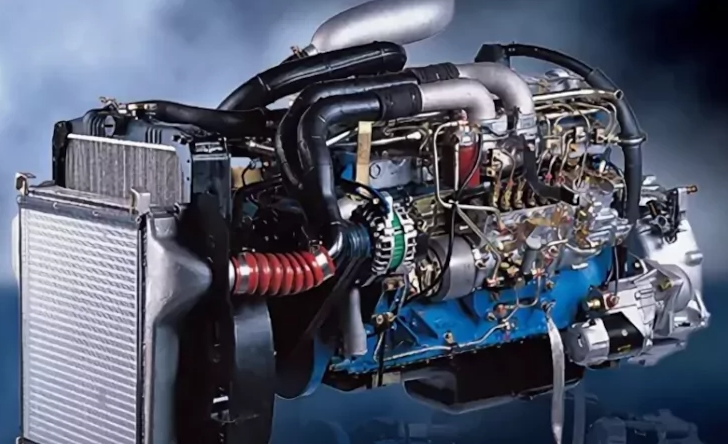
They are well-known for their dependability and ideal quality/price ratio. Hyundai D6DA engines stand out for their fuel and lubricant economy as well as their environmentally friendly exhaust. In their working chamber, the fuel is nearly entirely burned, and the electronic starter allows for an instant start.
Modern machinery is used in the production of D6DA spare parts, including spray nozzles, connecting rod bushings, pistons, liners, bushings, and piston pins. The development of cutting-edge technologies enables the production of parts that give the device dependability, minimal vibration, and nearly silent operation.
Specifications
| Manufacturer | Hyundai |
| Also called | D6DA |
| Fuel system | direct injection |
| Configuration | inline |
| Number of cylinders | 6 |
| Piston stroke, mm | 118 |
| Cylinder bore, mm | 109 |
| Compression ratio | 17.6 |
| Displacement, cc | 6606 |
| Power output, hp | 196-225/2500 |
| Torque output, Nm / rpm | 637/2500 |
| Fuel type | diesel |
| Euro standards | Euro 3 |
| Engine lifespan, thousand km — official information |
1 000 |
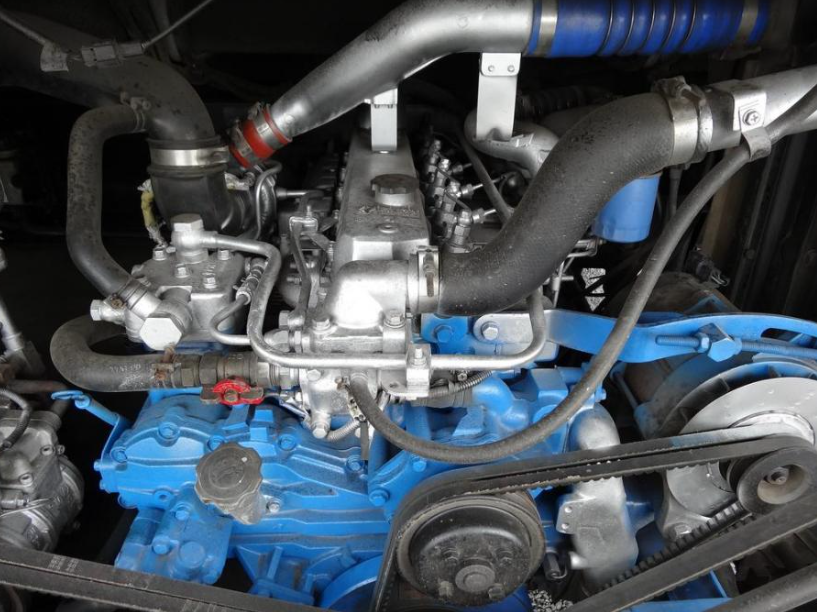
With a Garrett turbocharger, the inline six produces 225 horsepower. With two valves per cylinder, dry liners pressed into the block, and a timing gear drive from the crankshaft’s toe side, the engine’s structural design is far from modern.
Even though Common Rail fuel equipment started to be installed on the D6DA engine in Korea in 2006, an engine with an outdated mechanical injection pump was shipped to Russia until 2013. The engine was then brought up to Euro-3 standards by using a particulate filter at the outlet.
D6DA marking decoding
| D | Heavy Fuel Oil (Diesel) ICE |
| 6 | Engine type: four-stroke, 6-cylinder in-line. |
| D | Engine Development Order |
| A | Engine Modification Series |