
From 2002 to 2010, the company produced the 2.0-liter Alfa Romeo 937A1000 or 156 2.0 JTS engine, which was installed on popular models like the 156, GT, GTV, and similar Spider. In essence, this type of unit is a direct fuel injection version of the Twin Spark engine.
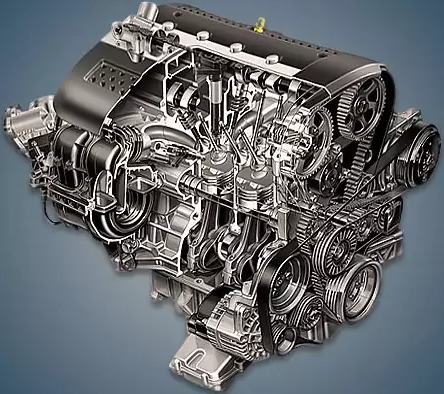
The JTS-engine series: 937A1000, 939A5000, 939A000.
Specifications
| Production years | 2002-2010 |
| Displacement, cc | 1970 |
| Fuel system | direct injection |
| Power output, hp | 165 |
| Torque output, Nm | 206 |
| Cylinder block | cast iron R4 |
| Block head | aluminum 16v |
| Cylinder bore, mm | 83 |
| Piston stroke, mm | 91 |
| Compression ratio | 11.3 |
| Features | DOHC |
| Hydraulic lifters | yes |
| Timing drive | belt |
| Phase regulator | VVT at the intake |
| Turbocharging | no |
| Recommended engine oil | 10W-40 |
| Engine oil capacity, liter | 4.4 |
| Fuel type | petrol |
| Euro standards | EURO 4 |
| Fuel consumption, L/100 km (for Alfa Romeo 156 2003) — city — highway — combined |
12.2 6.7 8.6 |
| Engine lifespan, km | ~180 000 |
| Weight, kg | 150 |
The engine was installed on:
- Alfa Romeo 156 (Type 932) in 2002 – 2005;
- Alfa Romeo GT II (Type 937) in 2003 – 2010;
- Alfa Romeo GTV II (Type 916) in 2003 – 2005;
- Alfa Romeo Spider V (Type 916) in 2003 – 2005.
Disadvantages of the Alfa Romeo 937A1000 engine
The engine has all the issues associated with direct injection engines, including valve soot;
Additionally, because of the piston group’s quick wear, an oil burner is frequently found here;
The phase regulator and oil pump will not last long if the motor is not lubricated;
The camshaft cams’ resource is greatly diminished by the system’s drop in oil pressure;
Keep an eye on the balancer belt’s condition; if it breaks, it falls beneath the timing belt.