
From 2009 to 2014, the 1.8-liter Alfa Romeo 939B1000 or 159 1.8 TBi engine was manufactured and fitted to popular concern models like the 159, Brera, and related Spider. This drivetrain is referred to as the 1.8 DI T-Jet 16V on third-generation Lancia Delta hatchbacks.
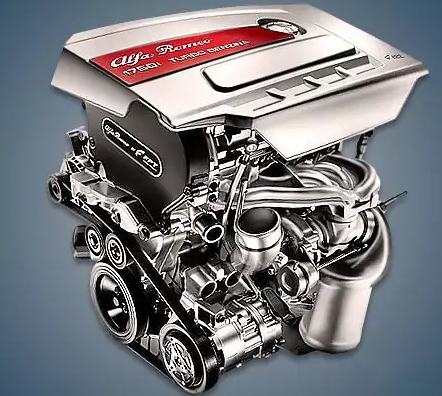
The TBi-engine line also includes: 960A1000.
Specifications
| Production years | 2009-2014 |
| Displacement, cc | 1742 |
| Fuel system | direct injection |
| Power output, hp | 200 |
| Torque output, Nm | 320 |
| Cylinder block | aluminum R4 |
| Block head | aluminum 16v |
| Cylinder bore, mm | 83 |
| Piston stroke, mm | 80.5 |
| Compression ratio | 9.5 |
| Features | DOHC |
| Hydraulic lifters | yes |
| Timing drive | belt |
| Phase regulator | on both shafts |
| Turbocharging | BorgWarner K03 |
| Recommended engine oil | 5W-40 |
| Engine oil capacity, liter | 4.8 |
| Fuel type | petrol |
| Euro standards | EURO 5 |
| Fuel consumption, L/100 km (for Alfa Romeo 159 2010) — city — highway — combined |
11.8 6.0 8.1 |
| Engine lifespan, km | ~250 000 |
| Weight, kg | 125 |
The engine was installed on:
- Alfa Romeo 159 (Type 939) in 2009 – 2011;
- Alfa Romeo Brera I (Type 939) in 2009 – 2010;
- Alfa Romeo Spider VI (Type 939) in 2009 – 2010;
- Lancia Delta III (844) in 2009 – 2014.
Disadvantages of the Alfa Romeo 939B1000 engine
This engine is highly dependable and has no special issues for a turbo engine of this power;
Soot on the valves develops rapidly due to direct fuel injection;
The timing belt should be changed every 60,000 kilometers or the valves will bend; the engine needs special oil or the turbine and hydraulic lifters won’t last long; and with heavy use, lubricant consumption can reach a liter per 1000 kilometers.