
The 7-Series sedan and 8-Series coupe, the company’s top models at the time, were equipped with the 5.0-liter 12-cylinder BMW M70 or M70B50 engine, which was produced between 1987 and 1994. For Alpina models, there were D1/1 motors with 350 horsepower in addition to the standard 300 horsepower.
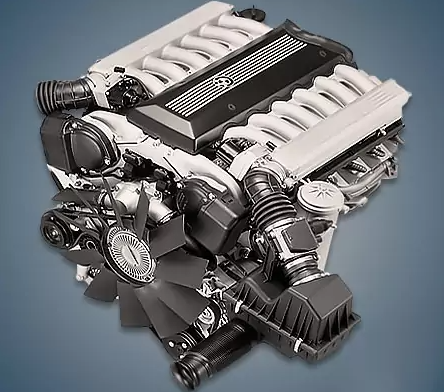
The engine was installed on:
- BMW 7-Series E32 in 1987 – 1994;
- BMW 8-Series E31 in 1989 – 1994.
Specifications
| Production years | 1987-1994 |
| Displacement, cc | 4998 |
| Fuel system | distributed injection |
| Power output, hp | 300 350 (Alpina D1/1) |
| Torque output, Nm | 450 470 (Alpina D1/1) |
| Cylinder block | aluminum V12 |
| Block head | aluminum 24v |
| Cylinder bore, mm | 84 |
| Piston stroke, mm | 75 |
| Compression ratio | 8.8 9.5 (Alpina D1/1) |
| Features | no |
| Hydraulic lifters | yes |
| Timing drive | chain |
| Phase regulator | no |
| Turbocharging | no |
| Recommended engine oil | 5W-40 |
| Engine oil capacity, liter | 7.5 |
| Fuel type | petrol |
| Euro standards | EURO 2 |
| Fuel consumption, L/100 km (for BMW 750iL 1990) — city — highway — combined |
20.8 8.9 13.6 |
| Engine lifespan, km | ~340 000 |
Disadvantages of the M70B50 engine
To begin with, the BMW 750 typically uses around 25 liters per hundred;
Electronic throttle control units (EML) are the primary cause of these issues;
A simple break in the wiring is frequently the cause of an engine ECU malfunction;
Severe valve guide wear has been reported by numerous owners;
The engine’s crankshaft position sensor and ignition coils are also weak points.