What Does Code P0760 Mean?
The OBD-II diagnostic trouble code P0760 signifies a malfunction in the Shift Solenoid C circuit. In modern automatic transmissions, the Powertrain Control Module (PCM) or Transmission Control Module (TCM) utilizes an array of solenoids to precisely control the flow of hydraulic fluid within the valve body, thereby engaging and disengaging various clutch packs and bands to achieve different gear ratios. Shift Solenoid C is one such electronically controlled hydraulic valve, typically either a normally-open (N.O.) or normally-closed (N.C.) device, responsible for routing transmission fluid pressure. The PCM/TCM continuously monitors the electrical characteristics of this solenoid, including its resistance, current draw, and voltage drop across its circuit. When the PCM/TCM detects an electrical anomaly within the Shift Solenoid C circuit—such as an open circuit, a short to ground, a short to voltage, or an out-of-range resistance value—that deviates from the factory specifications, it interprets this as a malfunction and sets code P0760, illuminating the Malfunction Indicator Lamp (MIL). This indicates that the control module cannot reliably command Shift Solenoid C to operate as intended, which directly impacts the transmission’s ability to shift gears smoothly or at all.
Common Symptoms
- Check Engine Light (MIL) Illumination: The most common and immediate symptom.
- Transmission Slipping: The transmission may feel like it’s briefly disengaging or losing power between shifts.
- Harsh or Delayed Gear Engagement: Shifts may feel abrupt, clunky, or take longer than normal to engage.
- Failure to Shift into Certain Gears: The transmission might refuse to engage specific gears, leading to reduced performance.
- Vehicle Stuck in “Limp Mode”: The transmission may default to a single gear (often 2nd or 3rd) to protect itself from further damage, limiting vehicle speed and power.
- Reduced Fuel Economy: Inefficient shifting patterns can lead to increased fuel consumption.
- Erratic or Unpredictable Shifting: The transmission may shift unexpectedly or at inappropriate RPMs.
What Causes the Code P0760?
- Faulty Shift Solenoid C: The solenoid itself may have an internal electrical open, short, or mechanical failure preventing proper hydraulic operation.
- Wiring Harness Issues: Damaged, chafed, corroded, or disconnected wiring or connectors leading to Shift Solenoid C, resulting in an open circuit, short to ground, or short to voltage.
- Low or Contaminated Transmission Fluid: Insufficient fluid levels can cause inadequate hydraulic pressure for solenoid operation, or contaminated fluid can impede solenoid movement.
- Obstructed Transmission Fluid Passages: Debris, sludge, or metallic particles within the transmission valve body can block fluid passages, preventing the solenoid from effectively controlling fluid flow.
- Faulty Transmission Control Module (TCM)/Powertrain Control Module (PCM): While less common, an internal fault within the control module could lead to incorrect command signals or misinterpretation of solenoid feedback.
- Internal Transmission Mechanical Failure: Rarely, a severe internal mechanical issue (e.g., valve body component failure, worn clutch packs causing excessive slip) could indirectly lead the PCM/TCM to incorrectly diagnose a solenoid fault due to an unexpected hydraulic response.
How to Diagnose and Troubleshoot
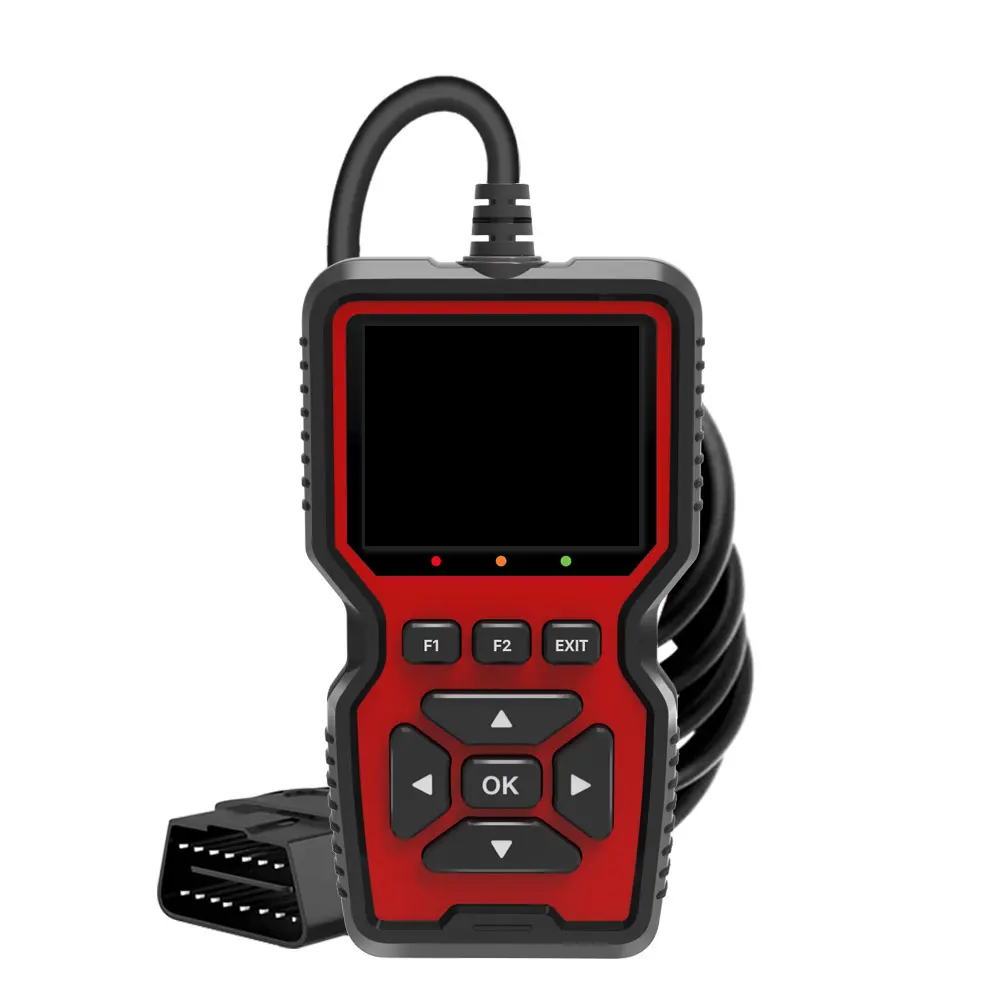
Diagnosing P0760 requires a systematic approach, often involving a digital multimeter (DMM), an OBD-II scan tool, and a service manual specific to the vehicle.
- Initial Verification and Data Collection:
- Connect an OBD-II scan tool to confirm P0760 and check for any related or pending codes.
- Record any available freeze frame data. This data provides a snapshot of vehicle operating conditions (engine RPM, vehicle speed, transmission temperature, etc.) at the moment the code was set, which can be invaluable for replication.
- Clear the DTC and perform a brief road test under conditions similar to the freeze frame data, if safe to do so, to confirm the code consistently returns.
- Inspect Transmission Fluid:
- With the engine at operating temperature and the vehicle on a level surface (refer to service manual for exact procedure), check the transmission fluid level and condition.
- Note if the fluid is low, appears burnt, contains metallic particles, or is discolored. Low fluid must be corrected. Burnt fluid or excessive debris indicates internal transmission wear.
- Visual Inspection of Wiring and Connectors:
- Locate the transmission wiring harness and the specific connector(s) for the shift solenoids (consult vehicle service information for pinouts).
- Thoroughly inspect the entire harness for signs of physical damage, chafing, corrosion, or loose connections. Pay close attention to areas where the harness passes through firewalls, near exhaust components, or where it may rub against other parts.
- Examine the solenoid connector itself for bent, pushed-out, or corroded pins. Ensure proper seating and retention.
- Electrical Tests of Shift Solenoid C Circuit (using DMM):
- Solenoid Resistance Test: Disconnect the main transmission harness connector or the specific Shift Solenoid C connector. Using a DMM, measure the resistance across the terminals corresponding to Shift Solenoid C. Compare this reading to the manufacturer’s specification (typically 10-25 ohms, exact value found in service manual). An open circuit (infinite resistance) or a short circuit (near zero resistance) indicates a faulty solenoid.
- Voltage Supply Test: With the ignition ON and the solenoid disconnected, use a DMM to check for battery voltage at the power supply wire going to Shift Solenoid C. Most shift solenoids receive a constant power feed from the PCM/TCM or a fuse.
- Continuity to Ground (Control Side): Disconnect the TCM/PCM connector. Test for continuity between the control wire for Shift Solenoid C at the transmission connector and ground. There should be no continuity to ground, indicating no short in the wiring. Similarly, check for continuity to voltage.
- Continuity of Wiring Harness: With both the transmission and TCM/PCM connectors disconnected, check for continuity on both the power and control wires from one end of the harness to the other. Also, check for shorts between adjacent wires in the harness. Gently wiggle the harness during testing to detect intermittent breaks.
- Advanced Scan Tool Diagnostics (if applicable):
- If equipped with a bidirectional scan tool, attempt to command Shift Solenoid C ON and OFF. Monitor live data for solenoid status, commanded state, and actual transmission gear state. This can help confirm if the solenoid is responding electrically and if the transmission is mechanically reacting.
- Internal Solenoid Inspection:
- If external electrical tests strongly suggest a faulty solenoid, it may be necessary to drop the transmission pan and remove the valve body to visually inspect and test Shift Solenoid C directly. Look for physical damage, blockages, or excessive wear.
Recommended Repairs and Solutions
The repair strategy for P0760 is directly dependent on the root cause identified through diligent diagnosis.
- Replace Shift Solenoid C: If diagnostic tests confirm an internal fault with the solenoid (e.g., incorrect resistance, physical damage), replacement of Shift Solenoid C is the primary solution. Ensure to use an OEM-quality replacement part to ensure compatibility and longevity. When replacing, be mindful of transmission fluid cleanliness and avoid introducing contaminants.
- Repair or Replace Wiring Harness/Connectors: If the issue is traced to damaged, corroded, or shorted wiring or connectors, the affected section must be repaired or replaced. Use high-quality, automotive-grade wiring and connectors, and ensure proper soldering and heat-shrink insulation for durable repairs.
- Transmission Fluid and Filter Service: If the transmission fluid was found to be low, burnt, or contaminated, perform a complete transmission fluid and filter change. Address any leaks causing low fluid levels. This may also involve cleaning the transmission pan and magnet.
- Valve Body Service or Replacement: In scenarios where multiple solenoid codes are present, or if significant debris and sludge are found, it might indicate a more widespread issue within the valve body. In such cases, the entire valve body may need to be removed, thoroughly cleaned, and inspected, or replaced as an assembly.
- TCM/PCM Replacement/Reprogramming: This should only be considered as a last resort, after all other potential causes have been thoroughly ruled out. A faulty TCM/PCM is rare. If replacement is necessary, it often requires specialized programming or flashing to match the vehicle’s specific configuration.
- Clear Codes and Road Test: After any repair, clear all stored diagnostic trouble codes using a scan tool. Perform an extended road test, ensuring all gears engage smoothly and that the code does not return. Some vehicles may benefit from or require a transmission adaptive relearn procedure after solenoid replacement to optimize shift quality.