
Overview & Design Features
The Lexus 2UR-FSE is a sophisticated 5.0-liter (4,969 cc) naturally aspirated V8 engine, meticulously developed by Toyota’s luxury division, Lexus. Introduced as a cornerstone of Lexus’s advanced hybrid powertrains, this engine represents a blend of robust performance and environmental consciousness. Its design integrates an Atkinson cycle capability, making it exceptionally efficient when paired with an electric motor system, while also delivering strong conventional power output for luxury vehicles. The 2UR-FSE holds historical significance as one of the most powerful V8 engines utilized in a production luxury hybrid sedan, showcasing Lexus’s commitment to combining refined power with cutting-edge green technology.
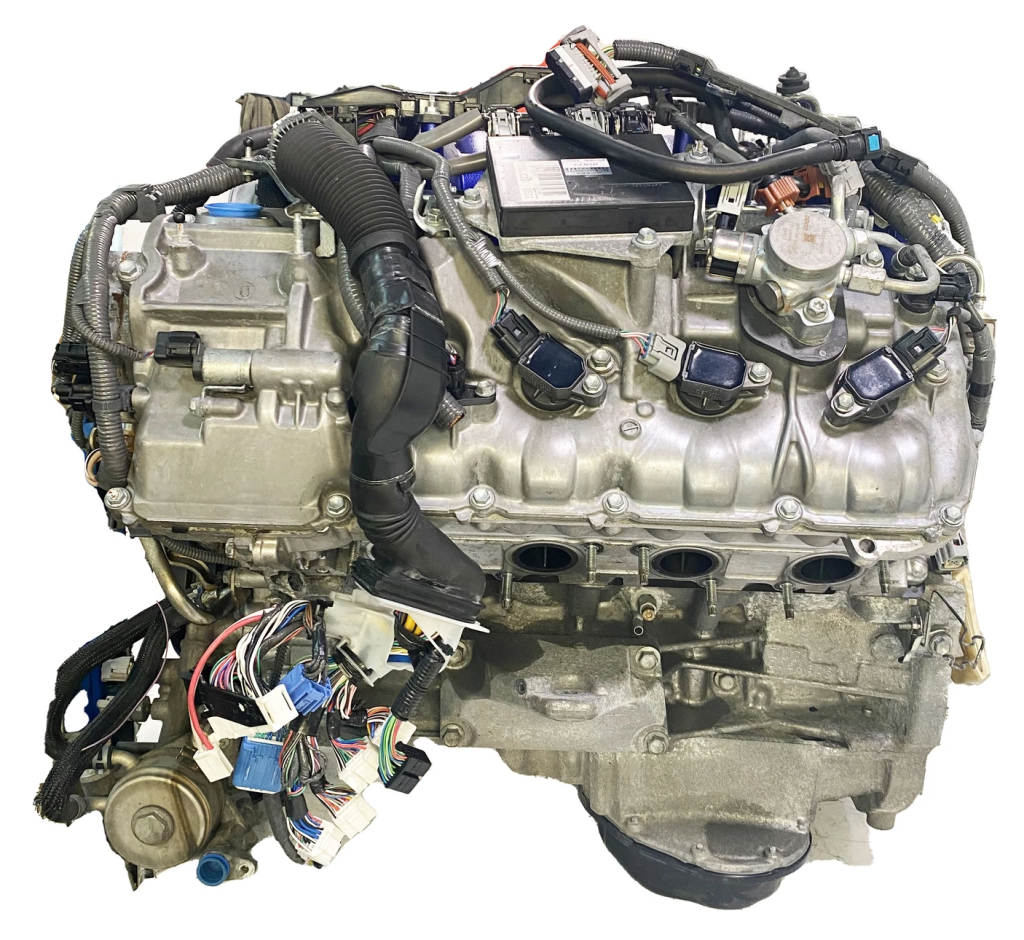
Core engineering features of the 2UR-FSE include a lightweight yet rigid aluminum alloy cylinder block and cylinder heads, designed for optimal thermal management and durability. It employs Toyota’s innovative D-4S direct and port fuel injection system, which strategically uses both injectors to maximize combustion efficiency across various engine speeds and loads, significantly reducing carbon buildup common in pure direct injection engines. The valvetrain features Dual VVT-iE (Variable Valve Timing with intelligence, Electric motor-driven) on the intake camshafts and VVT-i on the exhaust camshafts, allowing for precise control over valve overlap and lift. This enables seamless switching between Otto and Atkinson cycles, optimizing both power delivery and fuel economy depending on driving conditions.
The 2UR-FSE engine was prominently deployed in the Lexus LS 600h and LS 600hL models, specifically the UVF4x generation, produced from 2007 through 2017. In these flagship luxury sedans, the engine served as the primary combustion component within Lexus’s advanced Hybrid Drive system, contributing to a combined system output that rivaled larger, conventional V12 engines while offering superior fuel efficiency and lower emissions. The “FSE” designation signifies its particular application within a hybrid electric vehicle (HEV) powertrain, distinguishing it from other UR-series variants such as the performance-oriented 2UR-GSE found in F-branded models.
Technical Specifications
| Specification | Value |
|---|---|
| Displacement | 4969 cc (5.0 L) |
| Max Power | 389 hp (290 kW) @ 6400 RPM (Engine only) |
| Max Torque | 520 Nm (53 kg*m) @ 4000 RPM |
| Fuel Type | Premium Unleaded (91+ RON) |
| Fuel Consumption (l/100 km) | Approx. 9.3 (Combined, LS 600h, NEDC) |
| Engine Type | V8, 90-degree, Naturally Aspirated |
| Compression Ratio | 11.8:1 |
| Cylinder Bore | 94 mm |
| Piston Stroke | 89.5 mm |
| Valvetrain | DOHC, 32-valve (4 valves per cylinder) |
| Valves per Cylinder | 4 |
| Additional Info | Dual VVT-iE (intake), VVT-i (exhaust), D-4S direct/port fuel injection, Atkinson cycle capable |
Common Problems & Reliability
The Lexus 2UR-FSE engine is renowned for its exceptional reliability, aligning with Lexus’s reputation for engineering longevity. Major mechanical failures are rare, even at high mileages. However, like any complex engine, some specific areas warrant attention. Due to its D-4S dual fuel injection system, carbon buildup on the intake valves, a common issue in pure direct injection engines, is significantly mitigated, though not entirely eliminated, as the port injectors periodically clean the valve stems. Negligible carbon accumulation typically only becomes a concern after extensive mileage without proper maintenance.
Another area sometimes reported, albeit infrequently, involves the PCV (Positive Crankcase Ventilation) valve, which can become clogged over time, potentially leading to increased oil consumption or pressure issues within the crankcase. Regular inspection and replacement of this inexpensive component can prevent more serious problems. The timing chain system is robust and generally considered a “lifetime” component, designed to last the engine’s service life; however, proper oil change intervals are crucial to prevent premature wear on the chain and its guides. In terms of overall engine integrity, the 2UR-FSE is engineered for endurance, with many units exceeding 250,000 miles (approximately 400,000 km) without requiring major internal overhauls, provided consistent and appropriate maintenance practices are observed.
Maintenance Tips & Service Schedule
Adhering to a stringent maintenance schedule is paramount for preserving the longevity and performance of the 2UR-FSE engine. Engine oil and filter changes are recommended every 10,000 miles (16,000 km) or 12 months, whichever comes first, using a high-quality synthetic engine oil with a viscosity grade of 0W-20 or 5W-20, as specified by the manufacturer. Utilizing only premium engine oil ensures optimal lubrication and protects the intricate VVT-iE components.
Spark plugs, typically long-life iridium electrodes, should be replaced every 60,000 miles (96,000 km). While the timing chain is designed for the engine’s lifespan, regular inspections during major services are advisable, particularly at very high mileages, to check for any abnormal wear or stretching. The engine’s coolant system requires specific Toyota Super Long Life Coolant (SLLC); the initial replacement is usually recommended at 100,000 miles (160,000 km) or 10 years, and every 50,000 miles (80,000 km) or 5 years thereafter. Air filters (engine and cabin) should be inspected regularly and replaced as needed, typically every 30,000 miles (48,000 km). Furthermore, given its hybrid application, specific attention to the hybrid system’s inverter coolant and associated components is essential as part of the overall vehicle service.
Conclusion
The Lexus 2UR-FSE engine stands as a testament to advanced automotive engineering, offering a compelling combination of power, refinement, and efficiency within a hybrid luxury platform. Its design incorporates robust materials and sophisticated technologies, resulting in an engine with an outstanding reputation for durability and reliability. For a used vehicle buyer, an engine-equipped with the 2UR-FSE, particularly within the LS 600h/hL, represents a safe and reliable choice, provided the vehicle has a documented history of consistent and proper maintenance. While the complexity of the accompanying hybrid system necessitates specialized knowledge for some repairs, the fundamental engine unit itself is remarkably robust and capable of delivering many years of reliable service.