
From 2004 to 2015, two versions of the 1.6-liter Mazda Y6 or 1.6 CiTD engine were manufactured. The first generation models, which had the Y406, Y601, Y642, and Y646 indices, had a 16-valve cylinder head, while the second generation models, which had the Y650, Y655, Y661, and Y6Y1 indices, had an 8-valve cylinder head.
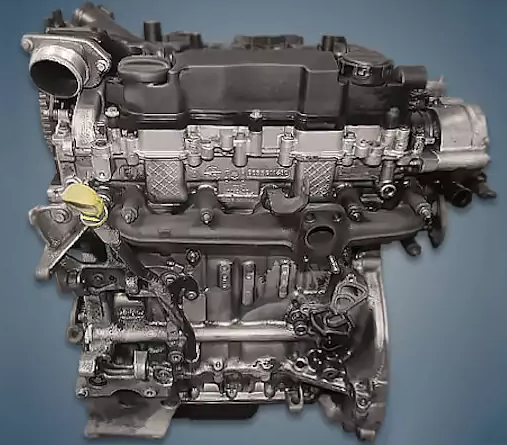
Diesel engines are also part of the Y-ENGINE family: Y4.
The engine was mounted on:
- Mazda 2 DE in 2009 – 2014;
- Mazda 3 BK in 2004 – 2009;
- Mazda 3 BL in 2009 – 2013;
- Mazda 5 CW in 2010 – 2015.
Specifications
| Production years | 2004-2015 |
| Displacement, cc | 1560 |
| Fuel system | Common Rail |
| Power output, hp | 90 (Y406, Y646) 109 (Y601, Y642) 95 (Y655, Y661) 115 (Y650, Y6Y1) |
| Torque output, Nm | 205 – 215 (Y406, Y646) 240 (Y601, Y642) 205 (Y655, Y661) 270 (Y650, Y6Y1) |
| Cylinder block | aluminum R4 |
| Block head | aluminum 16v (Y406, Y646) aluminum 16v (Y601, Y642) aluminum 8v (Y655, Y661) aluminum 8v (Y650, Y6Y1) |
| Cylinder bore, mm | 75 |
| Piston stroke, mm | 88.3 |
| Compression ratio | 18.3 (Y406, Y646) 18.3 (Y601, Y642) 16.0 (Y655, Y661) 16.0 (Y650, Y6Y1) |
| Features | DOHC (Y406, Y646) DOHC (Y601, Y642) SOHC (Y655, Y661) SOHC (Y650, Y6Y1) |
| Hydraulic lifters | yes |
| Timing drive | chain and belt (Y406, Y646) chain and belt (Y601, Y642) belt (Y655, Y661) belt (Y650, Y6Y1) |
| Phase regulator | no |
| Turbocharging | MHI TD025 (Y406, Y646) Garrett GT1544V (Y601, Y642) MHI TD02H2 (Y655, Y661) Garrett GTC1244VZ (Y650, Y6Y1) |
| Recommended engine oil | 5W-30 |
| Engine oil capacity, liter | 3.8 (Y406, Y646) 3.8 (Y601, Y642) 3.9 (Y655, Y661) 3.9 (Y650, Y6Y1) |
| Fuel type | diesel |
| Euro standards | EURO 3/4 (Y406, Y646) EURO 3/4 (Y601, Y642) EURO 4/5 (Y655, Y661) EURO 4/5 (Y650, Y6Y1) |
| Fuel consumption, L/100 km (for Mazda 3 2007) — city — highway — combined |
6.1 4.1 4.8 |
| Engine lifespan, km | ~300 000 |
Disadvantages of the Y6 1.6 CiTD engine
The camshaft cams in the engines from the early years of production wore out very quickly;
The chain between the camshafts is frequently extended, even in 16-valve engines;
First-generation engines’ turbines frequently fail because of clogged filters;
These are the common issues with diesel engines with a particulate filter and EGR; second-generation 8-valve engines are more dependable and have almost no weak points.