
Since 2005, the company has produced the Mercedes OM 642 3.0-liter V6 diesel engine, which is found in nearly every model, including the C-Class, G-Class SUV, and Vito minibuses. Additionally, Chrysler and Jeep models under its EXL index currently have this diesel engine installed.
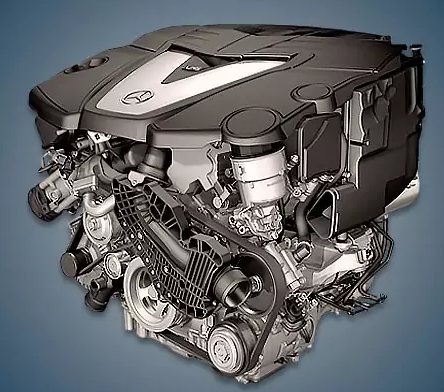
The German company Daimler AG debuted its first V6 diesel vehicle in 2005. A timing drive in the shape of a two-row chain, an aluminum block with a 72° camber angle and cast-iron liners, two aluminum DOHC cylinder heads with hydraulic lifters, a Bosch CP3 Common Rail fuel system with piezo injectors and a 1600 bar injection pressure, and a Garrett GTB2056VK turbine with an electric drive variable geometry and intercooler are all part of the design.
The diesel engine underwent several upgrades during production, and in 2014 it was updated with an AdBlue urea injection system and Nanoslide coating in place of cast iron liners.
Specifications
| Production years | since 2005 |
| Displacement, cc | 2987 |
| Fuel system | Common Rail |
| Power output, hp | 184 – 204 (DE 30 LA red. or 280 CDI / 300 CDI) 211 – 235 (DE 30 LA or 320 CDI / 350 CDI) 231 – 265 (LS DE 30 LA or 350 CDI) |
| Torque output, Nm | 400 – 500 (DE 30 LA red. or 280 CDI / 300 CDI) 440 – 540 (DE 30 LA or 320 CDI / 350 CDI) 540 – 620 (LS DE 30 LA or 350 CDI) |
| Cylinder block | aluminum V6 |
| Block head | aluminum 24v |
| Cylinder bore, mm | 83 |
| Piston stroke, mm | 92 |
| Compression ratio | 18.0 |
| Hydraulic lifters | yes |
| Timing drive | double row chain |
| Turbocharging | Garrett GTB2056VK |
| Recommended engine oil | 5W-30, MB 228.51/229.51 |
| Engine oil capacity, liter | 8.0 (passenger cars) 10.0 (Vito) 12.0 (Sprinter) |
| Fuel type | diesel |
| Euro standards | EURO 4/5/6 |
| Fuel consumption, L/100 km (for Mercedes ML 320 CDI 2010) — city — highway — combined |
12.7 7.5 9.4 |
| Engine lifespan, km | ~450 000 |
| Weight, kg | 220 |
The motor’s aluminum body features struts that cross. It has cast iron sleeves on its cylinders, which helps with hardening and operational dependability. The crankshaft has a large shaft bearing surface, heavy-duty construction, and steel connecting rods.
In order to lessen engine weight, the engine crankcase is composed of gray cast iron cylinder liners and die-cast aluminum with a through cross strut. Eight-hole nozzles are the design of the injectors. Charge changeover is enhanced by optimized airflow intake and charge tracts. The temperature of the charge air can be lowered to 95° C thanks to the charge air cooler.
Up to five injections can be made in a cycle using piezo injectors. This enhances responsiveness and dynamics while lowering engine noise. Even at low revs, the VTG turbocharger produces a lot of power and torque. By controlling boost pressure quickly and precisely, an electrically regulated turbocharger minimizes metering and boosting errors.
Features of engine injectors:
- The electronic control unit regulates injection;
- the nozzle-shaped injectors have eight holes;
- a variable turbine length VTG compressor provides pressurization;
- the intake manifold has an extra air duct;
A cooled exhaust gas recirculation (AGR) system is used to enhance environmental performance. The functioning of this system involves a number of details:
- The selective catalyst traps ammonia from diesel combustion, preparing the material for a subsequent reduction reaction;
- at the same time, SCR functions as a filter that traps sulfur odors, etc.
- The filter is restored without the need for additional elements.
Disadvantages of the OM642 engine
The most well-known issue with this diesel engine is that the heat exchanger gaskets are leaking, and since the block is collapsing, replacing the penny gaskets is expensive. After the design was completed around 2010, these leaks stopped happening.
Although the power unit has a dependable Bosch Common Rail fuel system, its piezo injectors are costly and have high fuel quality requirements. The frequent malfunctions of the injection pump’s fuel quantity control valve are also noteworthy.
This power unit’s intake manifold contains steel swirl flaps, but a servo with frequently broken plastic rods controls them. Contamination of the intake caused by a weak crankcase ventilation membrane significantly worsens the issue.
The Garrett turbine itself is incredibly robust and can operate silently for up to 300,000 kilometers, but heavy pollution frequently causes the system that modifies its geometry to wedge. Crumbs from the breakdown of the exhaust manifold welds typically ruin the turbine.
This motor is not the most reliable oil pump and is well-known for frequent lubricant leaks. Because it is sensitive to oil pressure, changing the liners is frequently done here.
Overall, this V6 diesel engine proved to be very dependable and unassuming. The issues that developed with gasoline engines manufactured concurrently and installed on the same vehicles are far worse than this.