
The C-Class, CLK-Class, and E-Class models, as well as the Vito and Sprinter minibuses, were equipped with the 2.2-liter inline diesel Mercedes OM 646 engine, which was manufactured between 2002 and 2010. An OM 644 transverse diesel engine was available for the Chrysler PT Cruiser.
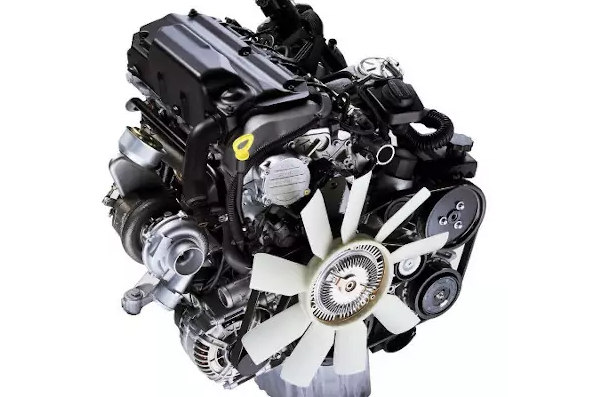
The diesel R4-family comprises OM616, OM601, OM604, OM611, OM640, OM646, OM651, OM654, and OM668.
A new unit was introduced in 2002 as a result of the OM611 4-cylinder diesel engine’s modernization. The motor’s overall design hasn’t changed all that much; it still features an aluminum 16-valve cylinder head with hydraulic compensators, a two-row timing chain, and a cast-iron cylinder block. But a more contemporary Bosch common rail fuel system with a CP3 pump and straightforward seven-hole solenoid injectors with a 1600 bar injection pressure emerged. The advanced turbine with variable geometry and electric drive Garrett GTA1852VK, as well as the intake manifold with electronically controlled swirl flaps EKAS, are noteworthy. Two Lanchester-style balance shafts were installed in passenger car modifications.
The Mercedes OM646 engine had new 7-hole injectors and a second-generation Common-Rail fuel system with a maximum injection pressure of 1600 bar. Better fuel atomization was made possible by the nozzles’ smaller diameter. Two pilot injections were supplied by the fuel system. Fuel injection prior to direct injection, which results in the combustion of the fuel charge, lowers the average operating cycle temperatures and pressures by allowing the temperature in the combustion chamber to drop due to fuel evaporation. As a result, noise and vibration are decreased, the diesel engine operates smoothly, and NOx emissions are decreased. An electronically controlled valve has taken the place of the pneumatic EGR valve.
Mercedes-Benz upgraded the OM646 diesel in 2006. Ninety parts have been replaced in the updated OM646 EVO. The diesel engine’s compression ratio was reduced from 18.0 to 17.5. Shorter connecting rods and higher pistons were employed. A new, modified intercooling heat exchanger and turbocharger were also installed. To provide even more effective engine cooling, the cylinder head has been redesigned. Engine starting was enhanced by the use of ceramic glow plugs. Additionally, the Sprinter was modified as a bi-turbo with two BorgWarner turbochargers.
adherence to environmental regulations The first distinguishing characteristic of this engine is Euro-5. The engine control unit’s fuel supply algorithms have been updated by the designers to enhance environmental performance. There were additional modifications as well:
The intercooler heat exchanger was enlarged, a new DPF and catalyst were installed, the EGR valve was changed, and all temperature and pressure regulators were updated.
Specifications
| Production years | 2002-2010 |
| Displacement, cc | 2148 |
| Fuel system | Common Rail |
| Power output, hp | 88 – 122 (DE 22 LA red) 129 – 150 (DE 22 LA) 136 (DE 22 LA EVO red) 170 (DE 22 LA EVO) |
| Torque output, Nm | 220 – 290 (DE 22 LA red) 305 – 340 (DE 22 LA) 270 – 340 (DE 22 LA EVO red) 400 (DE 22 LA EVO) |
| Cylinder block | cast iron R4 |
| Block head | aluminum 16v |
| Cylinder bore, mm | 88 |
| Piston stroke, mm | 88.3 |
| Compression ratio | 18.0 (DE 22 LA red, DE 22 LA) 17.5 (DE 22 LA EVO red, DE 22 LA EVO) |
| Hydraulic lifters | yes |
| Timing drive | double row chain |
| Turbocharging | Garrett GTA1852VK |
| Recommended engine oil | 5W-40, MB 229.5 / 229.51 |
| Engine oil capacity, liter | 6.5 / 8.5 / 9.5 (Passenger cars / Vito / Sprinter) |
| Fuel type | diesel |
| Euro standards | EURO 3 (DE 22 LA red, DE 22 LA) EURO 4 (DE 22 LA EVO red, DE 22 LA EVO) |
| Fuel consumption, L/100 km (for Mercedes E 220 CDI 2005) — city — highway — combined |
8.8 5.0 6.3 |
| Engine lifespan, km | ~400 000 |
| Weight, kg | 204 |
The engine was installed on:
- Mercedes C-Class W203 in 2003 – 2007; C-Class W204 in 2007 – 2009;
- Mercedes CLC-Class C203 in 2008 – 2010;
- Mercedes CLK-Class C209 in 2005 – 2009;
- Mercedes E-Class W211 in 2002 – 2009;
- Mercedes Sprinter W906 in 2006 – 2009; Sprinter Classic since 2013;
- Mercedes V-Class W639 in 2003 – 2010.
Disadvantages of the OM646 engine
Although the motor has a dependable Bosch fuel system with electromagnetic injectors, metering valve wear or leaks at the injection pump seals are frequent. Additionally, refractory washers beneath the nozzles frequently burn out, just like their predecessor.
The intake manifold’s plastic swirl flaps cause a lot of problems because air is drawn in through their axle holes and they break and fall off very quickly.
The cranking of the liners during a 200–300 thousand km run is the biggest issue. The primary cause is thought to be inadequate upkeep, so change the lubricant more frequently.
These diesels frequently experience air or oil leaks, just like many others. Bi-turbo modifications can be difficult, but single-turbo versions are dependable.