
Produced between 2006 and 2014, the Mitsubishi 3B21T 1.0-liter 3-cylinder turbo engine was mounted in the rear of the W451 on upgraded models of the second generation Smart Fortwo model. This unit’s standard modification produced 84 horsepower, while the Brabus version produced 98 to 102 horsepower.
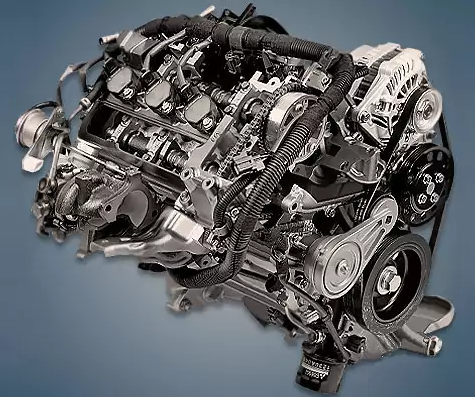
The engines 3B20, 3B20T, and 3B21 are also part of the 3B2 family.
The engine was mounted on:
- Smart Fortwo 2 (W451) in 2006 – 2014.
Specifications
| Production years | 2006-2014 |
| Displacement, cc | 999 |
| Fuel system | distributed injection |
| Power output, hp | 84 – 102 |
| Torque output, Nm | 120 – 147 |
| Cylinder block | aluminum R3 |
| Block head | aluminum 12v |
| Cylinder bore, mm | 72 |
| Piston stroke, mm | 81.8 |
| Compression ratio | 10.0 |
| Features | DOHC |
| Hydraulic lifters | no |
| Timing drive | chain |
| Phase regulator | MIVEC |
| Turbocharging | MHI TD025M1 |
| Recommended engine oil | 5W-30 |
| Engine oil capacity, liter | 3.4 |
| Fuel type | petrol |
| Euro standards | EURO 4/5 |
| Fuel consumption, L/100 km (for Smart Fortwo 2012) — city — highway — combined |
6.4 4.1 4.9 |
| Engine lifespan, km | ~200 000 |
| Weight, kg | 69 (without attachments) |
Disadvantages of the Mitsubishi 3B21T engine
Although this power unit is very dependable for a turbo engine, its consumption is excessively high;
The most important thing is to keep an eye on the cooling system; if it overheats, it leads the head of the block right away.
Grease frequently spills into candle wells because of hardened o-rings;
The timing chain or turbine may already need maintenance closer to 150,000 kilometers;
Every 100,000 kilometers, the valves must be adjusted because there are no hydraulic lifters.