
From 1984 to 1994, the company produced the 1.0-liter Toyota 1E carburetor engine, which was mounted in the rear of the P70 or P80, respectively, on two iterations of the well-known Starlet model. The only engine in the E engine family without a multiport fuel injection version is the liter engine.
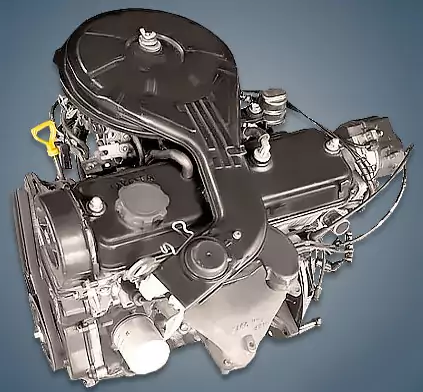
E family carburetor engines: 1E, 2E, and 3E.
The engine was mounted on:
- Toyota Starlet 3 (P70) in 1984 – 1989;
- Toyota Starlet 4 (P80) in 1989 – 1994.
Specifications
| Production years | 1984-1994 |
| Displacement, cc | 999 |
| Fuel system | carburetor |
| Power output, hp | 55 |
| Torque output, Nm | 75 |
| Cylinder block | cast iron R4 |
| Block head | aluminum 12v |
| Cylinder bore, mm | 70.5 |
| Piston stroke, mm | 64 |
| Compression ratio | 9.0 – 9.1 |
| Features | SOHC |
| Hydraulic lifters | no |
| Timing drive | belt |
| Phase regulator | no |
| Turbocharging | no |
| Recommended engine oil | 5W-30 |
| Engine oil capacity, liter | 3.2 |
| Fuel type | petrol |
| Euro standards | EURO 0 |
| Fuel consumption, L/100 km (for Toyota Starlet 1988) — city — highway — combined |
7.3 5.2 6.0 |
| Engine lifespan, km | ~200 000 |
| Weight, kg | 90 |
Disadvantages of the Toyota 1E engine
The majority of the unit’s issues are related to the carburetor’s illiterate setting;
Failures of the antiquated ignition system rank second in terms of mass;
Additionally, the cylinder head gasket frequently breaks in E series motors due to their fear of overheating;
Because there are no hydraulic lifters here, oil consumption is frequently encountered on runs exceeding 100,000 km due to the occurrence of rings. Additionally, don’t forget to periodically adjust the valves.