
Japan produced the 2.4-liter Toyota 2RZ-E engine exclusively for commercial vehicles between 1989 and 2004. The motor gained notoriety for vibrations because it lacked balance shafts. Up until 1999, a carburetor version with the 2RZ index was manufactured concurrently with the injection.
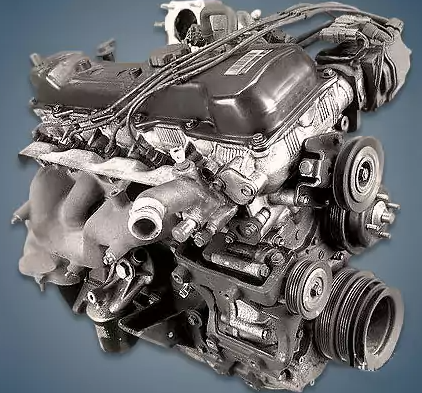
The engines in the RZ family are 1RZ-E, 2RZ-E, 2RZ-FE, and 3RZ-FE.
The engine was mounted on:
- Toyota HiAce H100 in 1989 – 2004.
Specifications
| Production years | 1989-2004 |
| Displacement, cc | 2438 |
| Fuel system | injector MPI |
| Power output, hp | 120 |
| Torque output, Nm | 198 |
| Cylinder block | cast iron R4 |
| Block head | aluminum 8v |
| Cylinder bore, mm | 95 |
| Piston stroke, mm | 86 |
| Compression ratio | 8.8 |
| Features | no |
| Hydraulic lifters | no |
| Timing drive | chain |
| Phase regulator | no |
| Turbocharging | no |
| Recommended engine oil | 5W-30 |
| Engine oil capacity, liter | 4.1 |
| Fuel type | petrol |
| Euro standards | EURO 2/3 |
| Fuel consumption, L/100 km (for Toyota HiAce 2003) — city — highway — combined |
12.8 8.6 10.8 |
| Engine lifespan, km | ~500 000 |
| Weight, kg | 145 |
Disadvantages of the Toyota 2RZ-E engine
This motor is thought to be incredibly dependable and low maintenance.
The engine is prone to vibrations because the design does not include balance shafts.
Out-of-adjustment valves are typically linked to the unit’s unstable operation.
A timing chain may need to be replaced after 200,000 kilometers.